WHY JOURNALISTS IGNORE YOUR START-UP: 17 TIPS FOR PR COVERAGE

a.17tipsbizwomanonphone
Nine out of 10 start-ups fail. One cause is that founders are misunderstood when describing their companies and trends affecting their businesses.

Bad “messages” mean prospective clients, investors and employees won’t bite.
Therefore, the key to a start-up’s success is crafting a story in a way that is clear and interesting.

stack of newspapers

My theory, which I share with my start-up clients, is if your story is interesting to a reporter, it will be of interest to anyone. Why? Reporters are a hard sell.

Furthermore, media coverage provides many benefits. It boosts trust and awareness, improves your search rankings, and differentiates from competitors.

c.tip#intro.differentiate you from competitors
Here are 17 tips on how to gain a journalist’s attention and story space.

1) INCLUDE AN ELEMENT OF SURPRISE IN YOUR STORY.

tip#1element ofsurprise
If there is no ah-ha moment, don’t expect it to get much attention.

Example: I shared a story with business reporters about a venture capital arm of a company that doesn’t actually invest money in start-ups. Reporters constantly responded, “A VC that doesn’t invest? Tell me more!” It was short, surprising and resulted in a lot of get-to-know interviews and several quality feature stories including Associated Press, C/Net and The Wall Street Journal.
2) DO A HALF HOUR OF HOMEWORK BEFORE REACHING OUT.

Yes, that means it is not as simple as querying a media database service like Gorkana or Cision for a list of 100 journalists and then picking up the phone to call the first one a minute later.

Example: Every time I query one of those databases for a media list, typically 30% of the reporter information is out of date. The most typical change these days tends to be a reporter leaving journalism to go into content marketing or public relations which pays more. I worked with Mike Cassidy formerly of the San Jose Mercury News on a large feature that included a nice photo of my European client who was in town for a while. I went back to pitch him something else a few short weeks later and he had left journalism, after 2o+ years.

3) KNOW THAT REPORTERS SWITCH JOBS. A LOT.

tip#3Use Twitter to check if a reporter switched jobs.

One of the best ways to check if the reporter is still on the beat is to check Twitter. It seems to be the first thing they update.

Example: I wrote a pitch note tailored for one person: the widely read Chrissy Farr. I had worked with her on a story not long before, however, right before I hit “send” I checked her Twitter to make sure she hadn’t switched jobs. Sure enough, she had! And just the day prior! I was so glad I checked. Had I not, the pitch efforts would have gone to waste.

Sure enough, she just switched again according to Twitter. She’s with Fast Company now.

4) LET AN EMAIL PITCH SIT FOR A DAY BEFORE YOU USE IT.
Example: The last four times I pitched Venturebeat, they filed a story within two hours of my email. One story was about a huge global telecom that was opening a Silicon Valley office to partner with local start-ups. Had there been a mistake in the pitch, it would have gone right into the story. They work fast! That’s not to say Venturebeat won’t agree to an embargo of the news. Full disclosure: there was a tiny error in the story but a. it wasn’t from my pitch and b. Venturebeat corrected it really fast.

An embargo is when a skilled PR pro asks a trusted writer to hold a story until an agreed upon date. It is tricky business and not for beginners.

5) FOLLOW A PHONE SCRIPT SO YOU STAY PUNCHY.
But feel free to stray from it if needed.

Most reporters hate phone calls but sometimes they are necessary. If you have a white hot story, reporters at big websites or media outlets get upset when you don’t call them.

Example: While at a PR agency, I was pitching a story about a chocolate company’s business success a few weeks before Valentine’s Day. Because I had written a script with the two most unique facts about my story idea, I “nailed” the story every time. I placed stories in Businessweek, Wall Street Journal, and other quality outlets.
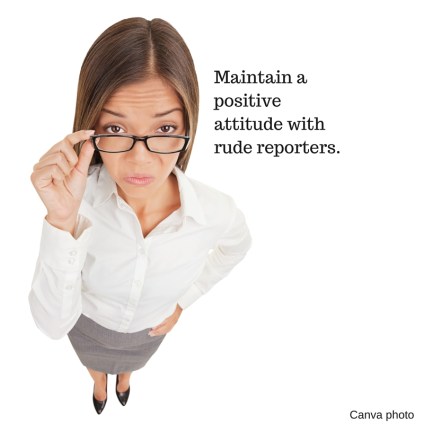
6) MAINTAIN A POSITIVE ATTITUDE WITH RUDE REPORTERS.
tip#6.17tips.positive attitude

Realize they are overworked, over pitched and way underpaid.

Writers get paid a third as much as PR people. Don’t let their bad attitudes hurt your feelings. Things will likely go better next time.

Example: A local technology business writer asked to talk to a sales executive at my company about a competitors’ new product versus ours. The writer asked the executive to compare the product prices. Prior to the meeting, I advised the executive to not discuss the competitors’ product’s pricing. I said, “Let them talk about that.” The reporter flew off the handle when we wouldn’t quote competitive pricing, saying the spokesperson didn’t have a clue. She later apologized. We were quoted in the story and future correspondence went fine. I’m Facebook friends with the writer who is highly respected; she has been nice since then.
7) LISTEN CAREFULLY TO REPORTERS’ FEEDBACK.
When a reporter does answer you or you get them on the phone and they reject your idea, learn what stories they like or dislike so you can pitch them something more appropriate next time.
Example: A USA Today writer recently told me she hears too many survey pitches from PR folks. If you pitch her one, she added, it had better have shocking findings. This was good to know. I passed it onto my start-up client. I like working with USA Today reporters because they are smart and good fact-checkers but they are never rude.

Once in a while I place a story with them. They are definitely in the “over pitched” category.
8) SOMETIMES A SOFT SELL WORKS BEST.

tip#8soft sell works best
If you know your company has a complicated B2B service or product and the CEO is not an interesting spokesperson, sometimes asking a reporter to have coffee to find out what stories they are interested in is the best approach.
Example: This worked with a Forbes writer. I invited the writer who is now with New York Times to a coffee chat to learn about what stories he was interested in at the time. Despite a huge rainstorm on our meeting day, he didn’t cancel. The writer later interviewed three of my employers’ customers and an inventor and published a high quality feature with no errors. (In this case, I didn’t have a boring story to tell. He just wasn’t receptive to a cold story pitch.)

THE PERFECT INTERVIEW

9) DON’T ASSUME THE REPORTER KNOWS THE SUBJECT.

Carry background information or have a way to look it up fast.

Example: Once a reporter said something incorrect and negative about my company during an interview. It appeared to be made up by the competition. I was not worried because I knew that the meeting meant the opportunity to set the record straight. I had the correct information and its source at my fingertips. The story came out correct.

10) RELAX, EVEN IF YOU DON’T HAVE EVERY ANSWER HANDY.

tip#10relax

If you do not have the answer, just say so, or offer to get back to them later.

Example: While doing a PR campaign about a world record technology research breakthrough, I once got back to the reporter after an interview with my vice president of technology and simply said, “I can’t divulge that information for competitive reasons.” He was fine with that. The story by John Markoff in The New York Times was high quality and fact-filled anyway. By the way, he’s one of the top 30 “most read by other U.S. tech reporters” according to a recent LinkedIn Pulse story.

11) NEVER SAY, “NO COMMENT.” IT MEANS “YES.”

You could just say, “I don’t have the information in front of me in order to answer that properly at this time.”

Example: When I worked for a $100 billion corporation, I was constantly pummeled with questions about rumored acquisitions. One San Francisco Chronicle writer — who has switched jobs three times since then — once joked, “Michelle, you never say, ‘no comment.’ Makes sense because that would be like a ‘Yes’ which would be the answer.” That company acquired at least 50 other companies while I was in PR there.

12) KNOW AT LEAST SOME MEDIA LAW.

One example is if you are being interviewed by phone, the reporter is required by law to tell you when you are being recorded. If you’re not certain, you should ask.

Example: The vast majority of feature story interviews I’m involved with are recorded. I have often just told the interviewee expect it to be recorded. I position it as a good thing. It means they would be more likely getting quotes correct. Once in a great while an interviewee has a problem with it. It’s usually the newbies who are nervous they might say something wrong.

13) KEEP IT JARGON-FREE. Explain jargon if you must use it.

Example: I was on the East Coast at a Computer Reseller News office for an interview with the new storage beat reporter. The executive with me kept calling hard drives, “HDDs.” After 15 minutes the reporter says, “What’s an HTT?” She had no clue.
So he carefully started over and said the whole name, “hard disk drive.” We had wasted those first few minutes because of a confusing acronym. They last reporter did know, “HDD” but she was new.

14) KEEP RECORDED MATERIAL SOUND BYTES BRIEF.

Video or radio stories may use only a half-minute cut. The shorter your comments, the less likely they are to be edited. Reporters love snappy quotes.

Examples: Out of the 100+ “broadcast” interviews I have set up and helped with the vast majority have resulted in valuable brand exposure for my employer or client. Most did well after my advice to think of a few short sound-bytes ahead of time. My favorite interview happened when I escorted the inventor of “CTRL ALT DELETE” through the airport on the way to an event. It was the anniversary of this concept. Sure enough a camera crew from NBC showed up and asked him what it was like to see that CTRL ALT DELETE had become so popular. He answered, “I may have invented CTRL ALT DELETE but Microsoft made it famous!” Of course that was the line that made the evening and morning news casts.

THE EXPERT FOLLOW-UP

15) DON’T ANNOY THE REPORTER DURING FACT CHECKS.

tip#15.Don'tannoythe reporter
Example: I pitched and then helped a local newspaper reporter with a story about a community service project on that involved interviews with five people. I had arranged all of them. I mostly cared about only the one interview but a story of that proportion needed various points of view. I emailed the writer a couple of times a day for a few days but she became dead quiet. I think that was overkill. However, I was pleased to open the newspaper to see a frame-worthy story that was fully fact checked.

16) UNLESS THE STORY WAS SET UP AS “BACKGROUND” IT’S OKAY TO POLITELY ASK WHEN IT WILL RUN.

If the reporter agreed to talk on background, then that means it’s not for a story.

So asking when the story would run would bug the writer. However background interviews sometimes turn into stories later. You typically find out it is a story when they start fact checking.

Example: My start-up client and I were helping a Business Insider reporter collect information about his unique background. He was born with a heart defect and survived several open heart surgeries before starting his social fitness app business in college. She never said it was a story until the last couple of fact checks. When she set up the interview, she said she just wanted to learn more. Once the fact checks started, I asked when it would run and she answered, “This afternoon.”It ran and received tens of thousands of views.

17) DON’T BE OFFENDED WHEN A REPORTER WON’T GIVE YOU STATUS.

Sometimes they are concerned about a competitor scooping them so they can’t let anyone know their story plans.

Example: I pitched, set up an interview with and helped fact check a story with a popular Silicon Valley-based Fortune magazine reporter who interviewed my company’s CIO. She wouldn’t give me the publish date, headline or confirm that a story would run. But all of her fact checks gave me all of the clues about what was happening. The story was well done.

To summarize, to garner a reporter’s attention, you need to have a thick skin, be patient and excel at storytelling and sales.

You also need to do your homework, for example, on Twitter before reaching out.

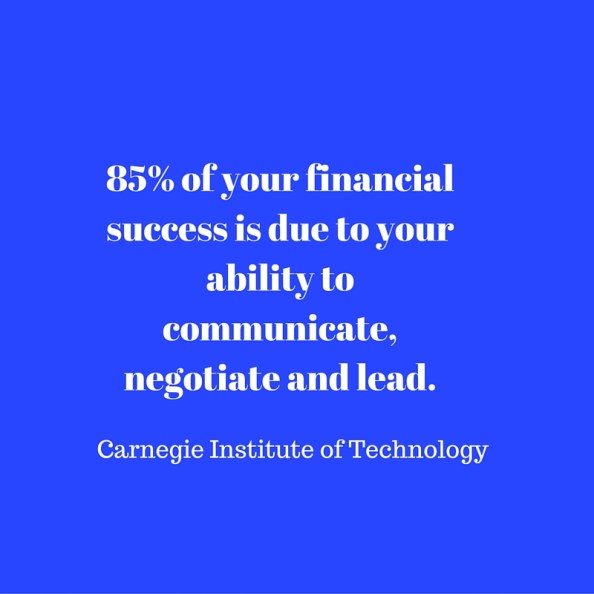
Once you’ve mastered the press pitch you will start seeing more success in communicating and selling to your other audiences.
z.INTROtip1.17tips.85% of your financial success is due to your ability to communicate, negotiate and lead.
Lastly, feel free to reach out to your local Public Relations Society of America (PRSA) or International Association of Business Communicators (IABC) affiliates to find a publicist or story teller to help.

[Thank you to the University of Michigan website for some of these tips. However, as an Ohio University E.W. Scripps Journalism school grad, I’m not affiliated with the school. See more tips here.]

###
Michelle McIntyre, the president of Silicon Valley-based PR Consultancy MMC PR, has executive roles with SV-IABC and TEDxSanJoseCa and blogs for VLAB MIT Enterprise Forum. She’s also an IBM and PR agency vet with 10 awards for PR campaign results. @FromMichelle on Twitter

13 Cool Things Forbes 30 Under 30 Have In Common

San Francisco Cable Carby Michelle McIntyre

It’s always an exciting time when the “Forbes 30 Under 30” list comes out. Today is no exception.

Each year when the story goes live, young start-up founders wake up early to check the Forbes website to see if they have won. When they find their names, they message their investor, mom or significant other and start planning their big trek to the uber fun celebration dinner and party. (Yes, someone from Uber is on the list.)

Some also thank their publicists. No doubt that the publicists help build the relationships with Forbes, finesse the messages and fill out the forms on time but the winners are typically of substance to begin with.

There are a whopping 600 winners this year. Wow, that’s a lot.

It’s brilliant marketing on Forbes’ part because all of them will be socializing the story and giving the media outlet a ton of attention which attracts advertisers.

Check out the list here.

It includes tech entrepreneurs, marketing folks, actors, and even pro athletes like Golden State Warriors’ Stephen Curry.

I found this list of their 13 common traits below interesting. A whopping 84% are single and they love their iPhone’s. The most winners come from New York City and San Francisco.

StanfodUnivCreditStanfordedu

The most popular undergrad schools are not surprisingly Stanford which is #1 (and pictured above), followed by U. Penn and Cornell.

Their top dream mentors are Elon Musk and Sheryl Sandberg who reside in the Silicon Valley.

Here are the 13 things the winners have in common.

“The Class of 2016 By The Numbers*:

15,000+: Nominations

600: Winners

64%: Want to ‘Change the world’

50%: Define success as ‘Liking myself and what I do’

5 top cities of residence (in order): New York City, San Francisco, Los Angeles, Boston, Chicago

3 most popular undergrad schools (in order): Stanford, U. Penn, Cornell

69%: Earned college degrees

50%: Have zero college debt

63%: Identify as growing up middle class

36%: Immigrants or first-generation Americans

84%: Single

No. 1 and 2 dream mentors: Elon Musk and Sheryl Sandberg

No. 1 can’t-live-without gadget: iPhone”

[Source: Forbes website 1/11/16.]

###

Michelle McIntyre runs MMC PR, a Silicon Valley consulting firm for tech start-ups. @FromMichelle on  Twitter

Photo credits: The trolley car photo was purchased from Canva and the Stanford image is from Stanford’s website.

Artificial Intelligence Systems: Good Citizens Or A Menace To Society?

DRIVERLESSCAR.SourcemichiganautolawGoogle-driverless-car

IBM Watson, Google’s driverless cars and “unbeatable” Atari gaming system, and unusual 3D printing jobs drive the visibility of artificial intelligence or “AI” systems right now.

With billions of dollars of ongoing investment in AI, everyone seems to want a piece of the action.

However, asks Dr. Steve Omohudro at a VLAB event in Menlo Park earlier this month, will AI be an asset or menace to society when it becomes more prevalent?

SteveOmahundroLinkedIn

AI will have a tremendous impact on the future, he says. Also referred to as “deep learning,” it is expected to drive $50 trillion in revenue by 2015.

Furthermore, IBM officials say they invested $1 billion in Watson, which Big Blue defines as a cognitive system enabling a new partnership between people and computers.

Hundreds of start-ups jumped into the AI arena and it’s expected to do no less than “improve the world.” Omohundro cited Google’s self-driving cars as a high profile example of AI. Driverless vehicles are expected to become a $10 trillion industry by 2025; even Apple Computer has invested in them.

Omohundro asked the audience to just imagine the impact that this and other implications of AI will have on society.

“Most cars sit in the parking lot all day not getting used,” says Omohundro. If and when driverless cars replace today’s models, “We’ll only need 1% of the vehicles we use today.”

[Note: Projected revenue figures, with the exception of the Watson figure, cited are from McKinsey and Company reports. The photo of Steve Omohundro came from his LinkedIn page. The photo of the Google car came from the Michigan Auto Law website.]

###

This story was written by Michelle McIntyre, president of MMC PR, a member of VLAB’s marketing team, an SV-IABC board member and IBM vet. @FromMichelle

Two Surprising Facts to Boost Your Media Coverage by Michelle McIntyre

Here are two facts about journalists and public relations (PR) that might surprise you.

Press InterviewThe first might make some experienced PR folks angry.

These facts come from a quarter of a century of media relations experience that included a decade stint at a $100 billion corporation, working with 13 start-ups and 10 awards.

#1 Journalists don’t owe you anything.

The first surprising fact is that reporters don’t owe you anything. Did you set up a one hour interview with your startup’s CEO? Did she rearrange her schedule to be there? Did you buy them a $300 dinner with the best wine at the hottest restaurant in New York? It doesn’t mean a thing. What matters is that the founder actually says something that can be quoted or made into an angle. If your company is hot right now, the reporter may have come armed with an angle already though. It is rare that you would be working for a “hot” company though. Most start-ups are unknowns.
#2 The boss doesn’t always know what a great press release looks like.
Great PR pros are not “yes” men and women. Are you a PR manager supervised by the vice president of marketing or founder of a start-up? Have you ever heard, “We need a press release on software upgrade x” or ,“We need a press conference on new product y.” Have you ever just written the press release because the boss demanded it? And what happened when the journalists ignored it, or did an interview to be nice. . . but didn’t write? There was no coverage and you wished you would have strategically said, “No.”

The key to great PR is to work hard to figure out what is interesting about your company, founder or solution. Then say the right thing at the right time to right reporter.

Doing the first thing the boss requests may not be the best route to PR career success.

And don’t believe that any reporter owes you anything. They don’t.

[The photograph above was purchased from Canva.]
###
Michelle McIntyre is the president of MMC PR, an IBM vet, and on the executive team of TEDxSanJoseCa. @FromMichelle on Twitter

PR LESSONS FROM THE CONFEDERATE FLAG

cotton plant for blog

Despite typically sticking to non-controversial topics on my corporate blog, I decided to do something different today: discuss something sensitive and controversial.

The front page stories about the Confederate flag offer a great lesson for publicists.

Before I list what lessons we PR folks can learn, I will back up a bit and talk about my opinion on the flag situation.

I was moved by the photo of the South Carolina shooter in the Sunday The New York Times. The Times did a smart thing by publishing it.

The Confederate flag is now closely associated with a killer and his hate crime. The idea is simple. If you fly the flag, you support what he did.

Additionally, the San Jose Mercury News just today published a story that says the Confederate flag symbolizes slavery. I don’t see these words too often. Usually reporters tip toe around the topic saying, “Old South” and Southern pride and so on.

I have not been to the South in a few years but I do have relatives and roots there. The South is beautiful. The hospitality there is awesome. I don’t hate the South.

I live in the Silicon Valley but was born in Cleveland, Ohio. I also have detailed lineage records showing that I’m related to Robert E. Lee who was head of the Confederate Army during the Civil War. Despite this fact, I still don’t support the Confederate flag.

There are a few reasons why the Confederate flag will likely be removed from all government offices and school campuses in coming months: being associated with a highly publicized hate crime (bad PR); economic boycotts; more diversity in government offices; and lastly people who previously remained quiet are now speaking out.

What can we PR people learn from the flag stories? Two things.

IS IT TIMELY RIGHT NOW?

When you think about what stories to pitch reporters – and by the way, some reporters don’t like or need story ideas – think about two elements: timeliness and surprise.

Is your story pitch surprising in any way?

Is it linked to a topic that is trending, one that people actually care about right now? And by right now, I mean today and this minute? Does your news have people saying, “So what?” or do they raise their eyebrows and say, “Interesting. Tell me more.”

A Bloomberg News TV journalist recently said that the best topics to pitch him should be chosen that day. He said check what is hot in the morning and offer him an expert on that topic. By the way if you are pitching broadcast media, pitch something visual.

THE SURPRISE FACTOR

Regarding the surprise factor, a friend in Ohio commented on Facebook that he was surprised anyone was flying the Confederate flag in the South. How can government folks be glorifying its symbolism in this day and age? The other surprise was how a “clean-cut” young man can walk into a Bible study and just kill nine people.

Wow, and they were awesome people. They were Society’s heroes.

Additionally, killing a pastor after Bible study is surprise. So journalists are all over it.

So the lesson is this. When you think about launching your start-up company or issuing a press release on your new software, what part of your story is timely and a surprise? If you think of your publicity in this way, you will get a lot more attention with a lot less work and expense.

Sometimes the surprise is not that the new software can do x or y but rather an interesting tidbit about the founder that would make an enticing story headline.

As the saying goes, work smarter not harder.

[The cotton plant photo was purchased from Canva.]

###

Michelle McIntyre is the president of MMC PR, a Communications and Citizenship in the Community merit badge counselor for Boy Scouts of America, IBM vet, former parliamentarian and vice president communications of the local district PTA, SV-IABC director of marketing communications and on the executive team for TEDxSanJoseCA. She has served 14 mostly software start-ups since launching her business two years ago. Her views are her own and not those of her clients or the non-profits she serves. @FromMichelle on Twitter

MASTER SOCIAL BUSINESS WITH THESE 5 TIPS

SocialBiz

By Michelle McIntyre

Here are five facts from the new book “How to Succeed in Social Business,” a collection of case studies and tips from social experts from 20 companies compiled by Shawn Santos.

1. “The exponential growth of social media channels and the popularity of graphics and visuals on those channels have spawned a new visual format on steroids with a new name: infographics.” Ninety percent of information transmitted to the brain is visual. Visuals are processed 60,000 times faster in the brain than text. Visuals are the rocks stars of social media.

Holly Nielsen, IBM, @HollyNielsen

LESSON LEARNED: Never post a blog without an image and make more infographics.

2. “Social media has enabled a momentous shift in the balance of power, and this type of democratization will continue.” A girl in the U.K. started a blog about school lunches that caught on with millions of school children globally. As you can expect, some of the food reviews were less than favorable. For example some posts said the food seemed unhealthy. This angered school district management. Her teacher told passed along the message that she was not allowed to take photos of her lunches anymore. She stopped. This backfired. Because of the groundswell of support for the girl from communities globally, the school district reversed its decision to let her take photos.

Shawn Santos, ServiceSource, @ShawnSantos

LESSON LEARNED: Use negative feedback from social media to improve.

3. A weblog is a great way to deal with the flood of requests from journalists for timely commentary on popular and constantly changing topics. For example, security threats infiltrate the digital landscape daily. Symantec ‘s Security Response Blog allows them to post commentary that reporters can efficiently access.

Charlie Treadwell, Symantec, @CTreadwell

LESSON LEARNED: It emphasizes what I already know, that a blog is a seriously effective and efficient business communications tool. Post to the blog when news is not big enough for a press release.

4. “Relevant conversations happen everywhere. Cast a wide net.” Cisco found that customer sentiment was found in non-obvious places, like competitor pages and blogs.

Sara Del Grande, Cisco, @SaraDelGrande

LESSON LEARNED: Use a social media measurement tool to get a big and deep glimpse of what your customers are saying.

5. “Effectively enable willing managers to experience the direct benefits of social media” because this is the fastest path to influencing the entire team.

David Shimberg, BMC Software, @DavidShimberg

LESSON LEARNED: Management needs to blaze the brand’s trail on social media. In the past I often recommended that start-ups hire an intern for this but now my attitude has changed.

“How to Succeed in Social Business” is available from Amazon.com in both a Kindle and print edition

###

Premium Business Advice from the Founder of Buzzfeed

By Michelle McIntyre

Earlier this week I heard a talk by Jonah Peretti, CEO and founder of entertainment and news website Buzzfeed, which has 200 million unique visitors monthly.

1JonahPeretti.InforumphotobyMichelle

To put this in perspective, Business Insider, which is no slouch, has 15.9 million and Time.com has 8.9 million.

A graduate of MIT Media Lab, Peretti lives in Brooklyn, NY, and was interviewed on stage by investor Chris Dixon at a Commonwealth Club INFORUM meeting in San Francisco, Calif.

As if he didn’t already have enough cool things to put on his LinkedIn profile, Peretti also co-founded Huffington Post.

Buzzfeed is known for its list format stories like The 40 Greatest Dog GIFs of All Time and quizzes like “Which 90s Toy Are You?” Its staff of 800 includes serious journalists who cover a variety of news from global terrorist threats to politics.

Because its stories are regularly shared millions of times, founder Jonah Peretti is fast becoming known as the master of virality.

Although Buzzfeed is sometimes criticized by more traditional people for its “fluffy” journalism (no pun intended), the business model works.

Here are some of Jonah Peretti’s more interesting comments and pieces of advice from the event in the areas of content marketing and entrepreneurship.

1. We optimize for content shares at Buzzfeed. You won’t click on a story to find out it is a trick. Another site might imply in the headline that two celebrities are dating, but when you click through to the story, you find out it’s not true.

2. We don’t look down on the business and advertising side of things. While the groups here are independent, they also respect one another.

3. When it comes to creating ads, we embrace innovation.

4. Regarding the popularity of video, he joked, “We are headed back to a preliterate society where soon no one will use words.”

5. Sometimes you have to be indifferent to business to serve the consumer.

6. When determining what content to run, we ask, will it change lives? Will it change laws? On a human level, we ask, does this have meaning?

7. One of the hardest and most important things is to build a great team. Startups need people with shared values and who also want to go after something big.

8. How do I attract talent? I let people do their best work and be more productive than they would be somewhere else.

9. Set up small groups of people each with a lot of autonomy. Let them build things inside of a company.

Jonah Peretti was asked what he thought of the Buzzfeed parodies, for example on Click-hole. “If it’s a parody and funny, I love it. At Buzzfeed we don’t take ourselves too seriously.”

[The photo of Jonah Peretti on stage in San Francisco, Calif., was taken by Michelle McIntyre.]

###

15 Premium Tips to get Media Coverage in 2015

NewspaperGlassespurchasedfromCanvadec232014

By Michelle McIntyre

The reason it’s hard for your start-up to get media coverage is because of noise.

Take the app market. As of June 2014, there were 1.2 million apps in iTunes.

Imagine if just a quarter of them contacted a reporter on the same day as you. That’s several hundred thousand companies!

In fact, your email to Alyson Shontell of Business Insider about your new app feature is probably sitting unopened next to 299 others just like it in her inbox that she received that day.

So in order to get some attention, you need to intelligently contact the media.

Here are 15 timely tips to help your start-up get journalists’ attention in 2015. They come from my experiences with Bloomberg, Business Insider, Buzzfeed, KQED, Mashable, TechCrunch, San Francisco Chronicle, Thomson-Reuters, Wired, Wall Street Journal and others.

1. MAKE YOUR KEY POINT FIRST.

In a note to a reporter, don’t bury the lead. When you land a media interview, say your main point first. Don’t plan to show a 45-page presentation.

2. KEEP IT SHORT.

A reporter receives 100 to 300 e-mailed pitches a day. Their voice mail boxes fill up fast. A short email might get read fully. To add detail, include a link. My Stanford media relations instructor and former San Francisco Chronicle Writer Marshall Wilson said a sentence should be no longer than 27 words. Key messages should take no longer than nine seconds to say.

3. READ THEIR STORIES FIRST.

Before Pam Edstrom attended her first media event with Bill Gates back when both their companies were just getting started, she read all of the industry magazines first. She then had intelligent talks with the journalists there. She is co-founder of public relations firm Waggener Edstrom.

4. PITCH THE COMPETITION.

KQED’s Peter Jon Shuler spoke in my Stanford post-graduate media relations class. He said he’s not likely to cover a story twice. Don’t call him and say, “I see you covered topic x. My company is a fit for that.” Instead pitch someone who hasn’t done the story yet, like a reporter at a competitive outlet.

5. OFFER SOMETHING SPECIAL BUT NOT TO EVERYONE.

TechCrunch takes contributed stories but they won’t run something unless it offers a unique viewpoint.

6. BOUNCE BACK AFTER FAILURE.

Great media relations folks don’t let rejection get them down. The timing could be off. It might take a year of relationship-building to land a shopping app in Good Housekeeping, for example, as was the case with one of my clients.

7. CONTACT THE RIGHT REPORTER.

If your story relates to new B2B social marketing software, contact the Huffington Post social business writer not the Elite Daily political blogger. Check Twitter profiles for updated job details. Some change jobs a lot.

8. PRETEND YOU’RE TALKING TO YOUR GRANDMA.

Skip the jargon like “mission critical” and just say what it is or does. If it’s a storage device that stores 500 movies just say that. Pretend you’re talking to your grandmother.

9. GO PLACES.

To increase your chances of meeting journalists, go out and get noticed. Give a talk at an industry conference or at a Meetup. Travel to a city where reporters are based. I set up a meeting with Issie Lapowsky of Wired and a Silicon-Valley based client recently and a cool story resulted.

10. TELL A COMPLETE STORY.

Compelling stories have a beginning, middle, end and hero. Include one when you are talking to a reporter. Overcome the fact that company founders do not like to highlight client problems. The story surrounding Sony’s movie “The Interview” features a big problem.

11. TELL A STORY THAT TUGS AT THE HEART STRINGS.

An app client tested a new nearby deals app feature before issuing an announcement. The story highlighted in communications was about a mom struggling to makes ends meet who was able to afford Christmas presents for her kids. It got attention. Another client’s story was about how he had three open heart surgeries by age 19. Staying healthy was the inspiration for co-founding his fitness app company while still in school.

12. ANNOUNCE NEWS BUT MAKE IT TIMELY.

Your campaign needs to fit in with what’s happening in the world. Right now it seems to be Sony movie “The Interview,” holiday shopping or New Year’s resolutions. A week ago it was Bill Cosby. Soon it will be losing weight, fitness, Super Bowl 2015 and Valentine’s Day. In August it will be back to school.

13. USE THE ELEMENT OF SURPRISE.

Snapchat, the “disappearing message” app got a life time worth of publicity by rejecting Facebook’s acquisition offer of $3 billion+. This was a surprise just due to the sheer amount. After that, everyone knew who they were. Reporters love to be surprised.

14. MAKE IT VISUAL.

Always have a photo of the founder, app screen shots and other graphics handy. Infographics and videos are popular. For social media posts, use a free graphics tool like Canva. Hire a news-smart photographer like Silicon Valley’s Mark Hundley or Paul Sakuma for your PR photography.

15. WRITE IT YOURSELF.

Some outlets like Buzzfeed, TechCrunch, and Wired accept contributed material. My blog is syndicated on a popular website. If your article is good, it will be promoted to home page. Venture Capital Firm General Catalyst Partners is known to be awesome at getting its own material published. It’s because the vice president of marketing communicates like a journalist.

In any case, if you try these tips and are still having a hard time, hire someone with media experience to help. [Photo credit: Newspapers and glasses photo was purchased through Canva.]

###

10 Premium Tips to Kick-start Your New Business

By Michelle McIntyre

Purchased.from.iStock_000029377892Medium

October marks the two year anniversary of my public relations consulting business. Since I left my corporate job and started working for myself, I have produced results for 10 clients. They have included consumer and B2B software app start-ups, engineering services and clean tech firms and the third largest technology company in the world.

If you are thinking of starting your own consulting business, here are tips. These are things I’ve learned along the way.

1. Set a goal and make it realistic! You’ll need a few months to set up a website, figure out your finances, and develop your brand. Don’t plan on getting a customer during that time. I achieved my goal of acquiring my first customer less than a month after I launched my website. In fact I got two customers during that time.

2. Legally define it early. For example, is it going to be an LLC, single member LLC, or S-Corp? An LLC allows you to own your company name and generally protects your private property from being taken should someone sue your business and you lose. Read up on the definitions and consult a lawyer before finalizing the plan.
Be aware that in California, LLC’s have an annual $800 fee-tax on top of regular taxes.

3. Figure out your formal business name. If it’s an LLC, you can choose to add “,LLC” or just “LLC.” If you choose to freelance consult without forming an LLC or S-Corp, etc., be ready to put your social security number on W-9s that you need to fill out for some clients. I have an LLC and just put my EIN number on forms, instead of my social security number.

Unfortunately different lawyers and tax experts may give you conflicting advice on this topic.

The best thing to do is call the IRS or your state tax board directly for information.

4. Order business cards and have a nice head shot taken early on. People ask for cards as soon as you tell them you’re starting a business. Your professional head shot is for social media sites like LinkedIn. You must be on LinkedIn. Wear business attire in the picture or people may not take you seriously. Make sure the same professional photo is used across all social networks for consistency.

5. Set up a website and get social! People will not take you seriously without a website and social media presence. Facebook, LinkedIn, Twitter, YouTube and Google+ are all the main places to be. Pinterest and Instagram are important in some markets, for example, if you are selling clothes, Pinterest is important.

Pick a couple of social networks to focus on at first but put a profile on all of them.

6. Network a lot. Meet-ups work well and are usually cost-effective. Join for free through Meetup.com. When you are not helping clients, you are networking. Meeting new people face to face to get business works! A popular one is Idea-to-IPO in the Silicon Valley.

7. Have a positive attitude always. Meet regularly with people who support what you are doing. Note some people may never support your plans. That’s okay.

8. Define exactly what you will do in your business and stick to it. If you keep adding services or changing the definition of your value-add, you may confuse prospective clients. When they are confused, they will not hire you.

9. Be a LinkedIn stud. Speak at an event and list it on your profile. Get several quality references and make sure they are on your profile. You are not on LinkedIn? You better get on it today then. Everyone in business is on that social network. Also make sure you have references in your line of business.

People will research you online before hiring you for a service so strategic references are gold.

10. Consult with mentors as much as possible. In addition to pointing out mistakes and boosting your morale, mentors can bring new business by referring you to others.

Good luck!
###
Michelle McIntyre is the president of MMC PR, director of marketing communications for SV-IABC, and on the executive team for TEDxSanJoseCA. Follow her on Twitter at @FromMichelle. [Photo credit: iStockphoto.com]

8 Notorious Mistakes Made in Naming Start-ups

By Michelle McIntyre

Naming start-ups can be fun. When I advise clients on name ideas, I just let them know what sounds good and what makes sense based on their target market and growth plans.

However, the biggest mistake they make is naming for the present and not for their business climate many years down the line.

Here’s an example. International Business Machines (also known as IBM) has a name that lends itself to global expansion. It’s more than 100 years old and top investors like Warren Buffet like it. (It’s public knowledge that he owns a lot of stock.)

The name isn’t as exciting as Uber but it makes sense and the acronym is nice.
I love the name Uber. It’s short, cool, easy to say and easy to spell.

After using it recently I’m a huge fan of the private room-or-house-for-rent service Airbnb. But when I tell people to download the Airbnb app to look for their own dream getaway cabin or bargain business trip room, I have to explain how to spell it five or six times before they get it. By the way, you can also rent a houseboat, yurt, hammock or tree house through the service.

Naming a company after its headquarters city may not sound great when it expands globally, especially if that name is hard for someone elsewhere to spell or say.

Or what if the city has a negative connotation somewhere? Suppose I named a store Moscow Chocolates but I wanted to sell them online to the U.S. President? That may not work at this moment.

In any case, whether you are planning to sell software apps or chocolate bars, it’s good to put some careful thought into your new company’s name.

Here are eight of the biggest mistakes start-ups make when choosing a name.

1. NOT SECURING OWNERSHIP. It costs both time and money to take ownership of the new name. Make sure you take care of this early on or you might be sorry later. That doesn’t mean you have to shell out $80,000 to a naming firm although some of them do a great job. A 2013 Mashable article recommends checking your company name here first: http://namechk.com/

2. STEALING SOMEONE ELSE’S. This mostly applies to companies in the same market. If two companies have similar names but sell completely different things, it typically is not a problem. Did you know the game Angry Birds is being sued because there allegedly was already a stuffed animal company named “Angry Birds” in Europe formed years before the popular app came out? Granted the video game came before the “new” Angry Birds stuffed animals came out but if they are both plush toys, it’s definitely a conflict.

3. MAKING IT HARD TO SAY. Do you want people to muck it up when they introduce the speaker from your company at an awards ceremony? Of course not!

4. MAKING IT HARD TO SPELL. This is especially true in the age of social networking when everyone posts news stories and tidbits so quickly. If you are start-up CEO speaking at a trade show and you want people to tweet your awesome quotes and attribute them to you and your company, then make its name clear and easy to spell. When I’m live tweeting at a SVForum event, I get frustrated when I have to leave out a speaker’s company name because it takes too long to look it up.

5. THERE’S CONFUSION BETWEEN THE COMPANY NAME AND THE PRODUCT. The company Facebook is called Facebook but then the company has an app called Facebook and another one called Instagram. Thinking back, maybe Mark Zuckerberg should have made the company name different than the app to avoid confusion. As widely popular as Facebook and Instagram are, “Facebook’s Instagram” still doesn’t roll off the tongue. Same goes for Google’s YouTube. When I think of Google, I think of Google search. Google’s YouTube sounds awkward to me still.

6. IT MEANS SOMETHING AWFUL TO ANOTHER CULTURE. Again, plan for global growth! Most experienced business people know the number or word four is unlucky in several Asian countries. It’s because it sounds like the word death in some East Asian languages. There are a few of these zingers out there. Here’s a great Mental Floss article about this topic: http://mentalfloss.com/article/31168/11-product-names-mean-unfortunate-things-other-languages

7. NOT THINKING ABOUT INTERNET SEARCH ENGINES. Make your company name easy to find when people are searching for that topic. “Quality Dog and Cat Grooming” will likely come up first when people search for that service.

8. MAKING IT EASY TO LOOK SILLY. This story “50 of the Worst Business Names” at http://bestonlinemba.net/50-of-the-worst-business-names has some hilarious but sad examples of naming gone wrong. No offense to the person who owns Hooker’s Funeral Home but don’t they know what the word means? Is this a place for ladies and gents of the evening to be put to rest? Or is Hooker a highly respected family name? Probably the latter.

In any case, tell your name to a few different people before solidifying it. If at least three of them tell you it’s awful, believe them.

###

Michelle McIntyre is the president of MMC PR, on the executive team of TEDxSanJoseCA and director of marketing communications of the Silicon Valley International Association of Business Communicators. Follow her on Twitter at @FromMichelle.