Cision reports that most journalists receive at least 50 pitches per week. Some receive hundreds daily. How can you stand out in an ocean of messages?
In this timely blog post, global PR professionals weigh-in on 2027 PR tactics and planning. Despite the massive popularity of AI tools for public relations, global PR professionals based in the Silicon Valley advise that humans need to stay in the center of it all for top results in 2027.
Here are seven tips to keep in mind when planning 2027 PR.
- Storytelling with human-centered angles will rule in 2027. Lou Hoffman, founder and chief executive, Hoffman Agency which grew revenue from 2025 to 2026 said in a September yesspress(dot)io blog story, “Stories trump messages.” He added that a good interview, “loses the varnish.” The best interviewees comfortably and naturally convey things that happen like they are talking to a friend. Fun fact. Lou founded his company the same year I met my husband on a bus going to Daytona Beach, Florida for Spring Break during our time at Ohio University! Hit me up for coffee and I’ll tell you more about it.
- Fact check all campaign research derived from AI. Jeannie Entin, founder and CEO of Injeannious Studio and PRSA Silicon Valley president advises, “Use AI early and often, but never skip the humanity check.” Popular AI tools used by PR professionals include Cision, Muck Rack, Meltwater, Prezly, Otter(dot)ai, ChatGPT, Gemini, and Anthropic Claude. Yes, use AI. I research a lot using some of these sources.
- Marketers in charge of the PR function at any size company need to hire a human PR pro. Several people ask for proposals. I always search for their name using AI and typically they don’t show up at first or it’s after I input further questions into the prompt. But they brag to me about how comfortable they are using AI for marketing. Well, how is that working for you? Name dropping Claude 10 times doesn’t mean you are a communications expert. You need a human PR pro in the mix.
- Press releases and newswires will still be relevant in 2027. Newswires will tout their AI that writes releases. In 2027, you must hire an experienced human to decide how to write the document so it contains real news. This particularly pertains to two entities collaborating. When you want to announce you are meeting with another company, it’s more of a verbal mention in a conversation. When you are partnering with that entity, that’s news, if it’s in a way that journalist care about. Note that partnerships with big entities usually mean you are part of a formal contractualized partnership that involves co-advertising. You can’t use the word “partner” in external relations documents too freely. I used to do PR for IBM developer relations and have to write, approve, edit or (gasp…) yes, reject – hundreds of partner press releases.
- Surprise news is still the best for top results. If a company has targeted the gaming industry for 10 years with its AI chips and switches to a focus on supplying technology to data centers in space, that’s a surprise. It’s means new workers, new offices and many changes. It will make headlines. It will go from news brief on page 2 of business section which may be behind the Sports section in the Silicon Valley, to front page of The Mercury News. Seriously though, The Merc needs to stop running so many wire stories and publish more of its own reporting. Shout out to George Avalos who is still there!
- Do PR activities in person, at least four per year. And consider your budget, personalities and spokespersons. People are still burnt out on digital meetings from the Covid lockdown era. A report issued by NPU said that 82% of people prefer in person events and only 1% don’t! My super active PR executive friend Meghan Fintland, head of global PR, Rubrik, told me that she was traveling to India for her job. She goes to Europe and Las Vegas regularly. This makes sense.
- The classic personalized pitch-to-a-journalist will thrive in 2027. This is despite startups thinking they can use AI to target a lot of reporters with the same message through things like website and social media posts. Reporters typically want scoops, which are news reports that are first out. Often a human PR pro will DM the reporter a tip first. As an aside, WSJ reporter told me in a Stanford media relations class that that outlet does like day 2 stories just fine with more insight though. Not every message has to be a ‘scoop’ pitch.
In summary, keep the human PR professional at the center of your AI-infused marketing communications in 2027 for excellent results.
And in Other News, Save the Date!
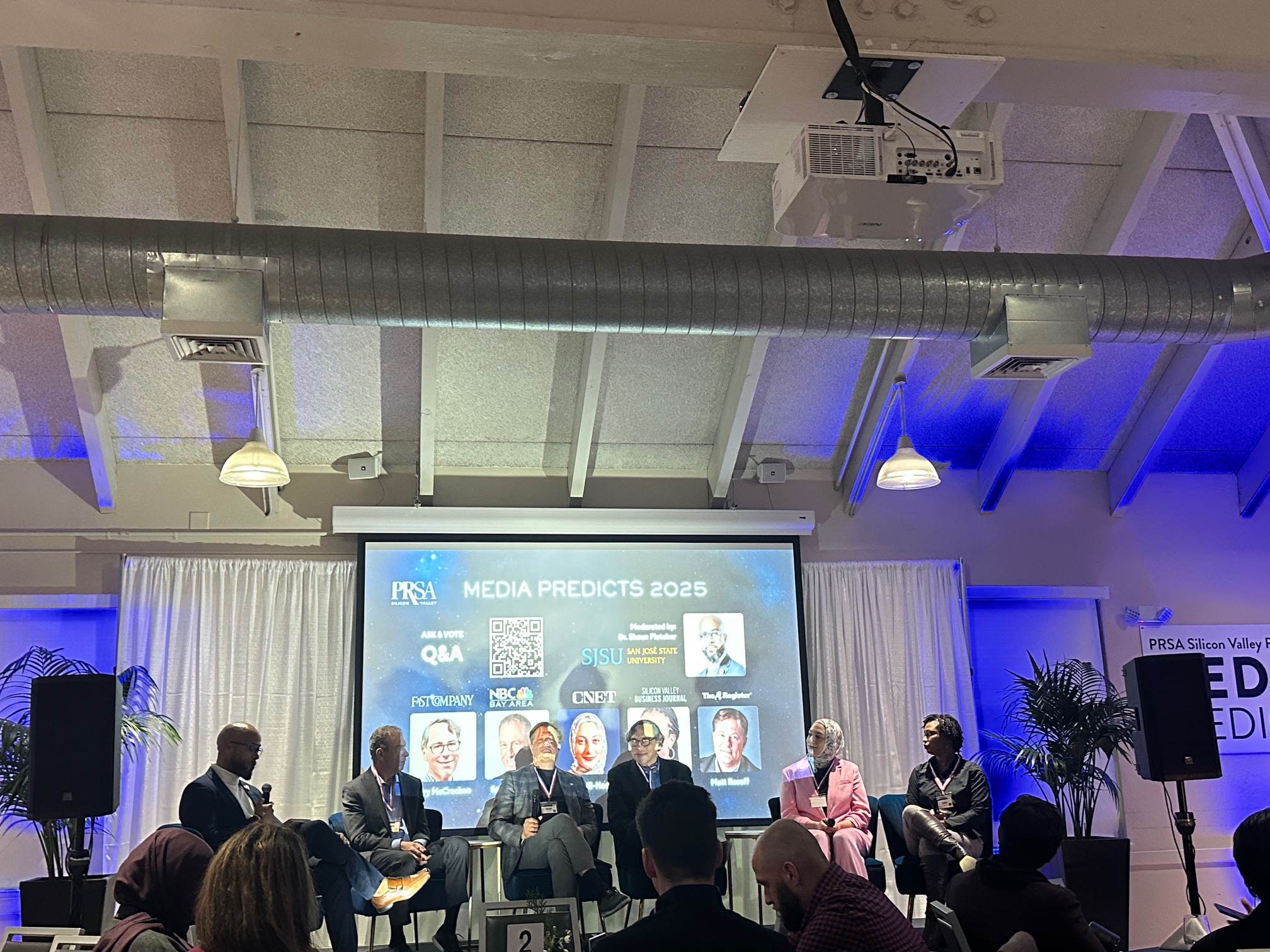
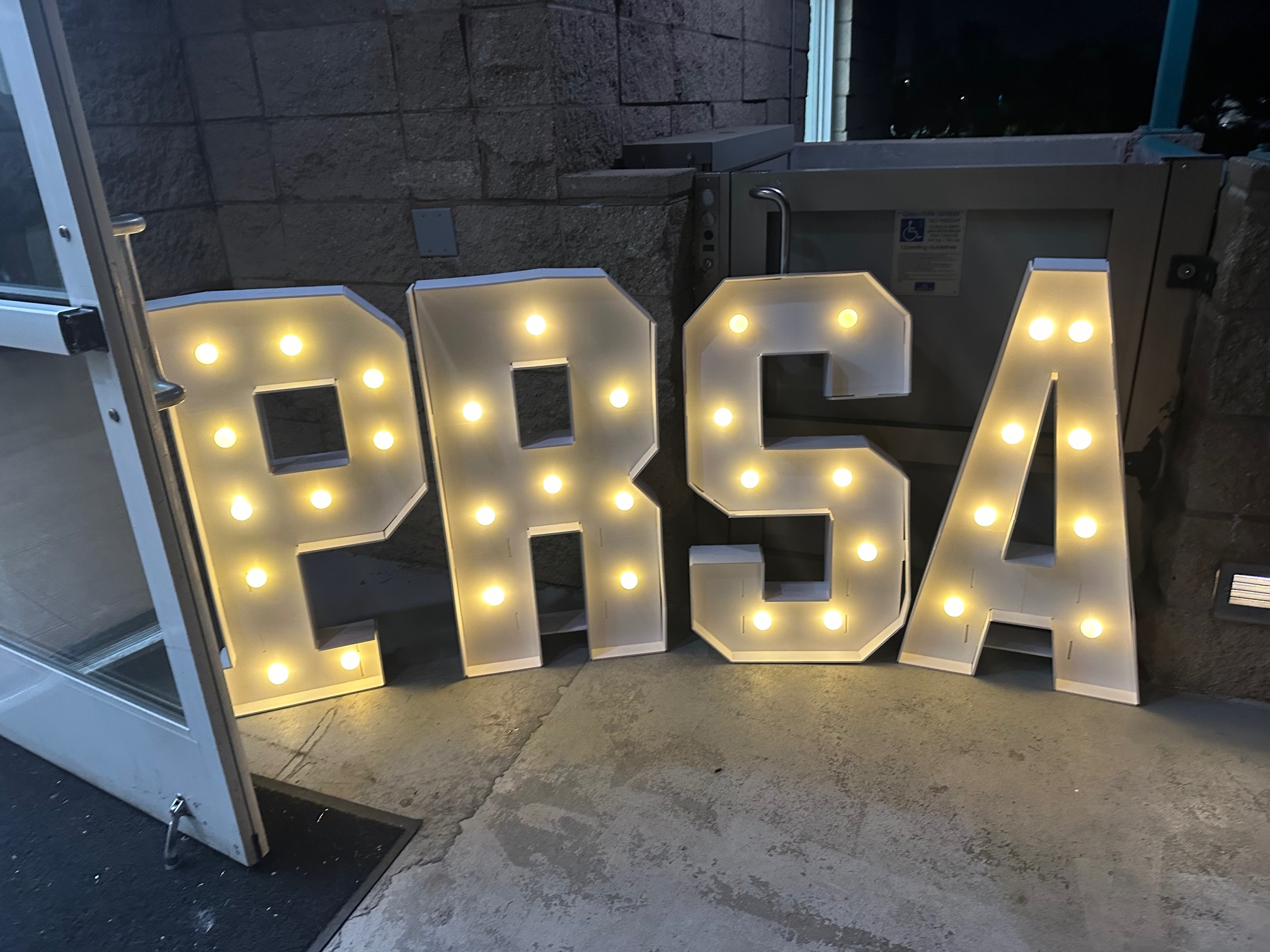
Save the date! PRSA Silicon Valley Media Predicts is Friday, December 4, 2026, from 6-9 PM at San Jose State University. This is from a reliable source Jeannie Entin. Stay tuned for updates directly from the executive team on that. My recommendation is to check the PRSA SV website November 1 for confirmation and details.
###
Michelle McIntyre is an award-winning PR consultant and IBM vet who lives and works in Saratoga, California. She’s the current PRSA SV editor-in-chief, an advisory role. McIntyre loves story telling, relationship-building and garnering big attention for startups and their VCs. She followed artificial general intelligence science and trends long before that activity was cool.
Her son is is a fourth-year PhD candidate at Duke researching stochastic dynamics and teaching Calc 2 to undergrads.
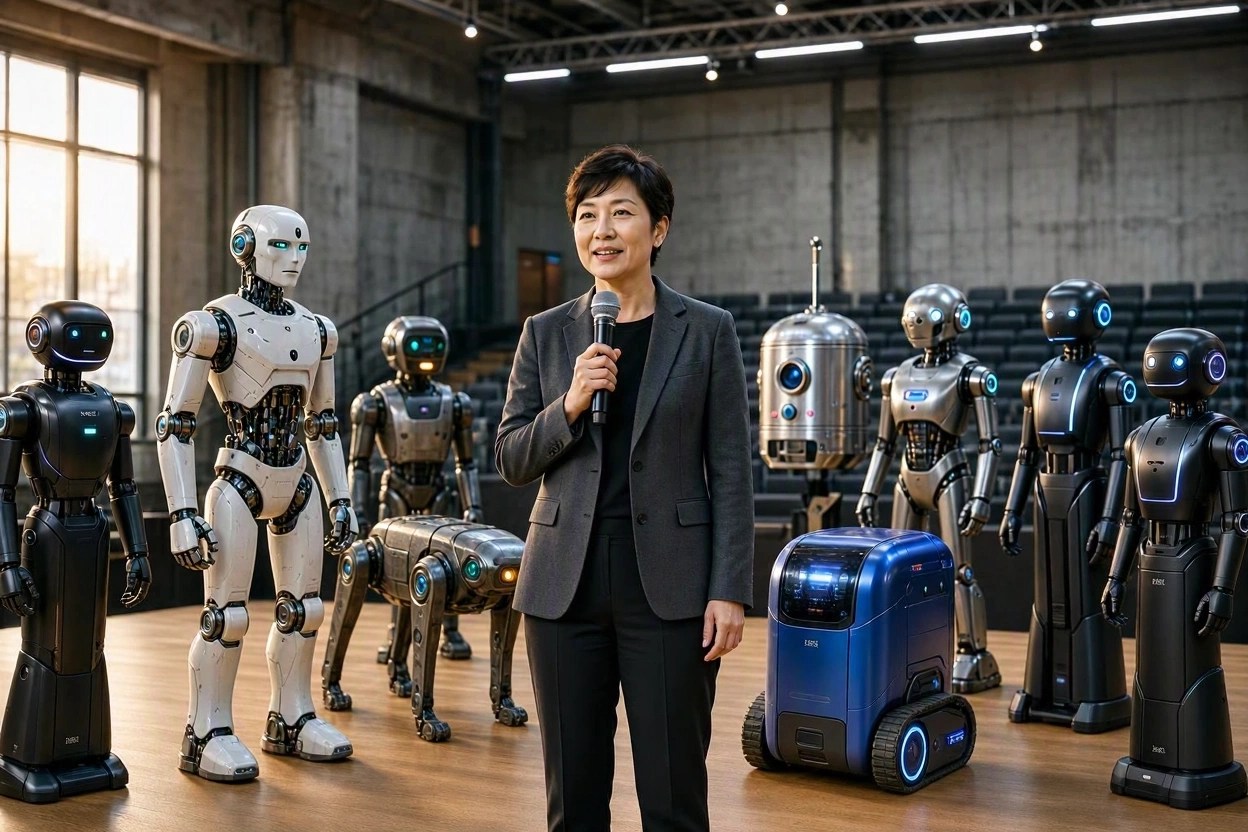
The artwork of woman with microphone surrounded by robots which represent AI tools is by Microsoft Bing AI.