7 Tips to Thrive in PR in 2027 & Save the Date! PRSA SV Media Predicts is Dec. 4th at SJSU

Cision reports that most journalists receive at least 50 pitches per week. Some receive hundreds daily. How can you stand out in an ocean of messages?

In this timely blog post, global PR professionals weigh-in on 2027 PR tactics and planning. Despite the massive popularity of AI tools for public relations, global PR professionals based in the Silicon Valley advise that humans need to stay in the center of it all for top results in 2027.
Here are seven tips to keep in mind when planning 2027 PR.

  1. Storytelling with human-centered angles will rule in 2027. Lou Hoffman, founder and chief executive, Hoffman Agency which grew revenue from 2025 to 2026 said in a September yesspress(dot)io blog story, “Stories trump messages.” He added that a good interview, “loses the varnish.” The best interviewees comfortably and naturally convey things that happen like they are talking to a friend. Fun fact. Lou founded his company the same year I met my husband on a bus going to Daytona Beach, Florida for Spring Break during our time at Ohio University! Hit me up for coffee and I’ll tell you more about it.
  2. Fact check all campaign research derived from AI. Jeannie Entin, founder and CEO of Injeannious Studio and PRSA Silicon Valley president advises, “Use AI early and often, but never skip the humanity check.” Popular AI tools used by PR professionals include Cision, Muck Rack, Meltwater, Prezly, Otter(dot)ai, ChatGPT, Gemini, and Anthropic Claude. Yes, use AI. I research a lot using some of these sources.
  3. Marketers in charge of the PR function at any size company need to hire a human PR pro. Several people ask for proposals. I always search for their name using AI and typically they don’t show up at first or it’s after I input further questions into the prompt. But they brag to me about how comfortable they are using AI for marketing. Well, how is that working for you? Name dropping Claude 10 times doesn’t mean you are a communications expert. You need a human PR pro in the mix.
  4. Press releases and newswires will still be relevant in 2027. Newswires will tout their AI that writes releases. In 2027, you must hire an experienced human to decide how to write the document so it contains real news. This particularly pertains to two entities collaborating. When you want to announce you are meeting with another company, it’s more of a verbal mention in a conversation. When you are partnering with that entity, that’s news, if it’s in a way that journalist care about. Note that partnerships with big entities usually mean you are part of a formal contractualized partnership that involves co-advertising. You can’t use the word “partner” in external relations documents too freely. I used to do PR for IBM developer relations and have to write, approve, edit or (gasp…) yes, reject –  hundreds of partner press releases.
  5. Do PR activities in person, at least four per year. And consider your budget, personalities and spokespersons. People are still burnt out on digital meetings from the Covid lockdown era. A report issued by NPU said that 82% of people prefer in person events and only 1% don’t! My super active PR executive friend Meghan Fintland, head of global PR, Rubrik, told me that she was traveling to India for her job. She goes to Europe and Las Vegas regularly. This makes sense.
  6. The classic personalized pitch-to-a-journalist will thrive in 2027. This is despite startups thinking they can use AI to target a lot of reporters with the same message through things like website and social media posts. Reporters typically want scoops, which are news reports that are first out. Often a human PR pro will DM the reporter a tip first. As an aside, WSJ reporter told me in a Stanford media relations class that that outlet does like day 2 stories just fine with more insight though. Not every message has to be a ‘scoop’ pitch.

In summary, keep the human PR professional at the center of your AI-infused marketing communications in 2027 for excellent results.

And in Other News, Save the Date!

Save the date! PRSA Silicon Valley Media Predicts is Friday, December 4, 2026, from 6-9 PM at San Jose State University. This is from a reliable source Jeannie Entin. Stay tuned for updates directly from the executive team on that. My recommendation is to check the PRSA SV website November 1 for confirmation and details.

###

Michelle McIntyre is an award-winning PR consultant and IBM vet who lives and works in Saratoga, California. She’s the current PRSA SV editor-in-chief, an advisory role. McIntyre loves story telling, relationship-building and garnering big attention for startups and their VCs. She followed artificial general intelligence science and trends long before that activity was cool.

Her son is is a fourth-year PhD candidate at Duke researching stochastic dynamics and teaching Calc 2 to undergrads.

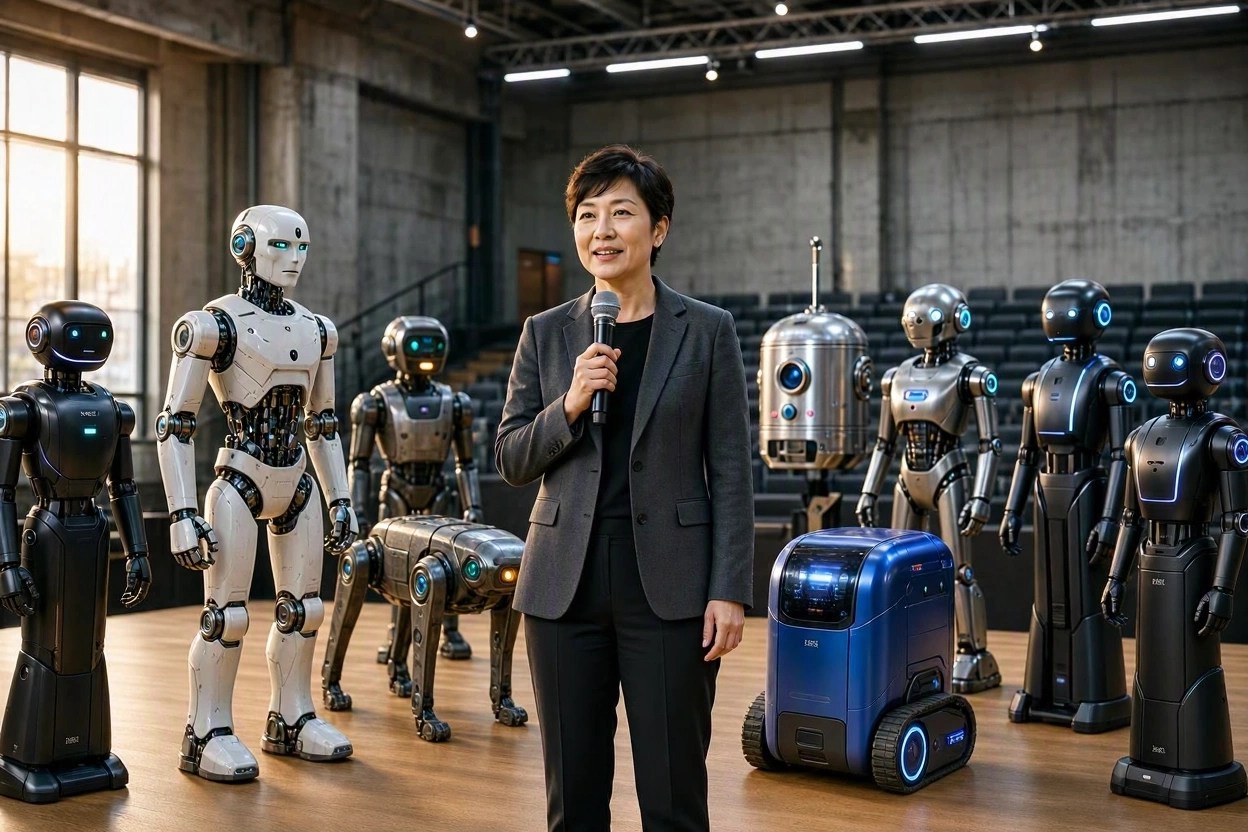
The artwork of woman with microphone surrounded by robots which represent AI tools is by Microsoft Bing AI.
13 Takeaways from Jensen Huang’s NVIDIA GTC Conference Keynote like AI has Gotten Smarter

NVIDIA, the first company to reach a $5 trillion valuation, is hosting a conference right now in San Jose, California. It’s called  NVIDIA’s GTC, and its founder and CEO Jensen Huang just gave the keynote at the Shark Tank. Huang said that 450 companies are exhibiting and NVIDIA is showcasing 129 robots.  This story outlines a few things he mentioned.

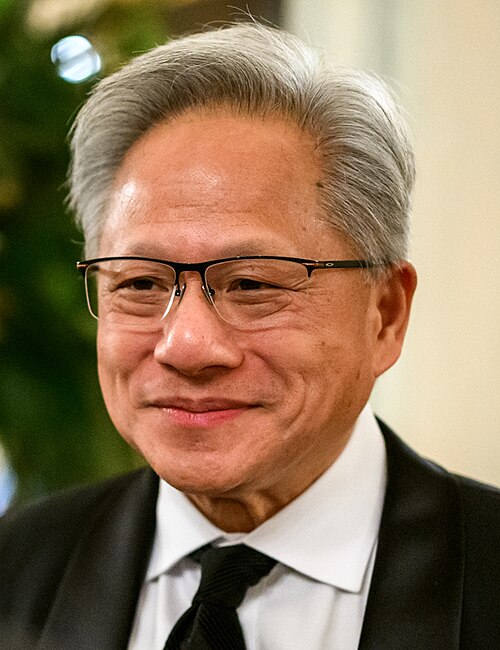
Jensen Huang Wikipedia photo by D. Torok.

I understood the trillions of dollars valuation after hearing from its founder that their customers and partners represent one third of all AI compute power globally. That’s a lot!

As an aside, he’s skilled at giving numbers that amaze the listener. He’s constantly saying things like, “a million times” or “a trillion dollars” or “10,000 fold.” Some of those items are referred to here. 

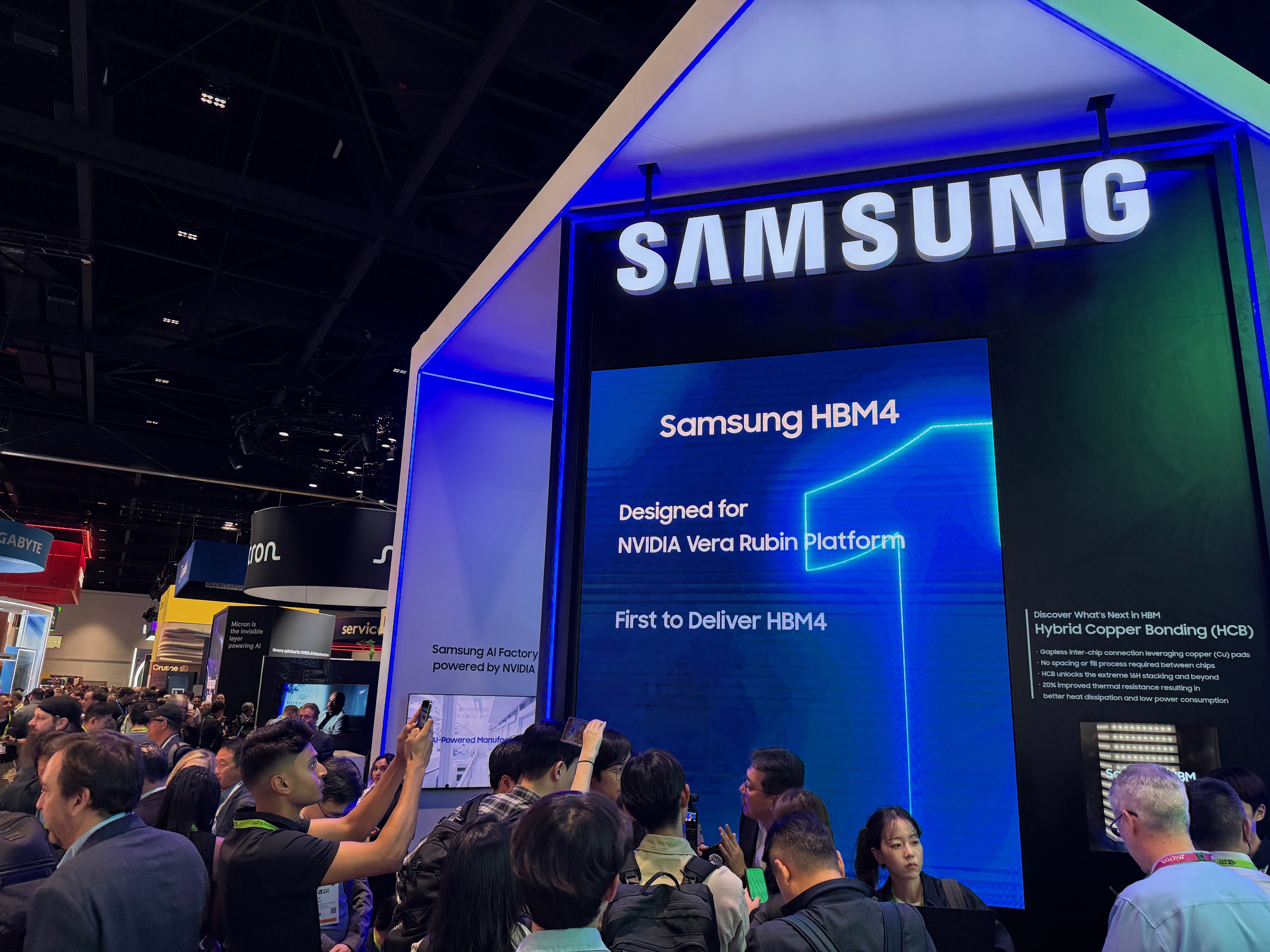
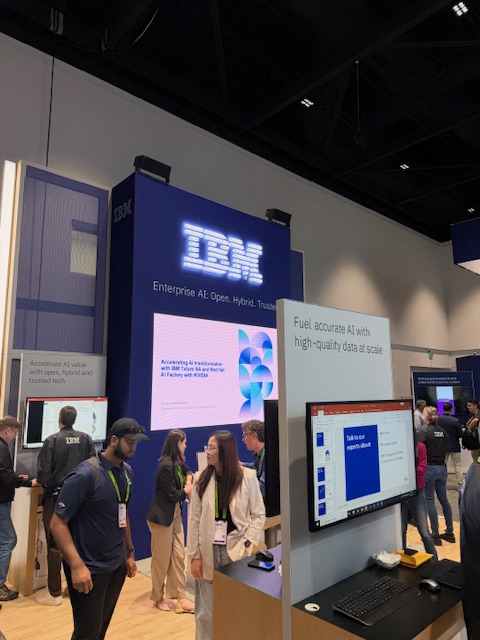
Here are 13 points from his talk as well as and IBM and Samsung booth photos.

  1. There’s an enormous need for more compute power and along with this, a stunning increase in the intelligence of AI. NVIDIA’s website says that when it comes to AI model training, the sheer magnitude of compute power required is staggering. NVIDIA tools keep all of this going. 
  1. The computing demand of work has gone up 10,000 times. I researched this statement further and it looks like that means since 2022 so over the past four years.
  1. It’s the 20th anniversary of NVIDIA Cuda. It’s been introduced into every single industry ecosystem. Later he clarified saying “almost every” industry. Cuda was announced on the back of GeForce, the greatest marketing campaign launched 25 years ago. They took Cuda to every computer system.
  1. Today NVIDIA announces the fusion of 3D graphics and AI. Huang mentioned IBM as a user of the new solution. Today IBM and NVIDIA are using NVIDIA Cuda for Watson X. Nestle is using the IBM tool.  
  1. Data is the ground truth that gives AI meaning. Tokens are the new commodity. Inference is your workload and tokens are your new commodity.
  1. Structured data is the foundation of trustworthy AI. Azure, Databricks, Google Cloud, others feed into this.
  1. ChatGPT represents the generative AI era. It has profoundly changed how computing is done. Huang said he used ChatGPT this morning. 
  1. Inference inflection was mentioned several times as a key message. Inference drives your revenues. The faster you can inference the more you can do. The better your inference, the smarter your AI. 
  1. NVIDIA is an algorithm company. They work with Google Cloud and AWS. He also name-dropped Oracle, Microsoft Azure, OpenAI, and Anthropic and OpenAI a few times. I counted three Anthropic mentions in hour one.
  2. NVIDIA the first vertically integrated but accelerated computing company. NVIDIA is horizontally open. 
  3. Industries he mentioned included autonomous vehicles, algorithmic trading which is going through a “deep learning moment,” AI biology for drug discovery, physical AI robotic systems. He mentioned quantum, media and gaming, among others.
  4. Robotics is a 50 trillion dollar industry. He’s said this before.
  5. The inflection point of inference has arrived. Every time it computes it has to reason. 

If you work in tech or want to, I recommend you listen to his whole keynote. It’s very technical and contains a lot of new product news. 

My key takeaway is that the founder of NVIDIA has a lot of trust in AI right now and it’s fueling the need for more compute power. His company is at the forefront of supplying the tools to try to satiate this hunger. Although Huang spoke about industry trends it was mostly an NVIDIA advertisement for new and newish products. This is fine because I believe that’s what attendees wanted to hear. 

###

Michelle McIntyre is a Silicon Valley-based tech public relations consultant known for her expertise in AI and robotics. She’s an IBM vet and a ranked future of work influencer with 3.5 million Quora views for her advice on elite college admissions. DM her on LinkedIn or Facebook to get in touch. IBM and Samsung booth photos were taken by David McIntyre.

Journalists Caution When Using GenAI to Write, Beware of Dullness

By Michelle McIntyre

A panel of business journalists gathered at Microsoft in Mountain View, Calif., last night as part of a San Francisco Press Club event to discuss how generative AI has affected their jobs.

One participant, Michael Nuñez of VentureBeat made bold predictions. He’s an advocate of using GenAI regularly at work. The other participants seemed to have more of a ‘proceed with caution’ attitude.

Nuñez predicted that Generative AI will be bigger than Google. 

He went even bolder saying that GenAI is as big as the smartphone.

On top of that he quipped, “In one year AI will have touched every aspect of the journalism process.” Yes, he used the word, “every.” 

Nuñez went into detail about how he uses AI as sort of a smart intern to do some research and writing to save him and his team time. He and the others agreed that it’s important to edit and fact check all AI work. 

They also agreed that prose could be biased.

Although most of their newsroom teams were using generative artificial intelligence (AI) in some way and already had guidelines for its use, none thought that AI would replace them in their jobs in the next five years.

In addition to Nuñez, the journalist panelists were Mr. Boone Ashworth of WIRED, Krystal Hu of Reuters, Julie Jammot of Agence Free Press, Mr. Chris Matyszczyk contributor to CNET and ZDNet, Ben Pimentel of San Francisco Examiner, and Jon Swartz of Marketwatch. Rachel Metz, now with Bloomberg, moderated.

100 Million Downloads in Two Months

It was nice to walk into the event with the Reuters group, by chance, since we arrived at the same time. What a beautiful campus by the way. I was happy to get to know Krystal Hu a bit since I had been frequently quoting data from her GenAI story several times recently in business conversations.

Hu had written that ChatGPT, the most popular flavor of GenAI, had the fastest growing user base of any consumer app. It achieved 100 million downloads in two months. This is faster than both Netflix and TikTok. 

Have a ‘Wild West’ mentality when using GenAI

Panelists advised the audience to keep in mind that AI could produce misinformation, and it is helpful to have an AI-use company guidelines.

Jon Swartz said you have to deal with GenAI with a ‘Wild West’ mentality because it’s something new. 

He added that he likes talking to other humans in the newsroom to brainstorm clever phrases. He said, AI can’t do this. 

AI Needs to Lighten Up

My thoughts mirror Swartz’s. We’re in Wild West territory. I  asked Bing chat to write me a biography and it was good but not special. It referenced five sources, but it didn’t have that special pizazz or flare. 

Like I might write, “Michelle likes tossing tennis balls to her big dog, Ringo.” If Bing were clever and funny, it would have added that to my bio. However, I was impressed that Bing spelled out the word “veteran.” It said, “McIntyre is an IBM veteran.” That’s more proper than “vet.” I always write, “vet.” 

Why Delegate Something that’s Fun to Do?

AFP’s Julie Jammot said that she’d never want AI to replace the main writing that she does, calling that task fun. She said that the problem with AI writing is that the language is too uniform. 

Got Misinformation?

Columnist Chris Matyszczyk offered clever quips summarizing his attitude which was that AI is sort of badly useful. He mentioned misinformation a few times, and others readily agreed with his points. 

Boone Ashworth said that WIRED did a good job at laying out their use of AI guidelines. Most of the others on the panel said their newsrooms have guidelines as well.  Ashworth seemed the most chill about using AI. For example, he said, it can be useful if you need to ask AI for a recipe of what dish to make as a meal.

Attribute or Don’t Attribute? That is the Question.

There was disagreement about whether or not a story needs to have AI attribution. That means putting, “Written by AI.” Most said it’s essential that AI be mentioned in attribution for many reasons. Nunez disagreed saying, it is just a tool. You wouldn’t note that Adobe Photoshop was used to make an image.

Krystal Hu from Reuters smartly brought up the infamous “stop progress letter.” She said, “The smartest minds are ringing the alarm on AI.” Ben Pimentel added that a pause in advancement is not practical, but it is good that the letter generated conversation.

The president of San Francisco Press Club, Curtis Sparrer of Bospar, introduced the panelists and Microsoft executives served as gracious hosts with warm welcomes, intelligent remarks and a nice food and beverage spread. 

###

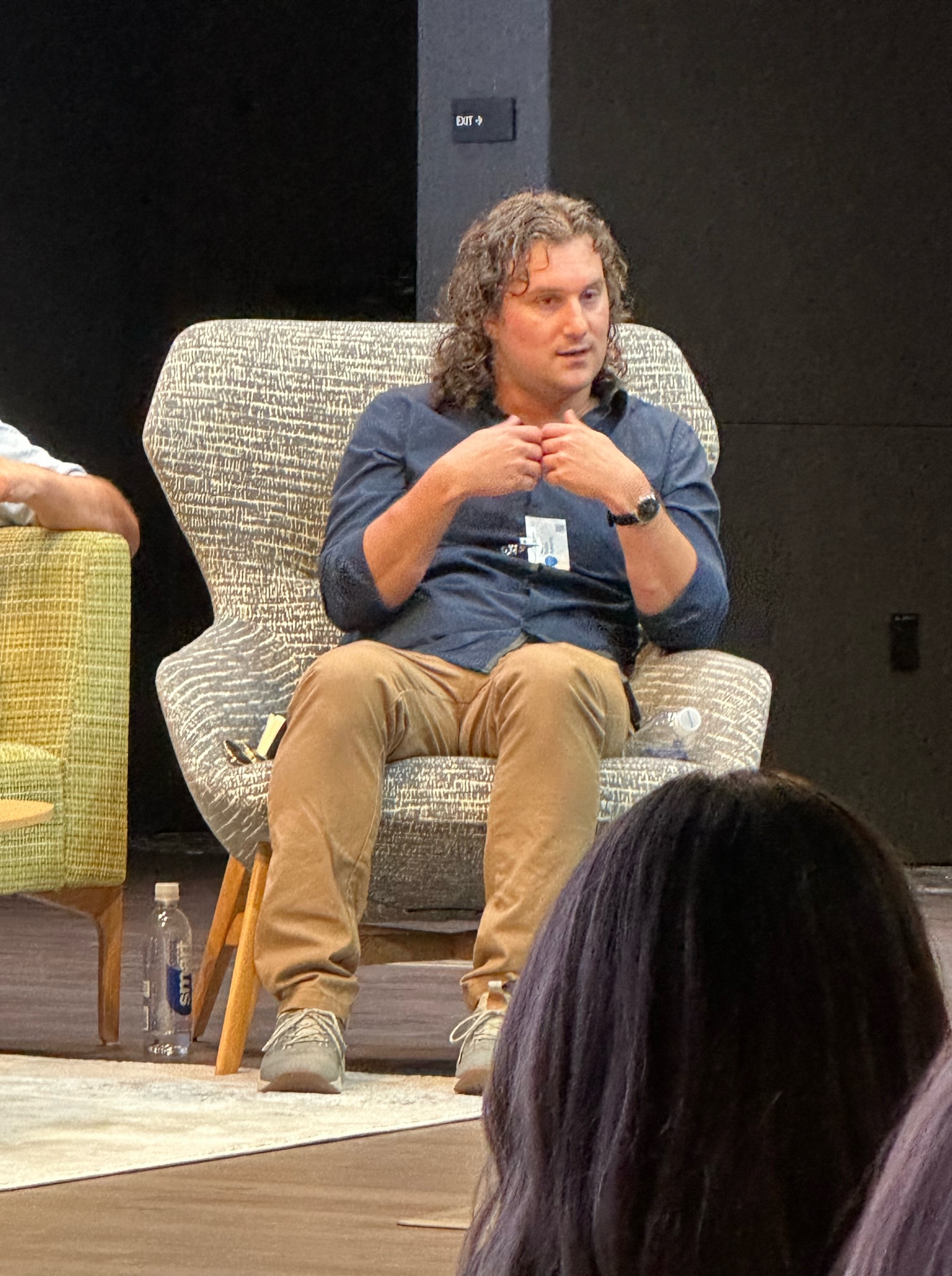
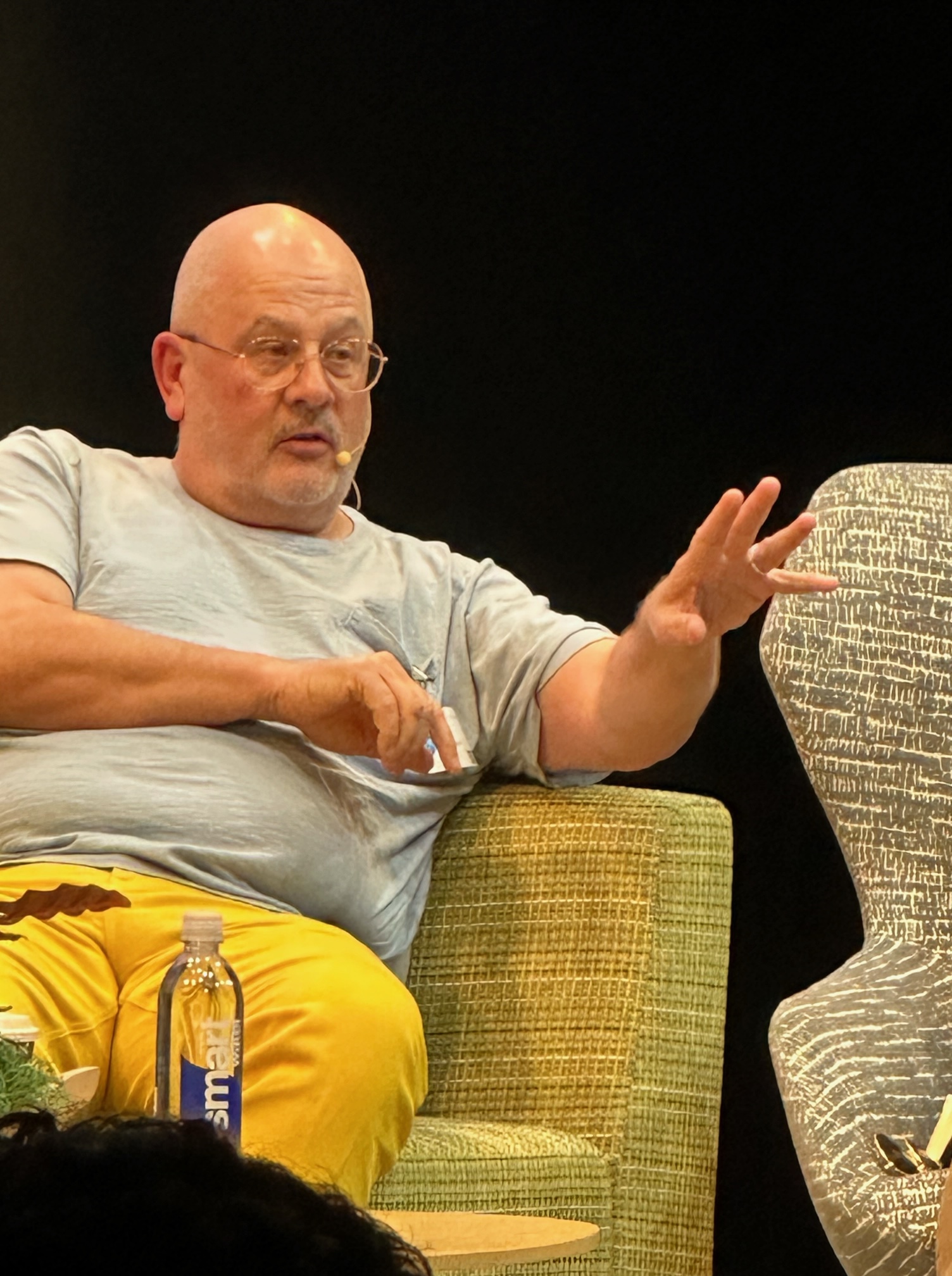
Michelle McIntyre is a Silicon Valley public relations consultant, IBM veteran, and head of editorial content for PRSA SV. She’s a ranked future of work influencer who likes to play fetch with her big dog Ringo. Photo descriptions: 1) Entire panel with ‘AI’ on the screen in the back. Credit: San Francisco Press Club 2) Curtis of Bospar with a microphone 3) Jon of Marketwatch and Julie of AFP, the side of Rachel’s face 4) Boone of WIRED with the navy shirt 5) Chris with a gray t-shirt 6) Ben of SF Examiner with the green shirt
Photos 2-6 were taken by Michelle McIntyre with her new iPhone 14 Pro. Watch the entire panel discussion by visiting this link.