7 Tips to Thrive in PR in 2027 & Save the Date! PRSA SV Media Predicts is Dec. 4th at SJSU

Cision reports that most journalists receive at least 50 pitches per week. Some receive hundreds daily. How can you stand out in an ocean of messages?

In this timely blog post, global PR professionals weigh-in on 2027 PR tactics and planning. Despite the massive popularity of AI tools for public relations, global PR professionals based in the Silicon Valley advise that humans need to stay in the center of it all for top results in 2027.
Here are seven tips to keep in mind when planning 2027 PR.

  1. Storytelling with human-centered angles will rule in 2027. Lou Hoffman, founder and chief executive, Hoffman Agency which grew revenue from 2025 to 2026 said in a September yesspress(dot)io blog story, “Stories trump messages.” He added that a good interview, “loses the varnish.” The best interviewees comfortably and naturally convey things that happen like they are talking to a friend. Fun fact. Lou founded his company the same year I met my husband on a bus going to Daytona Beach, Florida for Spring Break during our time at Ohio University! Hit me up for coffee and I’ll tell you more about it.
  2. Fact check all campaign research derived from AI. Jeannie Entin, founder and CEO of Injeannious Studio and PRSA Silicon Valley president advises, “Use AI early and often, but never skip the humanity check.” Popular AI tools used by PR professionals include Cision, Muck Rack, Meltwater, Prezly, Otter(dot)ai, ChatGPT, Gemini, and Anthropic Claude. Yes, use AI. I research a lot using some of these sources.
  3. Marketers in charge of the PR function at any size company need to hire a human PR pro. Several people ask for proposals. I always search for their name using AI and typically they don’t show up at first or it’s after I input further questions into the prompt. But they brag to me about how comfortable they are using AI for marketing. Well, how is that working for you? Name dropping Claude 10 times doesn’t mean you are a communications expert. You need a human PR pro in the mix.
  4. Press releases and newswires will still be relevant in 2027. Newswires will tout their AI that writes releases. In 2027, you must hire an experienced human to decide how to write the document so it contains real news. This particularly pertains to two entities collaborating. When you want to announce you are meeting with another company, it’s more of a verbal mention in a conversation. When you are partnering with that entity, that’s news, if it’s in a way that journalist care about. Note that partnerships with big entities usually mean you are part of a formal contractualized partnership that involves co-advertising. You can’t use the word “partner” in external relations documents too freely. I used to do PR for IBM developer relations and have to write, approve, edit or (gasp…) yes, reject –  hundreds of partner press releases.
  5. Do PR activities in person, at least four per year. And consider your budget, personalities and spokespersons. People are still burnt out on digital meetings from the Covid lockdown era. A report issued by NPU said that 82% of people prefer in person events and only 1% don’t! My super active PR executive friend Meghan Fintland, head of global PR, Rubrik, told me that she was traveling to India for her job. She goes to Europe and Las Vegas regularly. This makes sense.
  6. The classic personalized pitch-to-a-journalist will thrive in 2027. This is despite startups thinking they can use AI to target a lot of reporters with the same message through things like website and social media posts. Reporters typically want scoops, which are news reports that are first out. Often a human PR pro will DM the reporter a tip first. As an aside, WSJ reporter told me in a Stanford media relations class that that outlet does like day 2 stories just fine with more insight though. Not every message has to be a ‘scoop’ pitch.

In summary, keep the human PR professional at the center of your AI-infused marketing communications in 2027 for excellent results.

And in Other News, Save the Date!

Save the date! PRSA Silicon Valley Media Predicts is Friday, December 4, 2026, from 6-9 PM at San Jose State University. This is from a reliable source Jeannie Entin. Stay tuned for updates directly from the executive team on that. My recommendation is to check the PRSA SV website November 1 for confirmation and details.

###

Michelle McIntyre is an award-winning PR consultant and IBM vet who lives and works in Saratoga, California. She’s the current PRSA SV editor-in-chief, an advisory role. McIntyre loves story telling, relationship-building and garnering big attention for startups and their VCs. She followed artificial general intelligence science and trends long before that activity was cool.

Her son is is a fourth-year PhD candidate at Duke researching stochastic dynamics and teaching Calc 2 to undergrads.

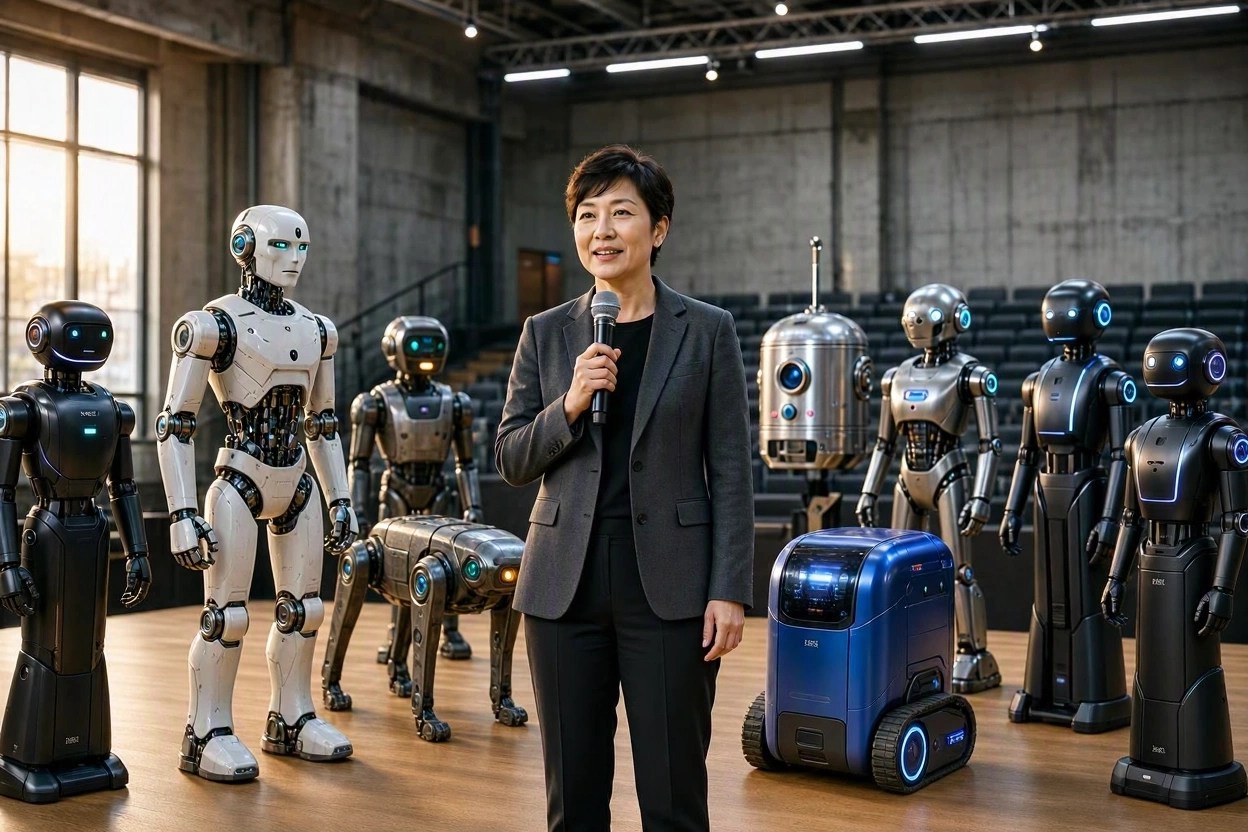
The artwork of woman with microphone surrounded by robots which represent AI tools is by Microsoft Bing AI.
13 Takeaways from Jensen Huang’s NVIDIA GTC Conference Keynote like AI has Gotten Smarter

NVIDIA, the first company to reach a $5 trillion valuation, is hosting a conference right now in San Jose, California. It’s called  NVIDIA’s GTC, and its founder and CEO Jensen Huang just gave the keynote at the Shark Tank. Huang said that 450 companies are exhibiting and NVIDIA is showcasing 129 robots.  This story outlines a few things he mentioned.

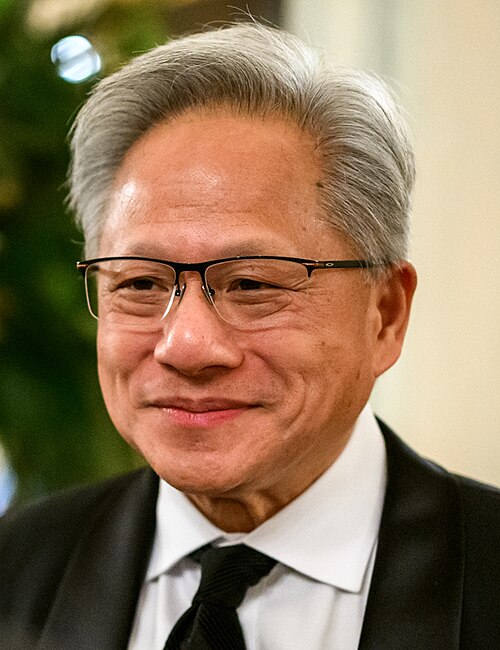
Jensen Huang Wikipedia photo by D. Torok.

I understood the trillions of dollars valuation after hearing from its founder that their customers and partners represent one third of all AI compute power globally. That’s a lot!

As an aside, he’s skilled at giving numbers that amaze the listener. He’s constantly saying things like, “a million times” or “a trillion dollars” or “10,000 fold.” Some of those items are referred to here. 

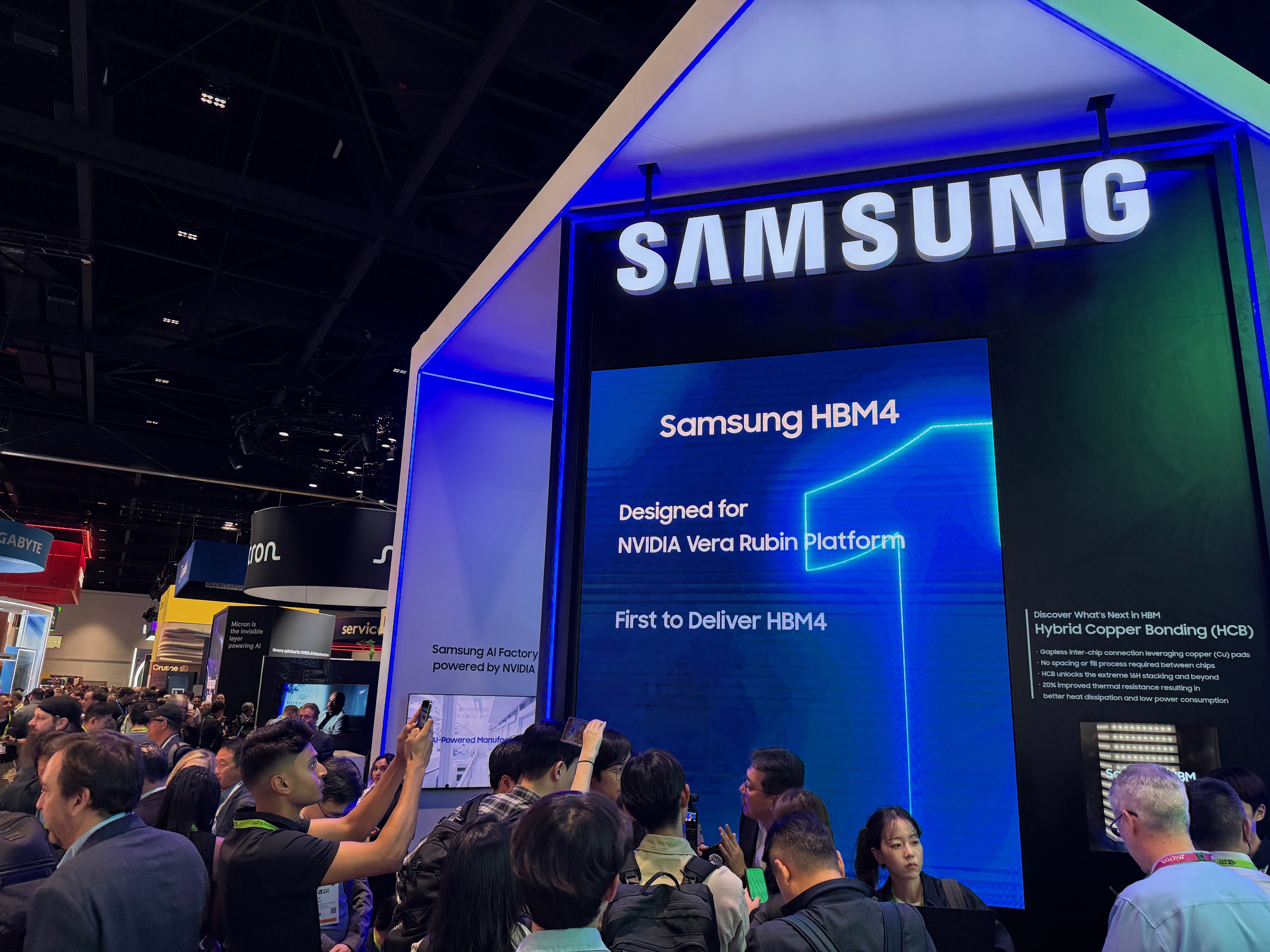
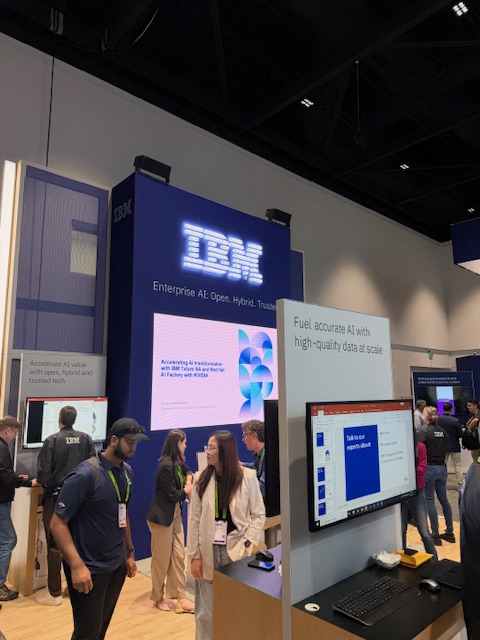
Here are 13 points from his talk as well as and IBM and Samsung booth photos.

  1. There’s an enormous need for more compute power and along with this, a stunning increase in the intelligence of AI. NVIDIA’s website says that when it comes to AI model training, the sheer magnitude of compute power required is staggering. NVIDIA tools keep all of this going. 
  1. The computing demand of work has gone up 10,000 times. I researched this statement further and it looks like that means since 2022 so over the past four years.
  1. It’s the 20th anniversary of NVIDIA Cuda. It’s been introduced into every single industry ecosystem. Later he clarified saying “almost every” industry. Cuda was announced on the back of GeForce, the greatest marketing campaign launched 25 years ago. They took Cuda to every computer system.
  1. Today NVIDIA announces the fusion of 3D graphics and AI. Huang mentioned IBM as a user of the new solution. Today IBM and NVIDIA are using NVIDIA Cuda for Watson X. Nestle is using the IBM tool.  
  1. Data is the ground truth that gives AI meaning. Tokens are the new commodity. Inference is your workload and tokens are your new commodity.
  1. Structured data is the foundation of trustworthy AI. Azure, Databricks, Google Cloud, others feed into this.
  1. ChatGPT represents the generative AI era. It has profoundly changed how computing is done. Huang said he used ChatGPT this morning. 
  1. Inference inflection was mentioned several times as a key message. Inference drives your revenues. The faster you can inference the more you can do. The better your inference, the smarter your AI. 
  1. NVIDIA is an algorithm company. They work with Google Cloud and AWS. He also name-dropped Oracle, Microsoft Azure, OpenAI, and Anthropic and OpenAI a few times. I counted three Anthropic mentions in hour one.
  2. NVIDIA the first vertically integrated but accelerated computing company. NVIDIA is horizontally open. 
  3. Industries he mentioned included autonomous vehicles, algorithmic trading which is going through a “deep learning moment,” AI biology for drug discovery, physical AI robotic systems. He mentioned quantum, media and gaming, among others.
  4. Robotics is a 50 trillion dollar industry. He’s said this before.
  5. The inflection point of inference has arrived. Every time it computes it has to reason. 

If you work in tech or want to, I recommend you listen to his whole keynote. It’s very technical and contains a lot of new product news. 

My key takeaway is that the founder of NVIDIA has a lot of trust in AI right now and it’s fueling the need for more compute power. His company is at the forefront of supplying the tools to try to satiate this hunger. Although Huang spoke about industry trends it was mostly an NVIDIA advertisement for new and newish products. This is fine because I believe that’s what attendees wanted to hear. 

###

Michelle McIntyre is a Silicon Valley-based tech public relations consultant known for her expertise in AI and robotics. She’s an IBM vet and a ranked future of work influencer with 3.5 million Quora views for her advice on elite college admissions. DM her on LinkedIn or Facebook to get in touch. IBM and Samsung booth photos were taken by David McIntyre.

To Succeed in AI, Know and Use These 10 Terms Including “Token” and “Inference”

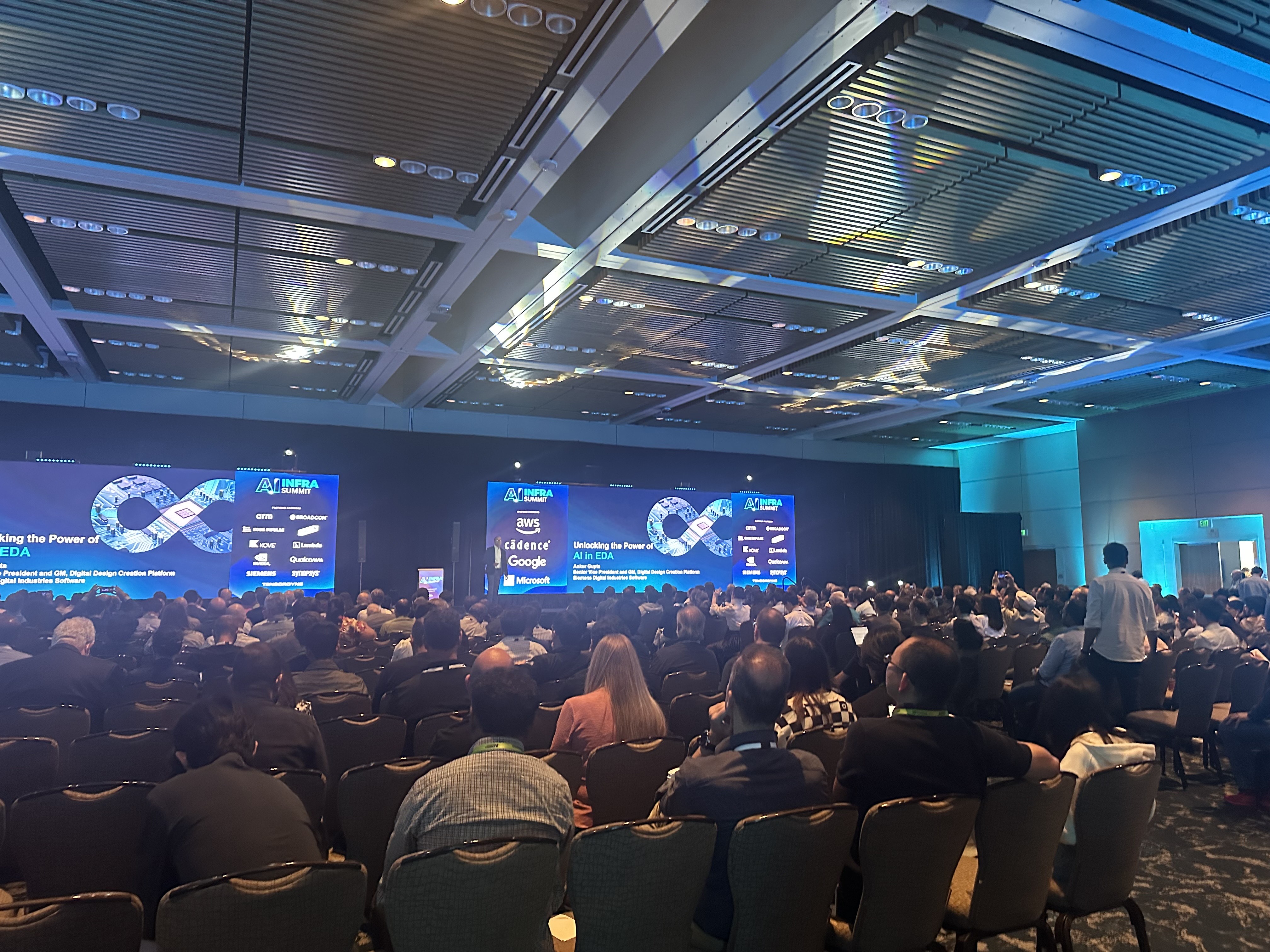
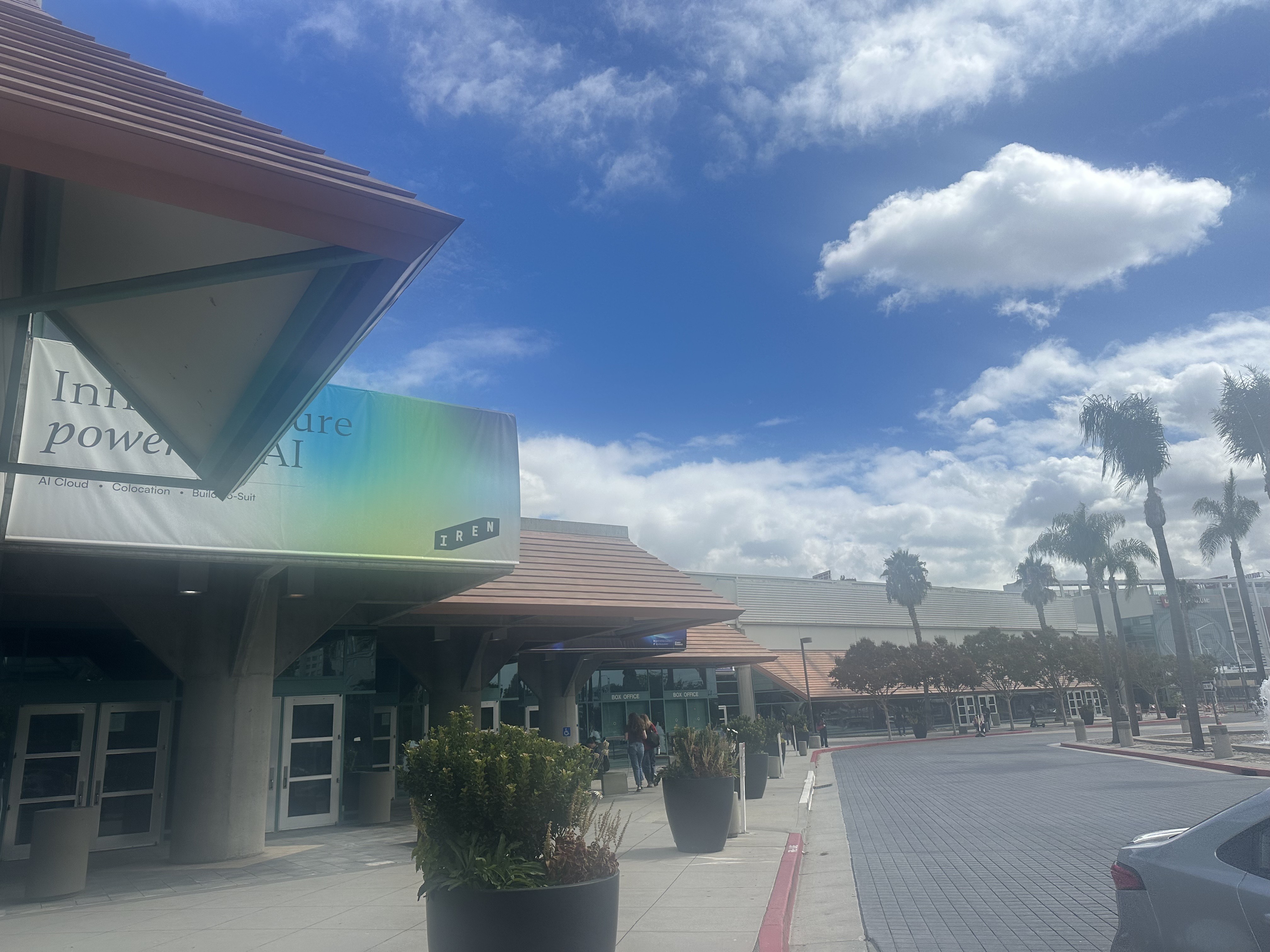
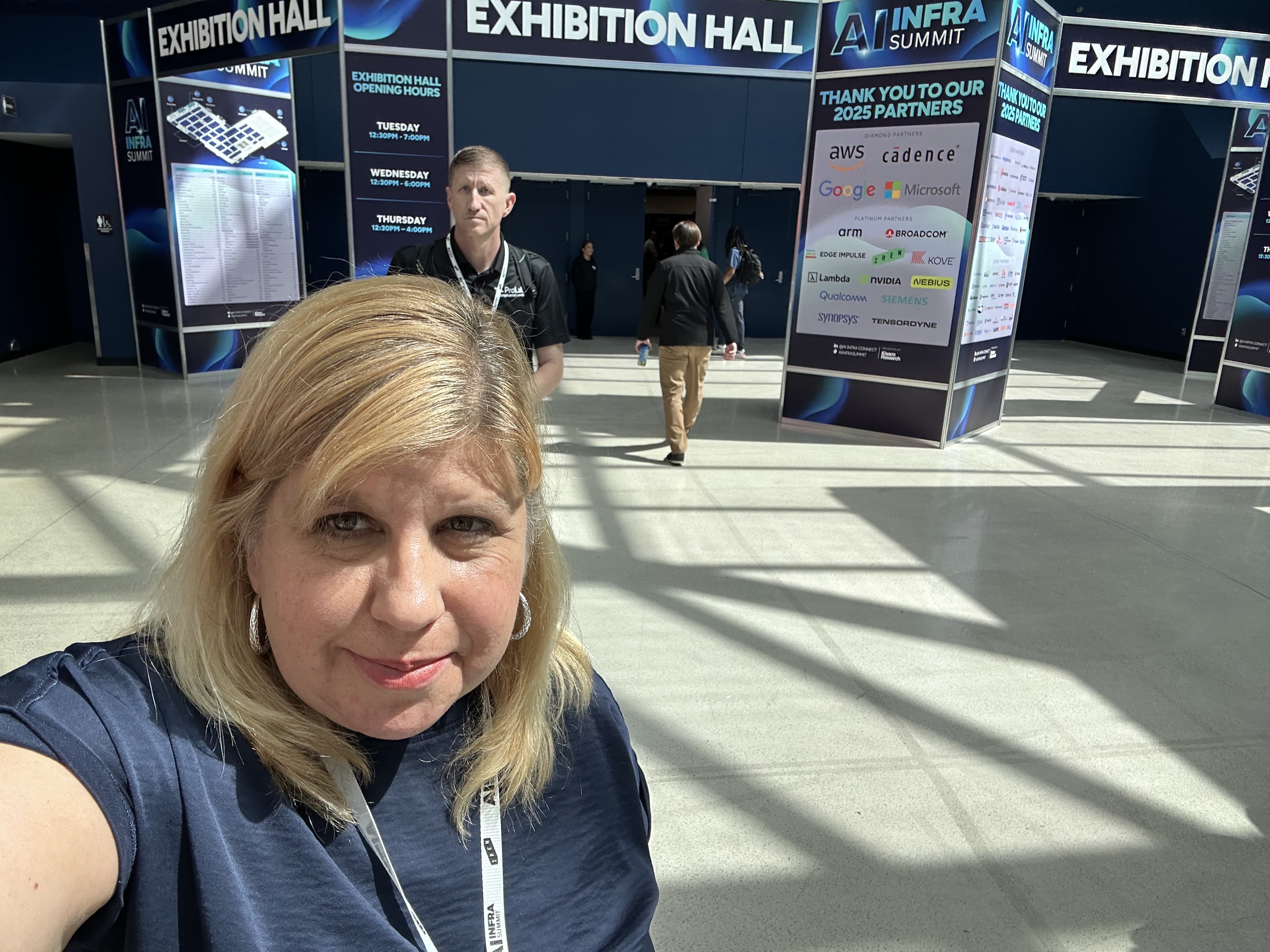
Today I attended day one of the AI Infra Summit at the Santa Clara Convention Center. Around 4,000 registered which is up from 1,500 last year. By the way, infra stands for infrastructure. Speakers addressed what you need for AI. 

 I noticed a trend. Speakers used a few AI-related terms over and over like “inference” and “token.” They liked to say, “AI factories” instead of or more than just “data centers.” The term math or AI math was tossed around a lot. Tensordyne booth had a digital sign that went so far as to say, “AI is math.” 

I decided to blog about the AI terms used by speakers that got my attention at AI Infra. 

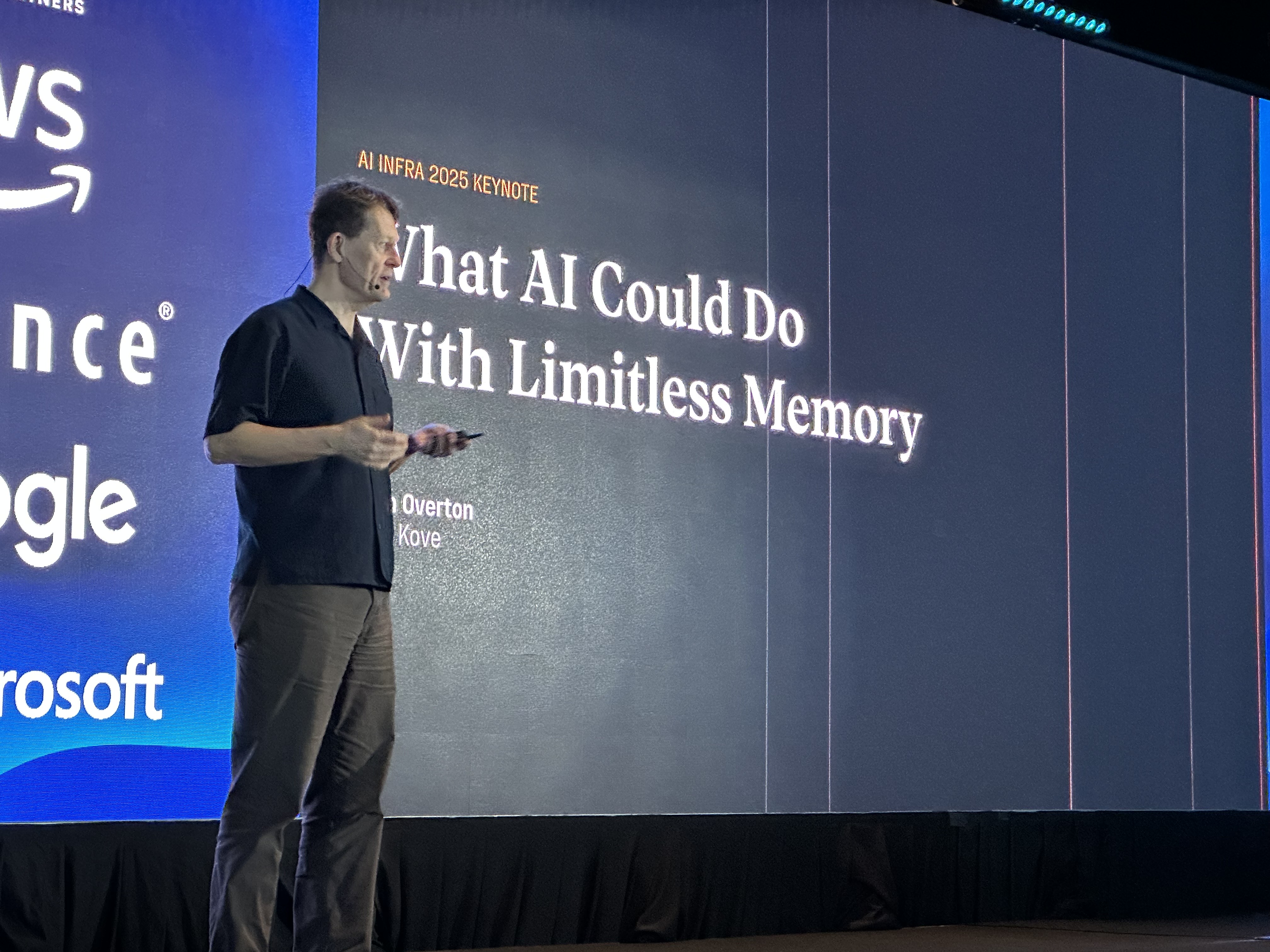
I sat through the press conference (photo below) featuring five companies, including two very young startups, as well as mainstage key notes by Meta, NVIDIA, AWS, Kove (unique software-based memory) and Siemens.

Thank you Royal Huang, PhD and CTO of SuperTech FT – a 5013c that teaches young people a practicum of physical AI and robotics – for checking my list of terms and commenting. Full disclosure is that SuperTech FT sponsored my conference attendance. Huang is an AI consultant who has worked in automobile robotics, health tech, edtech and more. (Royal is pictured below under the tiger in the AI Infra exhibit hall.)

Here’s my list of Top 10 AI Infra conference terms:

  1. INFERENCE: I heard this dozens of times and on many slides from the start of the press conference at 8:15 am right through to the last mainstage keynote speaker hours later. AI inference is the process of using a trained artificial intelligence model to generate predictions, insights or outputs from new, unseen data. Dr. John Overton, Kove’s CEO and a PhD, showed a slide that said, “Unlocking AI inference.” Kove innovates by making unique software-based memory.
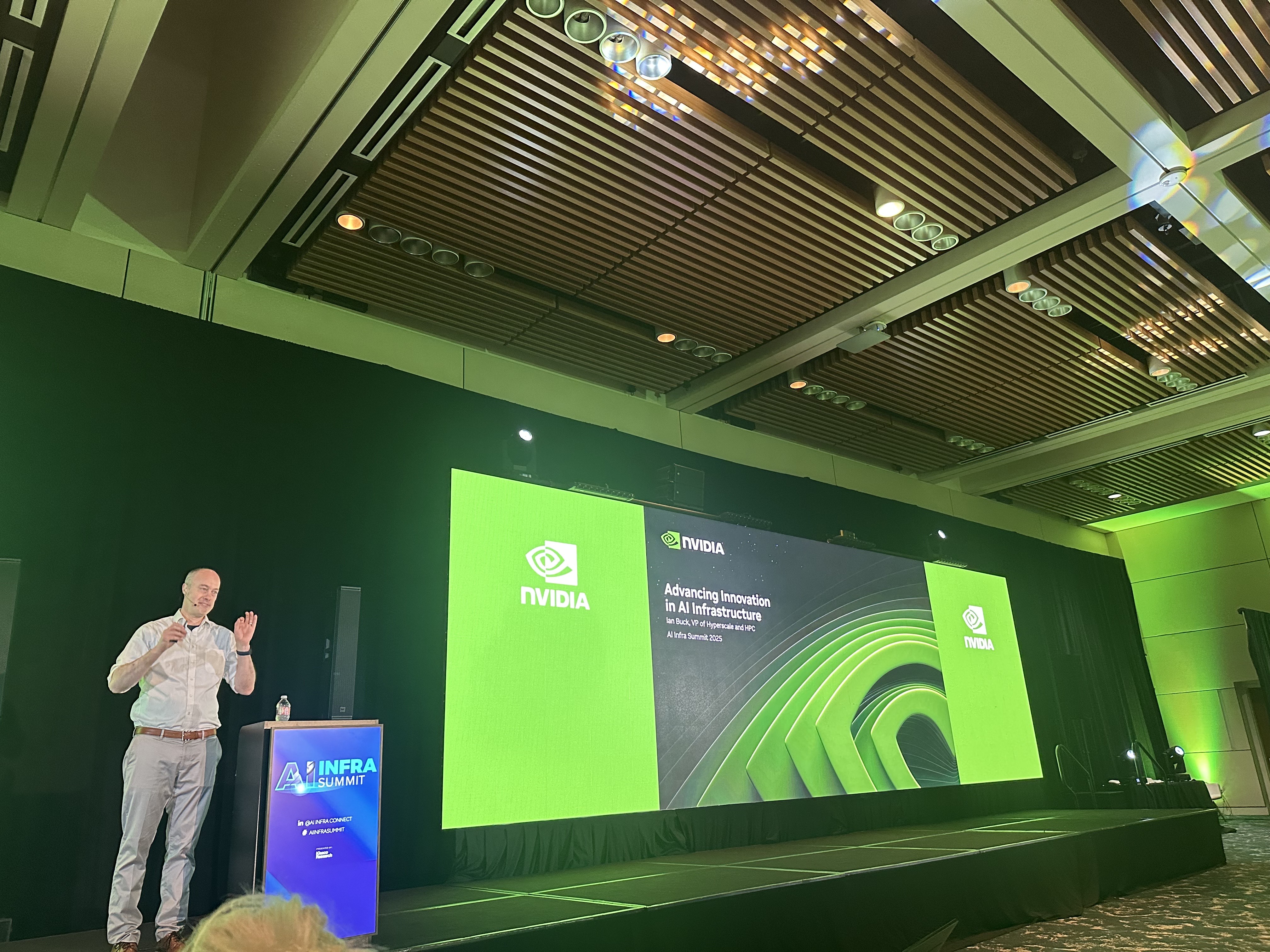
  2. TOKENS: NVIDIA’s website says, “Tokens are tiny units of data that come from breaking down bigger chunks of information.” It adds, “The language and currency of AI tokens are units of data processed by AI models during training and inference, enabling prediction generation and reasoning.” Speaking of tokens, NVIDIA’s VP of Hyperscale, Ian Buck, PhD, announced a new GPU today, called Rubin CPX. It will be online by the end of 2026 and it will be able to handle “one million tokens” which apparently is a big deal. It reminds me of that Austin Power movie line, “1 million dollars.”

3. AI FACTORIES: Speakers said “AI factories” much more than data centers on their slides. Not new news but still interesting are Meta’s plans to build a ginormous data center that can handle very advanced AI. Today, one gigawatt which can power all of San Francisco is considered big. Yee Jiun Song, VP of Engineering, Meta, and also a PhD, mentioned in the mainstage keynote one that a five-gigawatt data center is planned! This will be called Hyperion and be the size of Manhattan. 

Royal Huang commented on this topic, “Think of it this way. The data center is the soil and AI is the crop.” 

These next three are more commonly used by business people:

4. LLMs: A lot of speakers talked about training large language models or LLMs. 

5. AI Math: Today’s speakers said “math” several times. AI performs calculations. AI enables calculations. AI can save or cost a lot of money. There is a lot of math involved apparently. Recall that Tensordyne’s booth had a digital sign that said, “AI is math.”

I asked a person sitting next to me at lunch, Asif Batada, Sr. Product Marketing Manager of Alphawave Semi, if he thought math was important and used often in AI. He said, “Yes, math is like water,” and then switched the word to, “oil.” He elaborated, “Math is like oil; smart people are working on optimally using oil.” Interesting analogy.

6. GPUs and CPUs:  A GPU is defined as a specialized electronic circuit designed to rapidly process and render images, videos and animations as well as do scientific computing, AI and machine learning. NVIDIA Rubin CPX (a future product) is a GPU. Fun fact: NeuReality’s CEO said during the press conference that you don’t want to cram too many GPUs together because that could cause performance to suffer. I guess there’s an assumption that more GPUs are better. He says, not necessarily. And a CPU is a semiconductor chip that acts as the brain of a computer. 

These last words or terms are a bit overused but still valid:

7. OPEN SOURCE: Several mentioned that their product worked with many other brands of technology. Open computing is still a big deal. 

8. SCALE: AI Consultant Huang advised that, “Everyone says they scale. But scaling is the toughest thing to do.” I’m not a huge fan of this term for this reason. Almost everyone in tech claims they “scale.” It’s better to give the proof as opposed to just stating the claim. 

9. SAVING ENERGY and driving efficiency: Everyone mentioned this. A lot. Huang commented, “When you build a data center everyone is after being energy efficient.”

10. NVIDIA, the only proper noun on the list. And as a bonus number 10, Anthropic. Many companies said that their product is used by NVIDIA or they have been working with them. The AWS speaker name dropped working with both NVIDIA and Anthropic.

Royal Huang commented that he thought AI agents, agentic AI or multi-agents should have been included in my top 10. However, I didn’t hear many speakers mention them today. I do recall AWS mentioning it. Huang added that edge AI was also important. He had planned to see many agentic AI talks at the AI Infra conference which goes through September 11th. 

###

Michelle McIntyre is a Silicon Valley-based PR consultant and IBM vet. As a social media influencer and blogger, she’s sometimes invited to press conferences. She is attending AI Infra on behalf of SuperTech FT, a robotics non-profit that trains (mostly) young people to do ‘physical AI.’

Photos: Michelle McIntyre took all of the photos here. The stuffed animal booth give away is from a company called Xage Security.

68% Surveyed by USC Annenberg Say Humans will Remain Essential to PR 

USC Annenberg’s Global Communications Report examined trends affecting the public relations (PR) profession in the second half of 2025. 

The report team surveyed more than 1,000 PR professionals and like my trusty Nissan Rogue tires or the number of members of Metallica, there are four trends. They are AI, hybrid and remote work, the changing media landscape, and political polarization.

Let’s examine two, AI and political polarization. 

Sixty percent of respondents say AI will have a positive impact on the PR profession while 68% said that humans will remain essential to public relations. I agree with this thinking because at its heart, PR is about relationship-building. I literally get hired as a consultant because I know people. 

As an aside, the biggest use of AI in communications was social media according to USC’s timely report. And Gen Z PR people were the most AI-optimistic: 75% who responded said that AI decreased their workload.

The second trend that’s blaring louder than Metallica Guitarist Kirk Hammett at Levi’s Stadium Friday night, is political polarization. 

The U.S. and in some respects, the rest of the world, is divided in two. Either you are for the President of the U.S. or you can’t stand him. The reason why is that if you respect U.S. laws, it seems more ethical to be against him. But then, how can you be against the President? Do you advise your employer to take a stand on this?

And if you do media relations, it’s also wise to not approve of the President because he says he disrespects major media outlets. Theoretically a PR pro needs to respect outlets like Associated Press.

But if you speak out one way or the other customers or ‘investors’ can get upset. At its heart this has to do with the fact that if you take a strong stand either way, you could lose big revenue. Imagine what Harvard and most major colleges are going through right now. 

My advice is to hire an experienced and skilled PR professional to help navigate messages during this polarizing time. Pepper in an attorney’s viewpoint when tens of millions of dollars are at stake. 

By the way, Metallica’s famous four members never mentioned politics once Friday night at Levi’s! I guess their PR team told them to not bring up a politically polarizing topic.

###

Michelle McIntyre is an award-winning tech PR consultant in the Silicon Valley, and IBM vet. The photo of USC above is from its Wikipedia page.