13 Takeaways from Jensen Huang’s NVIDIA GTC Conference Keynote like AI has Gotten Smarter

NVIDIA, the first company to reach a $5 trillion valuation, is hosting a conference right now in San Jose, California. It’s called  NVIDIA’s GTC, and its founder and CEO Jensen Huang just gave the keynote at the Shark Tank. Huang said that 450 companies are exhibiting and NVIDIA is showcasing 129 robots.  This story outlines a few things he mentioned.
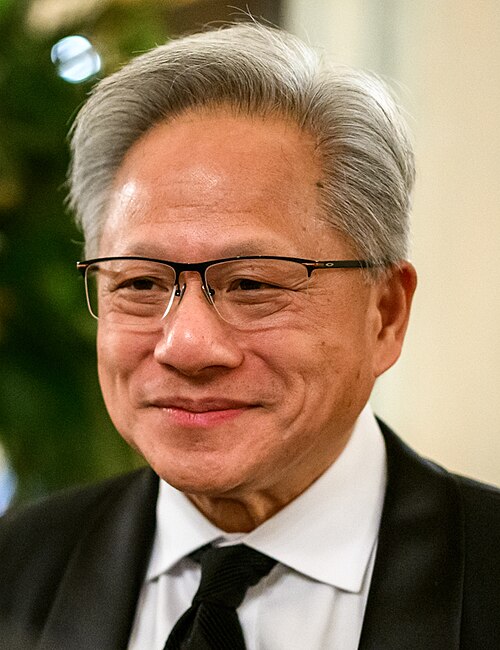
Jensen Huang Wikipedia photo by D. Torok.

I understood the trillions of dollars valuation after hearing from its founder that their customers and partners represent one third of all AI compute power globally. That’s a lot!

As an aside, he’s skilled at giving numbers that amaze the listener. He’s constantly saying things like, “a million times” or “a trillion dollars” or “10,000 fold.” Some of those items are referred to here. 
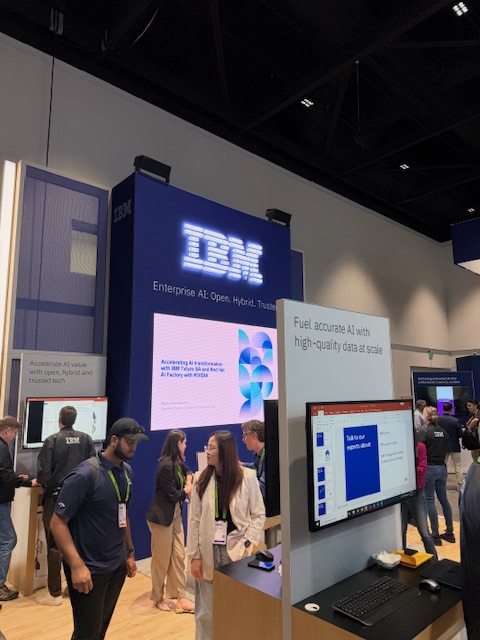
Here are 13 points from his talk as well as and IBM and Samsung booth photos.
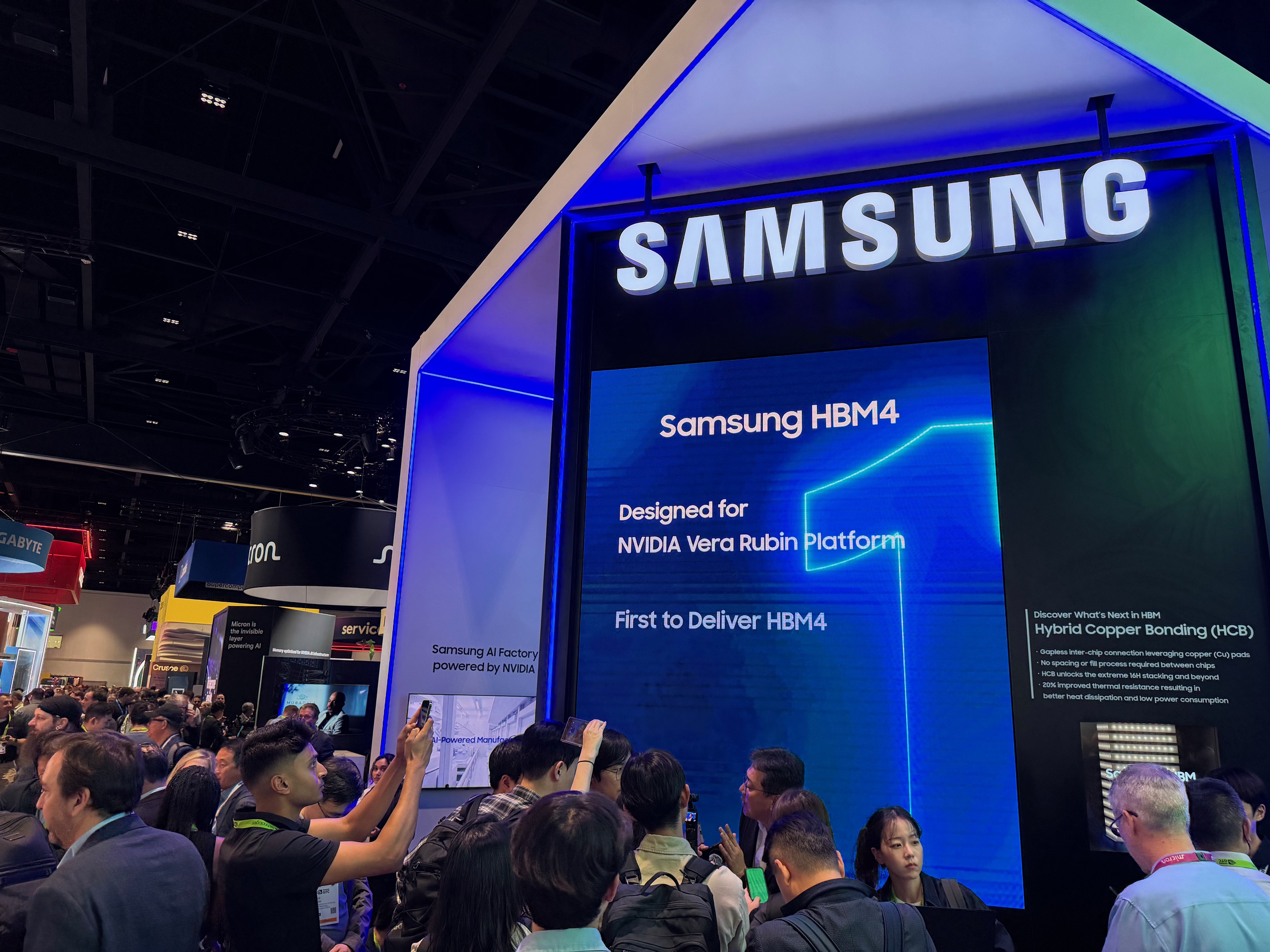
  1. There’s an enormous need for more compute power and along with this, a stunning increase in the intelligence of AI. NVIDIA’s website says that when it comes to AI model training, the sheer magnitude of compute power required is staggering. NVIDIA tools keep all of this going. 
  1. The computing demand of work has gone up 10,000 times. I researched this statement further and it looks like that means since 2022 so over the past four years.
  1. It’s the 20th anniversary of NVIDIA Cuda. It’s been introduced into every single industry ecosystem. Later he clarified saying “almost every” industry. Cuda was announced on the back of GeForce, the greatest marketing campaign launched 25 years ago. They took Cuda to every computer system.
  1. Today NVIDIA announces the fusion of 3D graphics and AI. Huang mentioned IBM as a user of the new solution. Today IBM and NVIDIA are using NVIDIA Cuda for Watson X. Nestle is using the IBM tool.  
  1. Data is the ground truth that gives AI meaning. Tokens are the new commodity. Inference is your workload and tokens are your new commodity.
  1. Structured data is the foundation of trustworthy AI. Azure, Databricks, Google Cloud, others feed into this.
  1. ChatGPT represents the generative AI era. It has profoundly changed how computing is done. Huang said he used ChatGPT this morning. 
  1. Inference inflection was mentioned several times as a key message. Inference drives your revenues. The faster you can inference the more you can do. The better your inference, the smarter your AI. 
  1. NVIDIA is an algorithm company. They work with Google Cloud and AWS. He also name-dropped Oracle, Microsoft Azure, OpenAI, and Anthropic and OpenAI a few times. I counted three Anthropic mentions in hour one.
  2. NVIDIA the first vertically integrated but accelerated computing company. NVIDIA is horizontally open. 
  3. Industries he mentioned included autonomous vehicles, algorithmic trading which is going through a “deep learning moment,” AI biology for drug discovery, physical AI robotic systems. He mentioned quantum, media and gaming, among others.
  4. Robotics is a 50 trillion dollar industry. He’s said this before.
  5. The inflection point of inference has arrived. Every time it computes it has to reason. 

If you work in tech or want to, I recommend you listen to his whole keynote. It’s very technical and contains a lot of new product news. 

My key takeaway is that the founder of NVIDIA has a lot of trust in AI right now and it’s fueling the need for more compute power. His company is at the forefront of supplying the tools to try to satiate this hunger. Although Huang spoke about industry trends it was mostly an NVIDIA advertisement for new and newish products. This is fine because I believe that’s what attendees wanted to hear. 

###

Michelle McIntyre is a Silicon Valley-based tech public relations consultant known for her expertise in AI and robotics. She’s an IBM vet and a ranked future of work influencer with 3.5 million Quora views for her advice on elite college admissions. DM her on LinkedIn or Facebook to get in touch. IBM and Samsung booth photos were taken by David McIntyre.
To Succeed in AI, Know and Use These 10 Terms Including “Token” and “Inference”

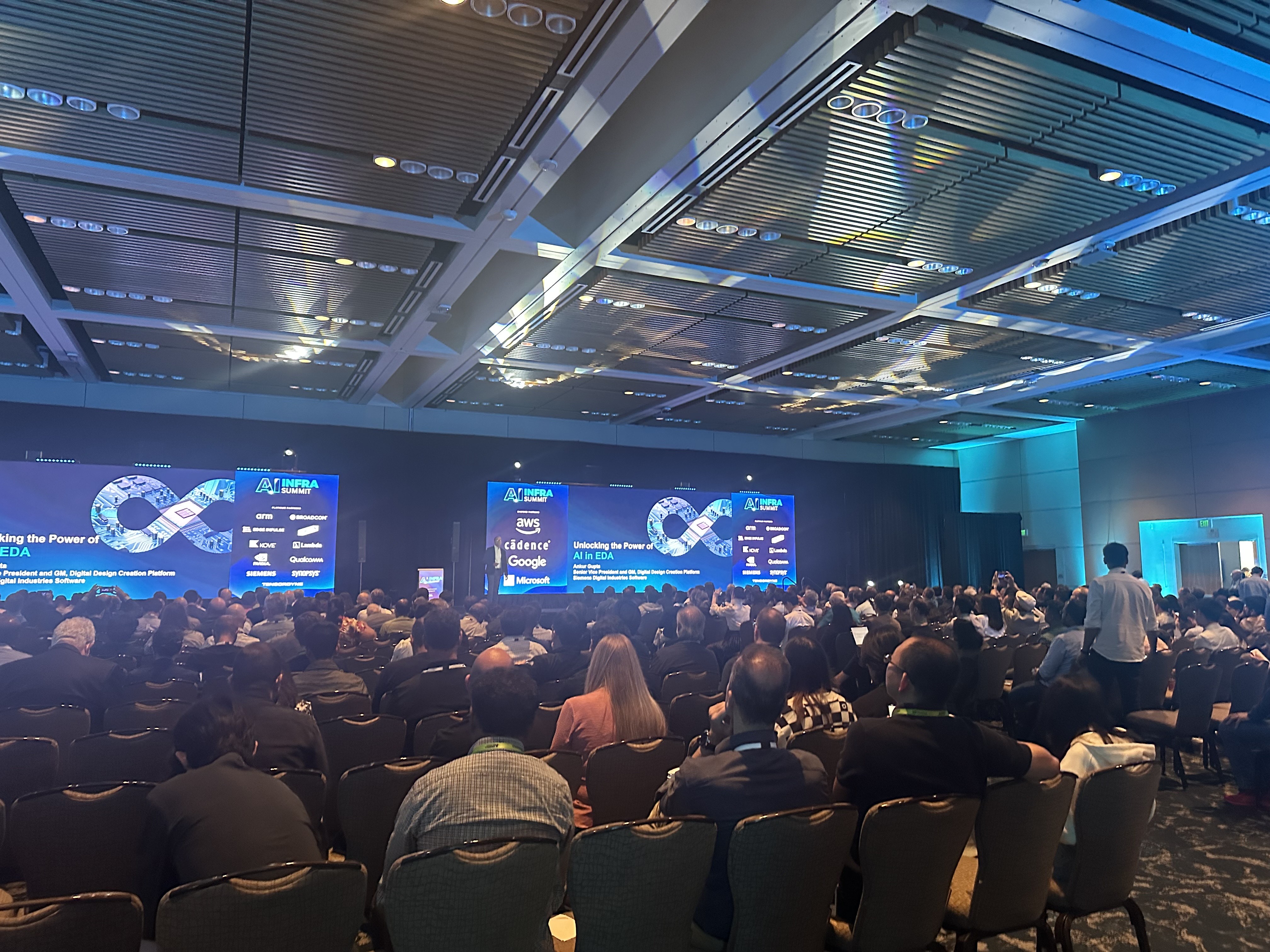
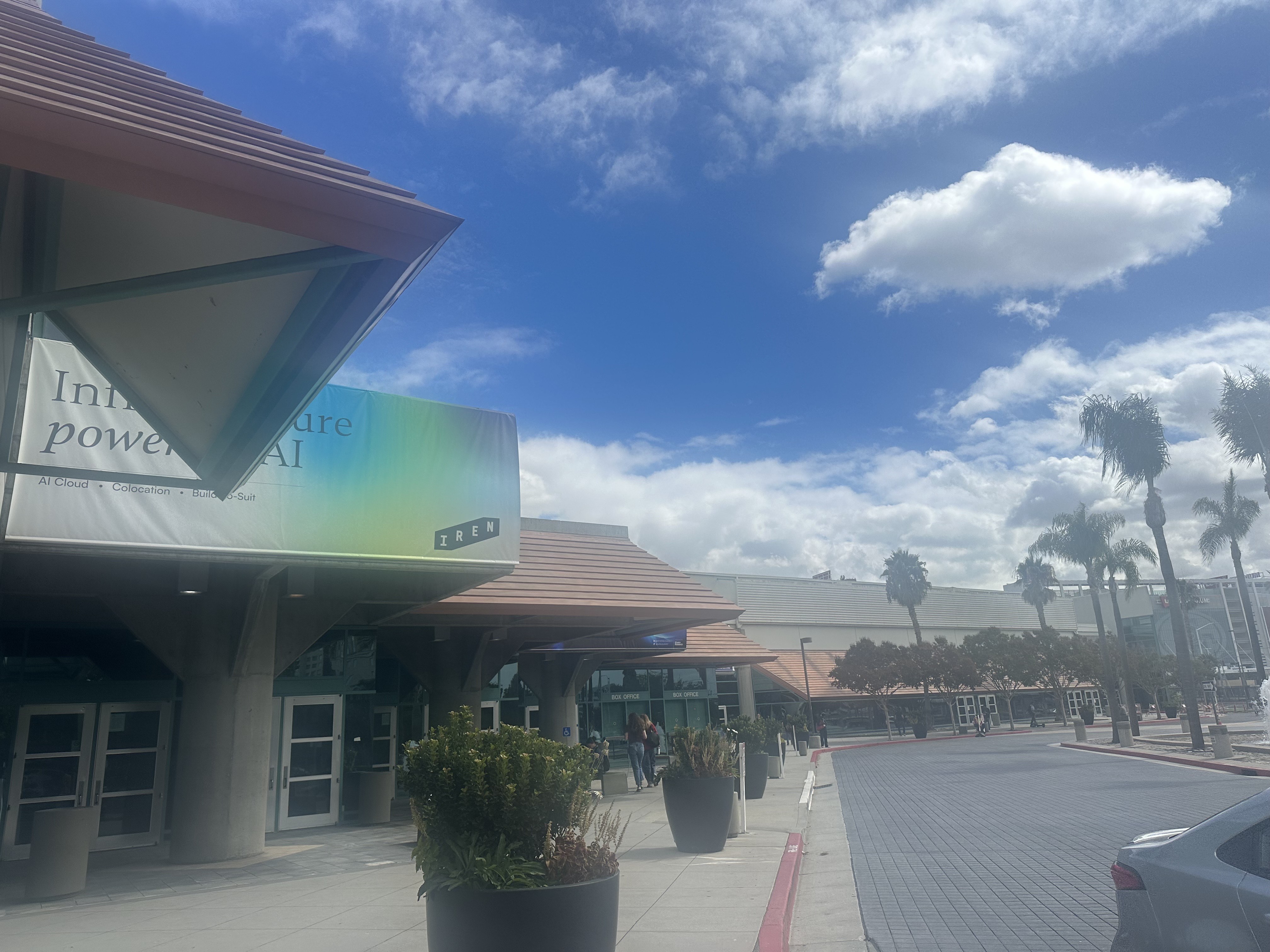
Today I attended day one of the AI Infra Summit at the Santa Clara Convention Center. Around 4,000 registered which is up from 1,500 last year. By the way, infra stands for infrastructure. Speakers addressed what you need for AI. 

 I noticed a trend. Speakers used a few AI-related terms over and over like “inference” and “token.” They liked to say, “AI factories” instead of or more than just “data centers.” The term math or AI math was tossed around a lot. Tensordyne booth had a digital sign that went so far as to say, “AI is math.” 

I decided to blog about the AI terms used by speakers that got my attention at AI Infra. 

I sat through the press conference (photo below) featuring five companies, including two very young startups, as well as mainstage key notes by Meta, NVIDIA, AWS, Kove (unique software-based memory) and Siemens.

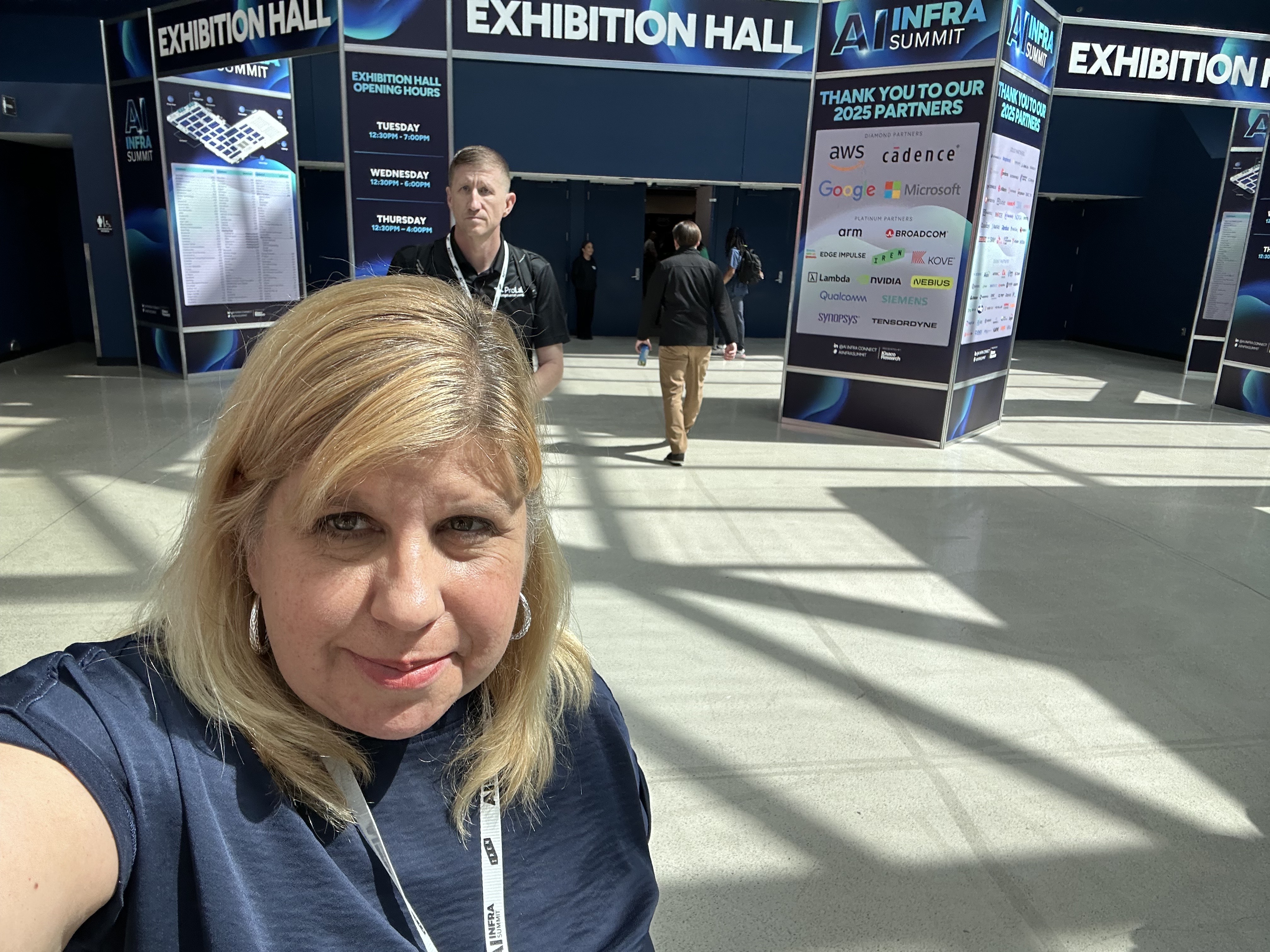
Thank you Royal Huang, PhD and CTO of SuperTech FT – a 5013c that teaches young people a practicum of physical AI and robotics – for checking my list of terms and commenting. Full disclosure is that SuperTech FT sponsored my conference attendance. Huang is an AI consultant who has worked in automobile robotics, health tech, edtech and more. (Royal is pictured below under the tiger in the AI Infra exhibit hall.)

Here’s my list of Top 10 AI Infra conference terms:

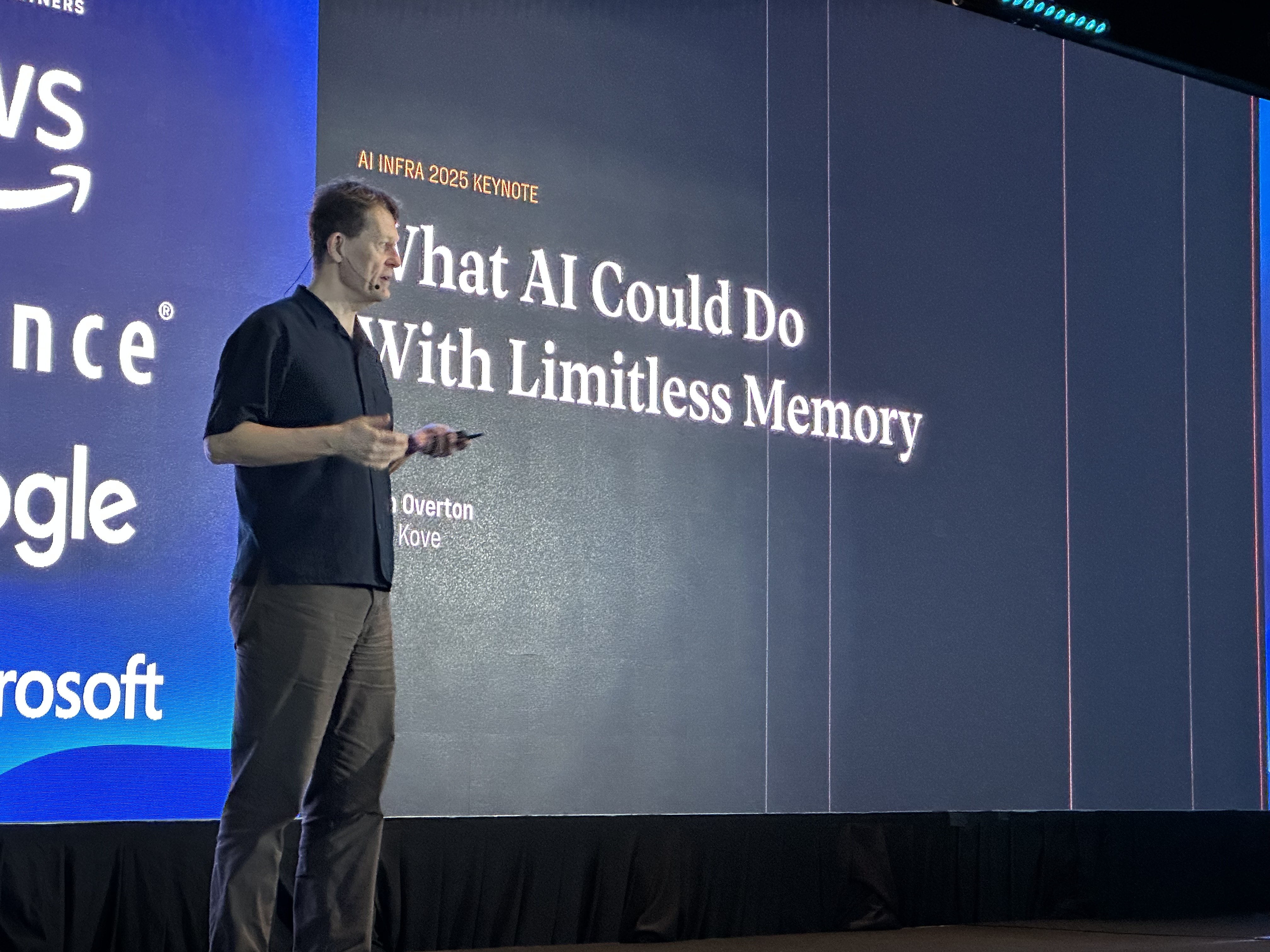
  1. INFERENCE: I heard this dozens of times and on many slides from the start of the press conference at 8:15 am right through to the last mainstage keynote speaker hours later. AI inference is the process of using a trained artificial intelligence model to generate predictions, insights or outputs from new, unseen data. Dr. John Overton, Kove’s CEO and a PhD, showed a slide that said, “Unlocking AI inference.” Kove innovates by making unique software-based memory.
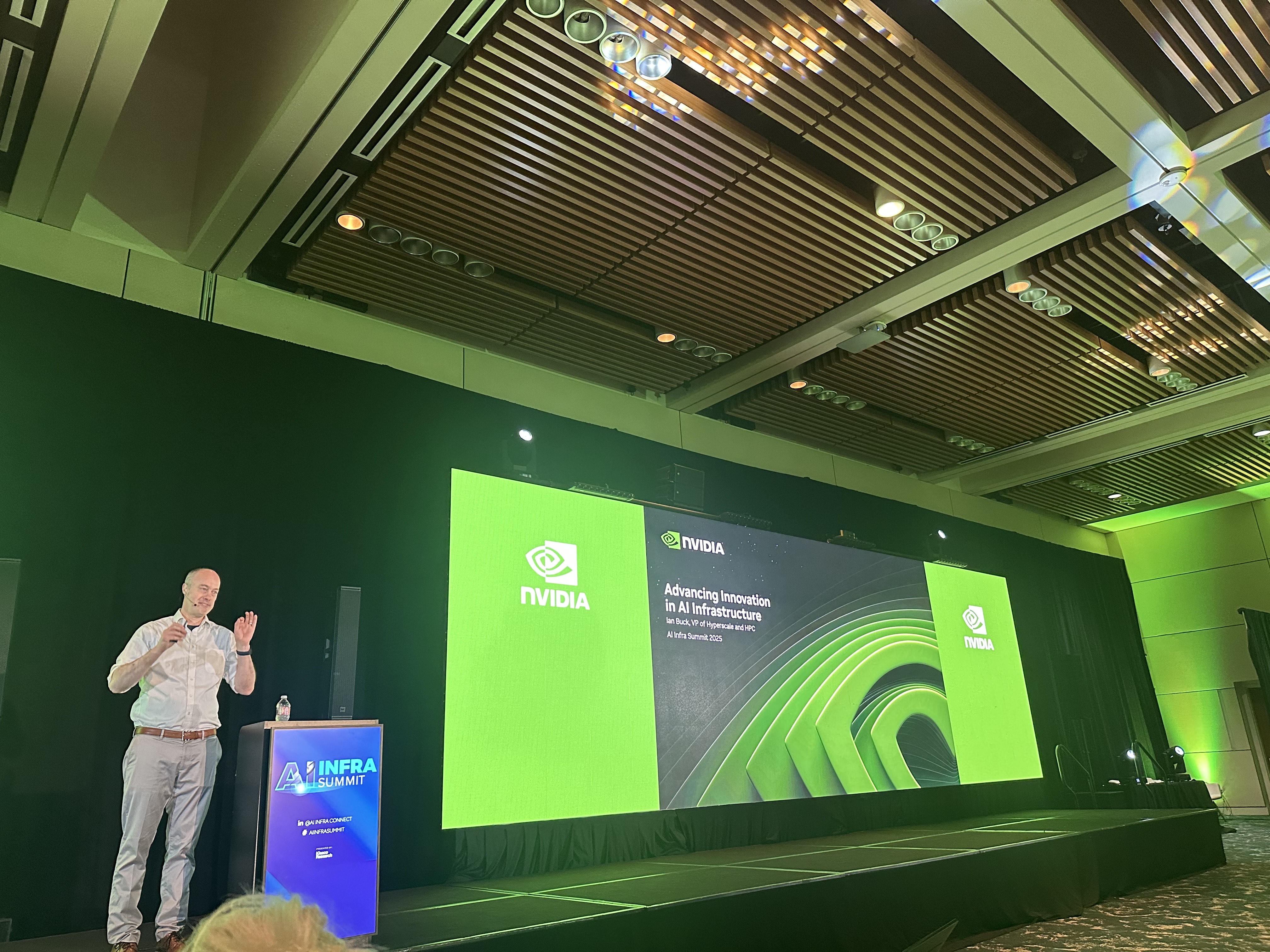
  2. TOKENS: NVIDIA’s website says, “Tokens are tiny units of data that come from breaking down bigger chunks of information.” It adds, “The language and currency of AI tokens are units of data processed by AI models during training and inference, enabling prediction generation and reasoning.” Speaking of tokens, NVIDIA’s VP of Hyperscale, Ian Buck, PhD, announced a new GPU today, called Rubin CPX. It will be online by the end of 2026 and it will be able to handle “one million tokens” which apparently is a big deal. It reminds me of that Austin Power movie line, “1 million dollars.”

3. AI FACTORIES: Speakers said “AI factories” much more than data centers on their slides. Not new news but still interesting are Meta’s plans to build a ginormous data center that can handle very advanced AI. Today, one gigawatt which can power all of San Francisco is considered big. Yee Jiun Song, VP of Engineering, Meta, and also a PhD, mentioned in the mainstage keynote one that a five-gigawatt data center is planned! This will be called Hyperion and be the size of Manhattan. 

Royal Huang commented on this topic, “Think of it this way. The data center is the soil and AI is the crop.” 

These next three are more commonly used by business people:

4. LLMs: A lot of speakers talked about training large language models or LLMs. 

5. AI Math: Today’s speakers said “math” several times. AI performs calculations. AI enables calculations. AI can save or cost a lot of money. There is a lot of math involved apparently. Recall that Tensordyne’s booth had a digital sign that said, “AI is math.”

I asked a person sitting next to me at lunch, Asif Batada, Sr. Product Marketing Manager of Alphawave Semi, if he thought math was important and used often in AI. He said, “Yes, math is like water,” and then switched the word to, “oil.” He elaborated, “Math is like oil; smart people are working on optimally using oil.” Interesting analogy.

6. GPUs and CPUs:  A GPU is defined as a specialized electronic circuit designed to rapidly process and render images, videos and animations as well as do scientific computing, AI and machine learning. NVIDIA Rubin CPX (a future product) is a GPU. Fun fact: NeuReality’s CEO said during the press conference that you don’t want to cram too many GPUs together because that could cause performance to suffer. I guess there’s an assumption that more GPUs are better. He says, not necessarily. And a CPU is a semiconductor chip that acts as the brain of a computer. 

These last words or terms are a bit overused but still valid:

7. OPEN SOURCE: Several mentioned that their product worked with many other brands of technology. Open computing is still a big deal. 

8. SCALE: AI Consultant Huang advised that, “Everyone says they scale. But scaling is the toughest thing to do.” I’m not a huge fan of this term for this reason. Almost everyone in tech claims they “scale.” It’s better to give the proof as opposed to just stating the claim. 

9. SAVING ENERGY and driving efficiency: Everyone mentioned this. A lot. Huang commented, “When you build a data center everyone is after being energy efficient.”

10. NVIDIA, the only proper noun on the list. And as a bonus number 10, Anthropic. Many companies said that their product is used by NVIDIA or they have been working with them. The AWS speaker name dropped working with both NVIDIA and Anthropic.

Royal Huang commented that he thought AI agents, agentic AI or multi-agents should have been included in my top 10. However, I didn’t hear many speakers mention them today. I do recall AWS mentioning it. Huang added that edge AI was also important. He had planned to see many agentic AI talks at the AI Infra conference which goes through September 11th. 

###

Michelle McIntyre is a Silicon Valley-based PR consultant and IBM vet. As a social media influencer and blogger, she’s sometimes invited to press conferences. She is attending AI Infra on behalf of SuperTech FT, a robotics non-profit that trains (mostly) young people to do ‘physical AI.’

Photos: Michelle McIntyre took all of the photos here. The stuffed animal booth give away is from a company called Xage Security.