To Succeed in AI, Know and Use These 10 Terms Including “Token” and “Inference”

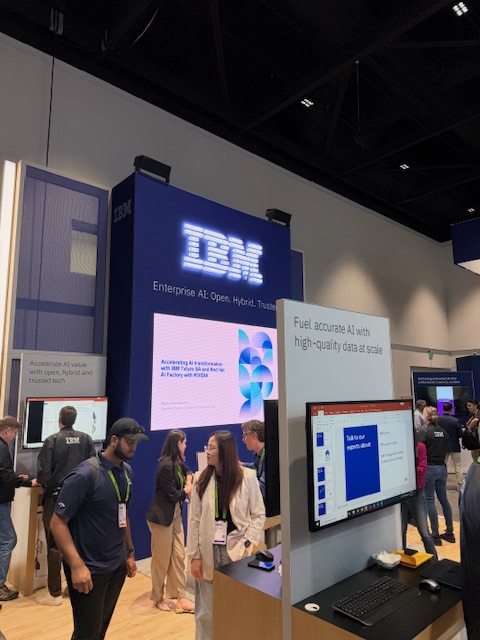
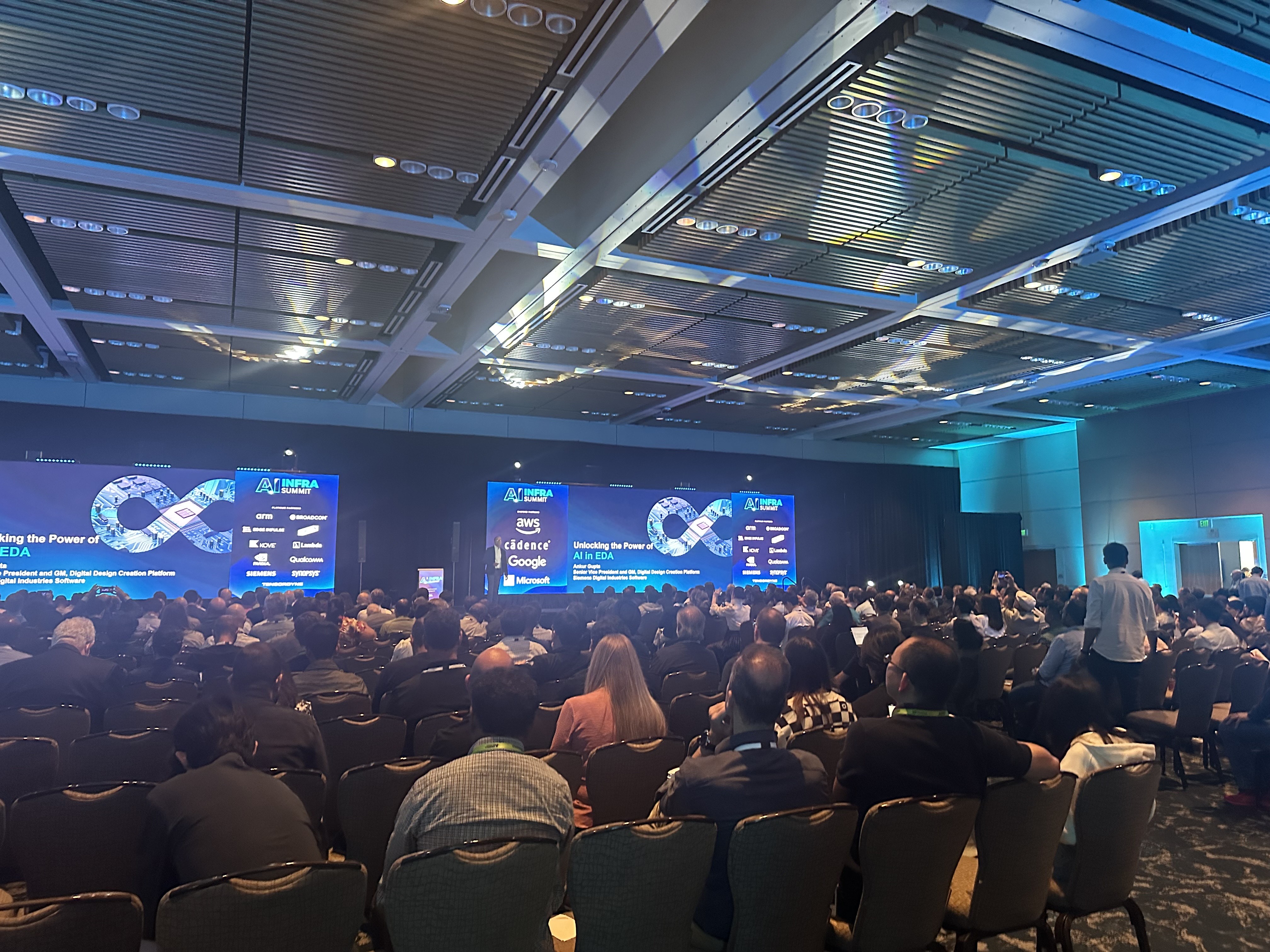
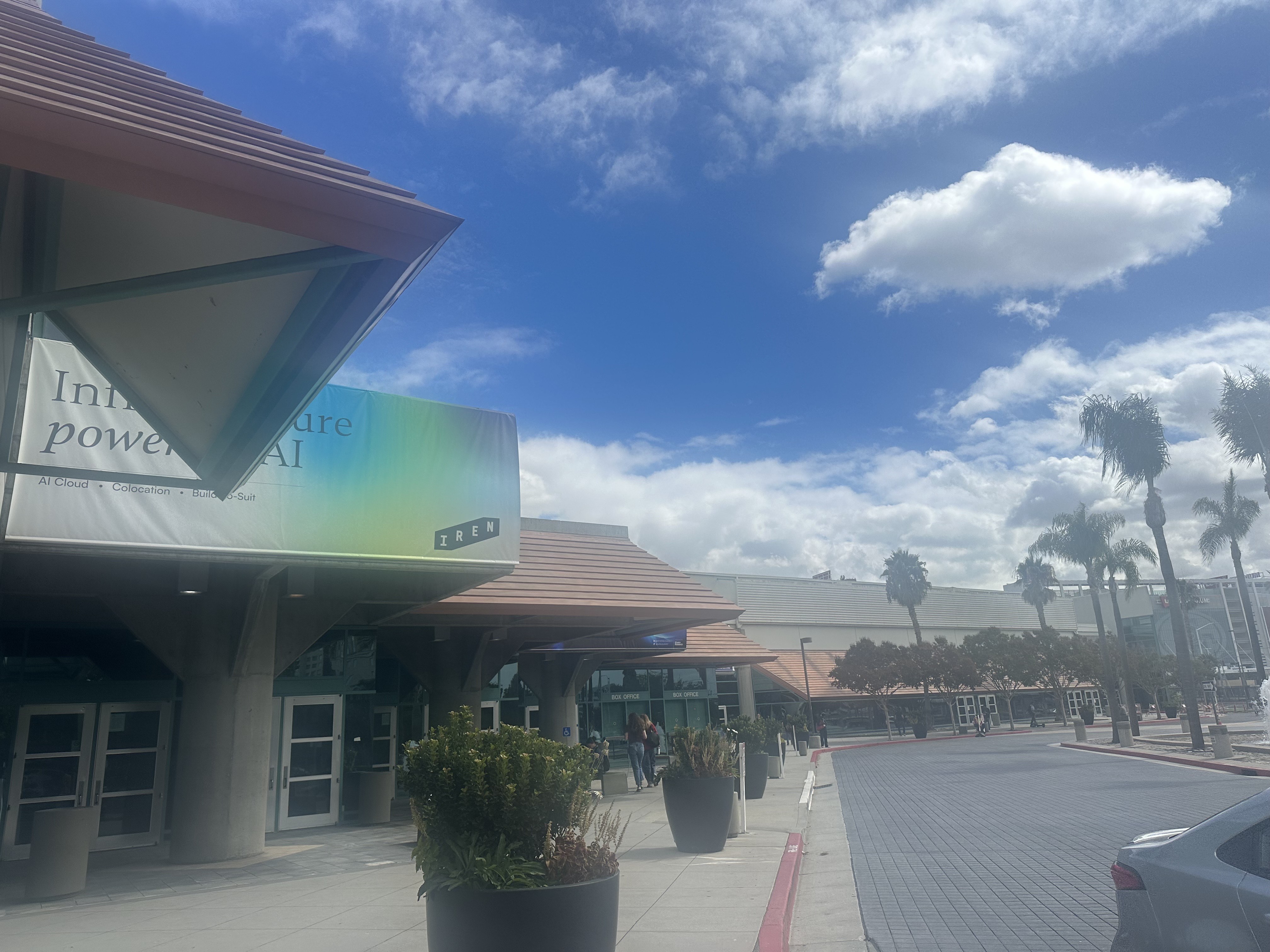
Today I attended day one of the AI Infra Summit at the Santa Clara Convention Center. Around 4,000 registered which is up from 1,500 last year. By the way, infra stands for infrastructure. Speakers addressed what you need for AI. 

 I noticed a trend. Speakers used a few AI-related terms over and over like “inference” and “token.” They liked to say, “AI factories” instead of or more than just “data centers.” The term math or AI math was tossed around a lot. Tensordyne booth had a digital sign that went so far as to say, “AI is math.” 

I decided to blog about the AI terms used by speakers that got my attention at AI Infra. 

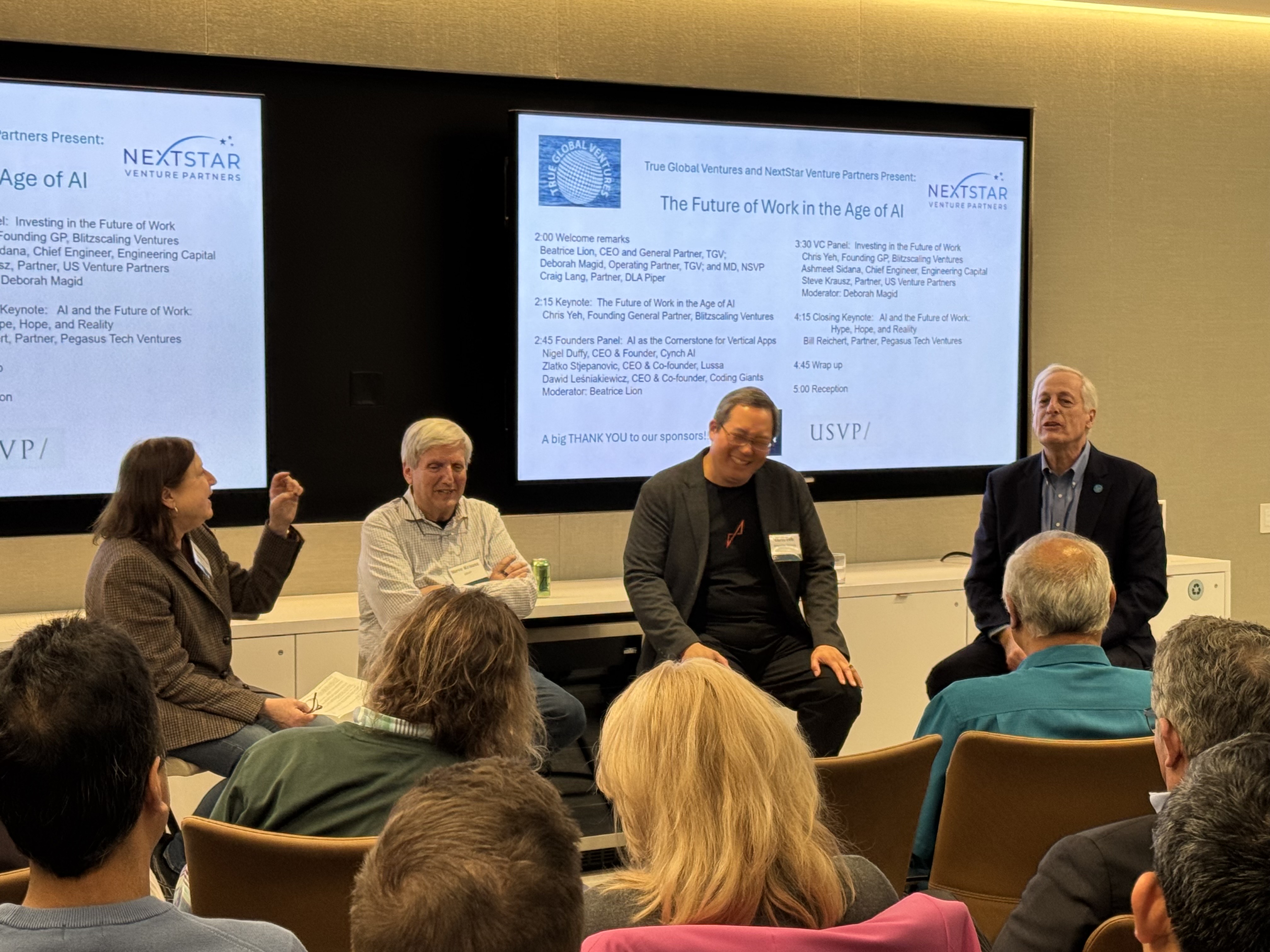
I sat through the press conference (photo below) featuring five companies, including two very young startups, as well as mainstage key notes by Meta, NVIDIA, AWS, Kove (unique software-based memory) and Siemens.

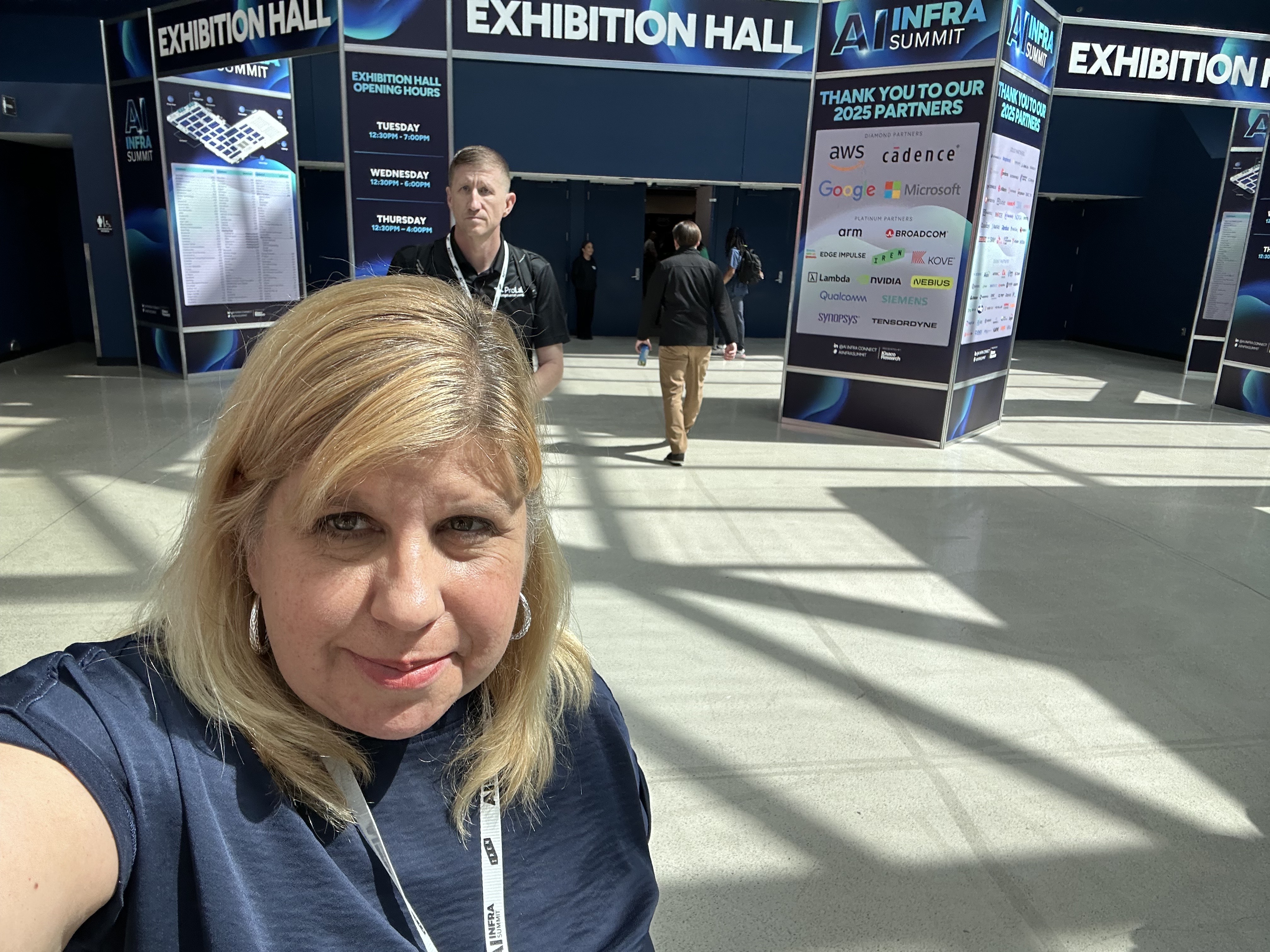
Thank you Royal Huang, PhD and CTO of SuperTech FT – a 5013c that teaches young people a practicum of physical AI and robotics – for checking my list of terms and commenting. Full disclosure is that SuperTech FT sponsored my conference attendance. Huang is an AI consultant who has worked in automobile robotics, health tech, edtech and more. (Royal is pictured below under the tiger in the AI Infra exhibit hall.)

Here’s my list of Top 10 AI Infra conference terms:

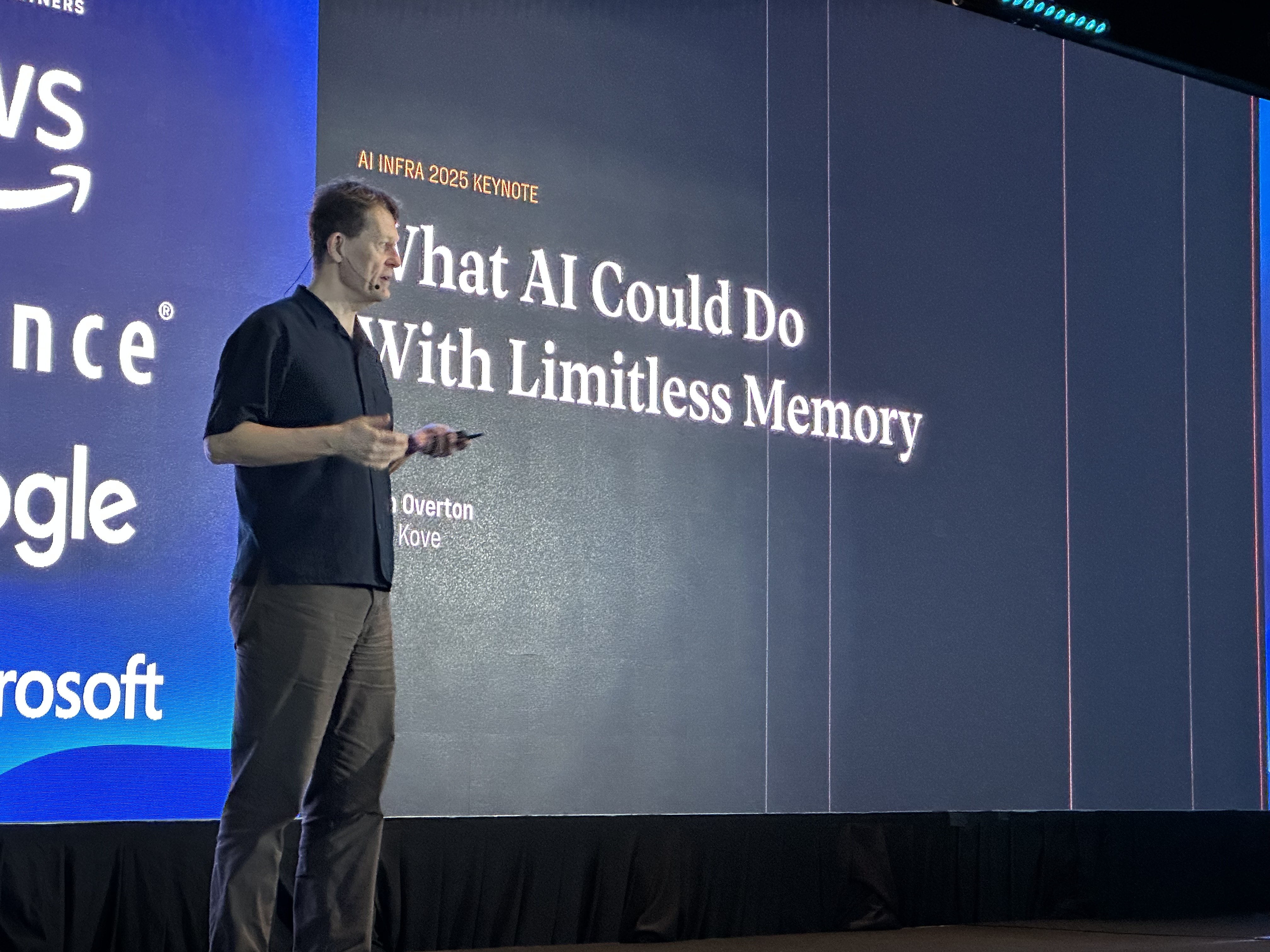
  1. INFERENCE: I heard this dozens of times and on many slides from the start of the press conference at 8:15 am right through to the last mainstage keynote speaker hours later. AI inference is the process of using a trained artificial intelligence model to generate predictions, insights or outputs from new, unseen data. Dr. John Overton, Kove’s CEO and a PhD, showed a slide that said, “Unlocking AI inference.” Kove innovates by making unique software-based memory.
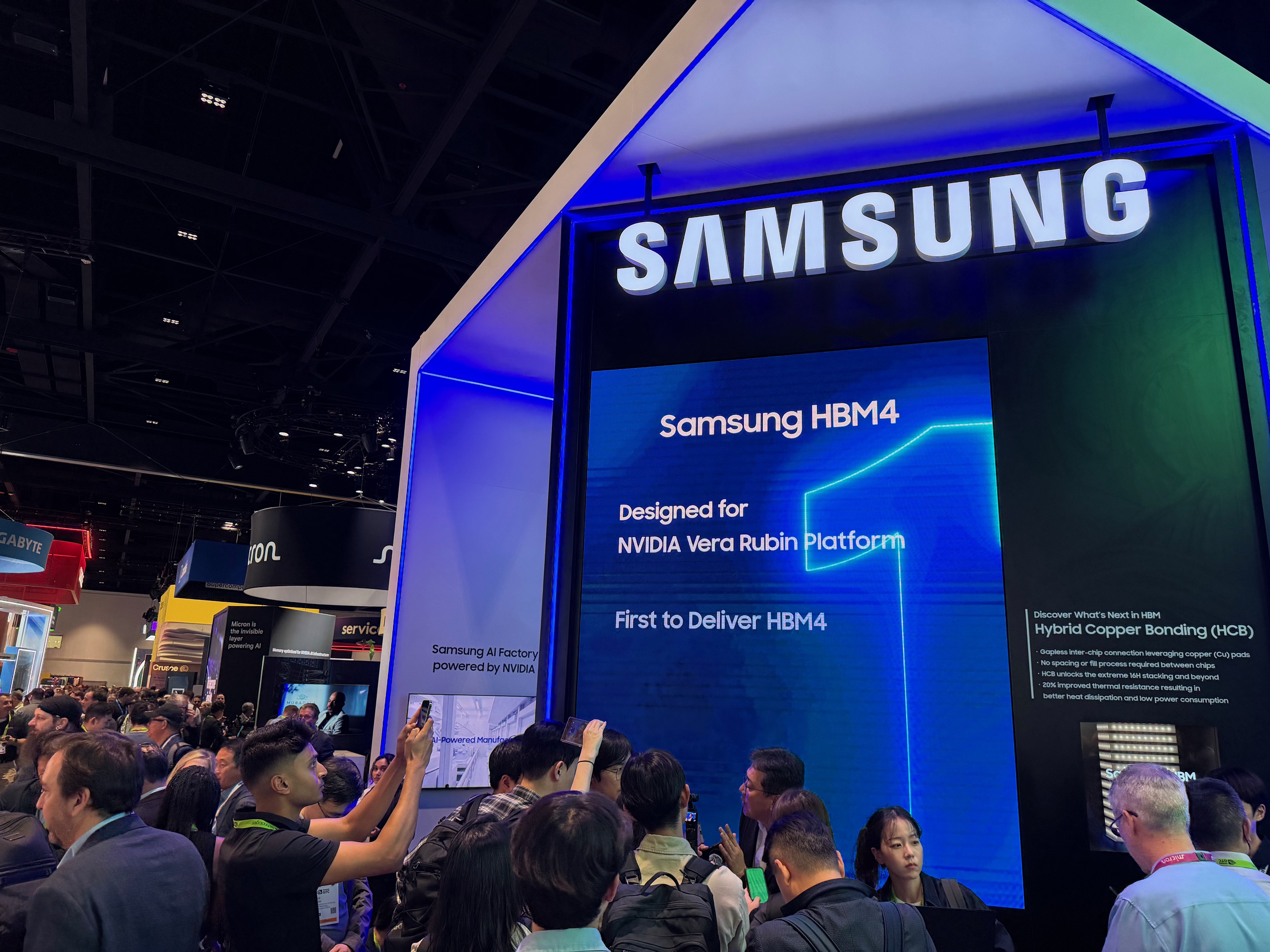
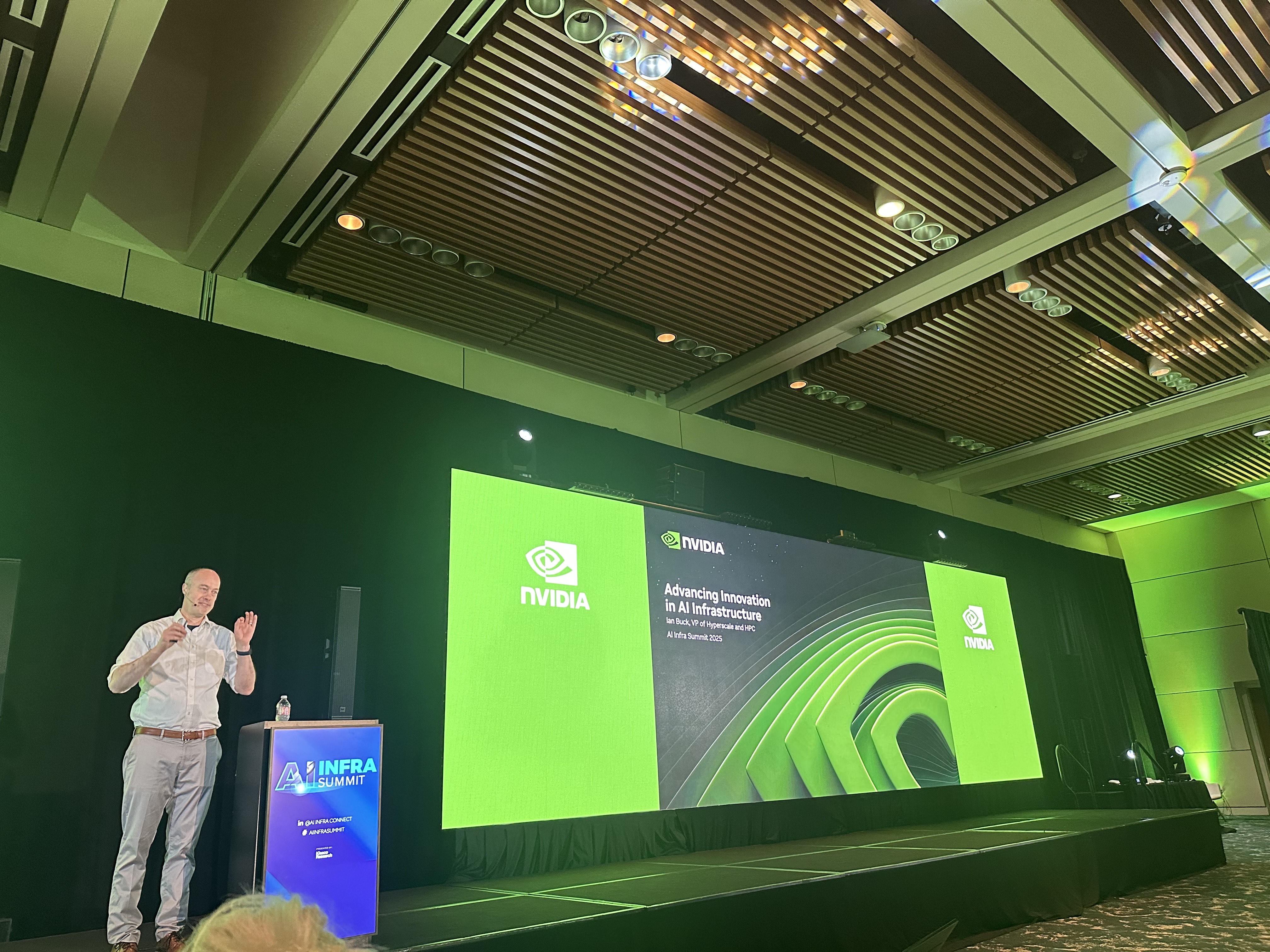
  2. TOKENS: NVIDIA’s website says, “Tokens are tiny units of data that come from breaking down bigger chunks of information.” It adds, “The language and currency of AI tokens are units of data processed by AI models during training and inference, enabling prediction generation and reasoning.” Speaking of tokens, NVIDIA’s VP of Hyperscale, Ian Buck, PhD, announced a new GPU today, called Rubin CPX. It will be online by the end of 2026 and it will be able to handle “one million tokens” which apparently is a big deal. It reminds me of that Austin Power movie line, “1 million dollars.”

3. AI FACTORIES: Speakers said “AI factories” much more than data centers on their slides. Not new news but still interesting are Meta’s plans to build a ginormous data center that can handle very advanced AI. Today, one gigawatt which can power all of San Francisco is considered big. Yee Jiun Song, VP of Engineering, Meta, and also a PhD, mentioned in the mainstage keynote one that a five-gigawatt data center is planned! This will be called Hyperion and be the size of Manhattan. 

Royal Huang commented on this topic, “Think of it this way. The data center is the soil and AI is the crop.” 

These next three are more commonly used by business people:

4. LLMs: A lot of speakers talked about training large language models or LLMs. 

5. AI Math: Today’s speakers said “math” several times. AI performs calculations. AI enables calculations. AI can save or cost a lot of money. There is a lot of math involved apparently. Recall that Tensordyne’s booth had a digital sign that said, “AI is math.”

I asked a person sitting next to me at lunch, Asif Batada, Sr. Product Marketing Manager of Alphawave Semi, if he thought math was important and used often in AI. He said, “Yes, math is like water,” and then switched the word to, “oil.” He elaborated, “Math is like oil; smart people are working on optimally using oil.” Interesting analogy.

6. GPUs and CPUs:  A GPU is defined as a specialized electronic circuit designed to rapidly process and render images, videos and animations as well as do scientific computing, AI and machine learning. NVIDIA Rubin CPX (a future product) is a GPU. Fun fact: NeuReality’s CEO said during the press conference that you don’t want to cram too many GPUs together because that could cause performance to suffer. I guess there’s an assumption that more GPUs are better. He says, not necessarily. And a CPU is a semiconductor chip that acts as the brain of a computer. 

These last words or terms are a bit overused but still valid:

7. OPEN SOURCE: Several mentioned that their product worked with many other brands of technology. Open computing is still a big deal. 

8. SCALE: AI Consultant Huang advised that, “Everyone says they scale. But scaling is the toughest thing to do.” I’m not a huge fan of this term for this reason. Almost everyone in tech claims they “scale.” It’s better to give the proof as opposed to just stating the claim. 

9. SAVING ENERGY and driving efficiency: Everyone mentioned this. A lot. Huang commented, “When you build a data center everyone is after being energy efficient.”

10. NVIDIA, the only proper noun on the list. And as a bonus number 10, Anthropic. Many companies said that their product is used by NVIDIA or they have been working with them. The AWS speaker name dropped working with both NVIDIA and Anthropic.

Royal Huang commented that he thought AI agents, agentic AI or multi-agents should have been included in my top 10. However, I didn’t hear many speakers mention them today. I do recall AWS mentioning it. Huang added that edge AI was also important. He had planned to see many agentic AI talks at the AI Infra conference which goes through September 11th. 

###

Michelle McIntyre is a Silicon Valley-based PR consultant and IBM vet. As a social media influencer and blogger, she’s sometimes invited to press conferences. She is attending AI Infra on behalf of SuperTech FT, a robotics non-profit that trains (mostly) young people to do ‘physical AI.’

Photos: Michelle McIntyre took all of the photos here. The stuffed animal booth give away is from a company called Xage Security.

68% Surveyed by USC Annenberg Say Humans will Remain Essential to PR 

USC Annenberg’s Global Communications Report examined trends affecting the public relations (PR) profession in the second half of 2025. 

The report team surveyed more than 1,000 PR professionals and like my trusty Nissan Rogue tires or the number of members of Metallica, there are four trends. They are AI, hybrid and remote work, the changing media landscape, and political polarization.

Let’s examine two, AI and political polarization. 

Sixty percent of respondents say AI will have a positive impact on the PR profession while 68% said that humans will remain essential to public relations. I agree with this thinking because at its heart, PR is about relationship-building. I literally get hired as a consultant because I know people. 

As an aside, the biggest use of AI in communications was social media according to USC’s timely report. And Gen Z PR people were the most AI-optimistic: 75% who responded said that AI decreased their workload.

The second trend that’s blaring louder than Metallica Guitarist Kirk Hammett at Levi’s Stadium Friday night, is political polarization. 

The U.S. and in some respects, the rest of the world, is divided in two. Either you are for the President of the U.S. or you can’t stand him. The reason why is that if you respect U.S. laws, it seems more ethical to be against him. But then, how can you be against the President? Do you advise your employer to take a stand on this?

And if you do media relations, it’s also wise to not approve of the President because he says he disrespects major media outlets. Theoretically a PR pro needs to respect outlets like Associated Press.

But if you speak out one way or the other customers or ‘investors’ can get upset. At its heart this has to do with the fact that if you take a strong stand either way, you could lose big revenue. Imagine what Harvard and most major colleges are going through right now. 

My advice is to hire an experienced and skilled PR professional to help navigate messages during this polarizing time. Pepper in an attorney’s viewpoint when tens of millions of dollars are at stake. 

By the way, Metallica’s famous four members never mentioned politics once Friday night at Levi’s! I guess their PR team told them to not bring up a politically polarizing topic.

###

Michelle McIntyre is an award-winning tech PR consultant in the Silicon Valley, and IBM vet. The photo of USC above is from its Wikipedia page.

10 Takeaways from PRSA Silicon Valley’s June Media Panel with NBC, NYT and SiliconAngle

Meghan Fintland, PRSA Silicon Valley Chapter’s President who is also Rubrik’s head of global PR moderated a PRSA SV panel of three journalists on June 5th at AMD in San Jose. Panelists were Scott Budman, business and technology reporter, NBC News Bay Area, New York Times Contributor Don Clark, and Mark Albertson, senior writer, SiliconANGLE Media, Inc. 

I missed the event due to a summer cold but have notes from a couple of friends who attended. Here are 10 takeaways I thought were interesting: 

  1. The pace of reporting is much faster than a few years ago. SEO and algorithms matter.
  2. News we cover is what impacts the community. (Scott Budman)
  3. AI is big but what is it all for? What is this moving towards?
  4. If I can snap my fingers, I would get rid of (the terms) “platform” and “solution.” It’s such obfuscation. Just be simple. (Don Clark)
  5. Thank you to the PR world—you are the bridge between me and the CEO, and it’s saved me a million times. (Scott Budman)
  6. Think about other angles, pitching me something related to a hot tech but maybe not necessarily what your product is. (Scott Budman)
  7. AI is impactful in software programming, chip design and test. (Don Clark)
  8. Learn the technology at a deeper level than you need to than to do just the transactional pitching. You are building your brand as a communicator, and that’s more than just what the client wants. (Don Clark)
  9. I cover the tech beat. I can come in ready to report on the newest chip, but an editor will say yeah, there’s a fire. But talking to people in the community, they’re talking about tech. (Scott Budman)
  10. (On how reporting has changed.) Politics! Tech covers China, Washington and AI, especially in semiconductors. (Don Clark)

My PRSA colleague Jennifer Yoder is penning a longer more journalistic article for the chapter’s blog. Look for that story soon.

###

Michelle McIntyre is a PR Consultant and IBM vet in Saratoga, California. She thanks Mark L. and Jennifer Yoder for their event notes. Credits: The first photo is Scott Budman and that is from the NBC Bay Area website. The second is of Don Clark and that’s his LinkedIn profile photo. Clark is also a musician.

3 PR TRENDS SHAPING 2024 from LATIN AMERICA, MALAYSIA AND NIGERIA

I enjoyed hearing journalists and PR professionals speak here in the San Francisco Bay Area recently, from the San Francisco Press Club interview with the NY Times SF bureau chief to the Public Relations Society of America Silicon Valley Media Predicts panel featuring Barron’s, Business Insider, CNET, and CBS News Bay Area. 

Changes brought about by artificial intelligence overshadowed both of those conversations. These were all locals albeit with global perspectives. 

I wanted to know what folks beyond Northern California thought about 2024 so I did some digging. Here is insight from Latin America, Malaysia, and Nigeria’s PR leaders:

  1. AI continues to shape industries including PR agency billing. – Andy See Teong Leng, President of PRGN and former president of PRCA of Malaysia:

“Looking ahead to 2024, Andy (See) predicts that AI will continue to shape the industry, and he emphasizes the importance of humanizing communications in the face of technological advancements. He highlights the growing significance of sustainability and ESG (environmental, social, and corporate governance) communications, urging PR and communications professionals to advise their clients on genuine and authentic approaches to social responsibility.”  Link to more input from and a podcast with Mr. See here

In his podcast segment with Abbie Fink and Adrian McIntyre, he said that GenAI may impact how agencies charge clients. Why? Because AI has sped up work. 

  1. Authenticity rules communications. – Olanrewaju Alaka, executive, Laerryblue Media, Nigeria

“In a world saturated with information, authenticity emerges as the linchpin of effective communication. I foresee a PR landscape where brands will strive to be more genuine, embracing transparency as a cornerstone of their narratives. The human touch, I believe, will be the catalyst for building lasting connections with audiences.” For more details from Mr. Alaka, visit this link. His further comments discuss the importance of visual storytelling and PR campaigns with a higher purpose. 

  1. DEI-related actions reinforce stakeholder trust. -Institute for Public Relations, Latin American Communication Monitor (LACM)

The LACM analyzed trends in Latin America’s PR field and what professionals predict for 2024. A survey of 1,134 communications professionals from 20 countries was conducted from May to June 2022. There were multiple key findings. One is that “actions on diversity, equity, and inclusion (DEI) reinforced stakeholder trust.”

The survey went on to reveal that “empathetic leadership increased engagement, improved mental health, and reduced turnover.” For more information from the LACM look here.

In addition to attending the local PR dinners, panels, and fun networking mixers be sure to take the pulse of what international leaders are saying to have a fuller understanding of our diverse and spread-out world. Because one of the major 2024 PR trends is the human touch, continue to attend events in person in 2024 to deepen relationships and forge new ones.

###

Michelle McIntyre is a PR Consultant and IBM Veteran based in Saratoga, California, a suburb of Silicon Valley.