Meghan Fintland, PRSA Silicon Valley Chapter’s President who is also Rubrik’s head of global PR moderated a PRSA SV panel of three journalists on June 5th at AMD in San Jose. Panelists were Scott Budman, business and technology reporter, NBC News Bay Area, New York Times Contributor Don Clark, and Mark Albertson, senior writer, SiliconANGLE Media, Inc.
I missed the event due to a summer cold but have notes from a couple of friends who attended. Here are 10 takeaways I thought were interesting:
The pace of reporting is much faster than a few years ago. SEO and algorithms matter.
News we cover is what impacts the community. (Scott Budman)
AI is big but what is it all for? What is this moving towards?
If I can snap my fingers, I would get rid of (the terms) “platform” and “solution.” It’s such obfuscation. Just be simple. (Don Clark)
Thank you to the PR world—you are the bridge between me and the CEO, and it’s saved me a million times. (Scott Budman)
Think about other angles, pitching me something related to a hot tech but maybe not necessarily what your product is. (Scott Budman)
AI is impactful in software programming, chip design and test. (Don Clark)
Learn the technology at a deeper level than you need to than to do just the transactional pitching. You are building your brand as a communicator, and that’s more than just what the client wants. (Don Clark)
I cover the tech beat. I can come in ready to report on the newest chip, but an editor will say yeah, there’s a fire. But talking to people in the community, they’re talking about tech. (Scott Budman)
(On how reporting has changed.) Politics! Tech covers China, Washington and AI, especially in semiconductors. (Don Clark)
My PRSA colleague Jennifer Yoder is penning a longer more journalistic article for the chapter’s blog. Look for that story soon.
###
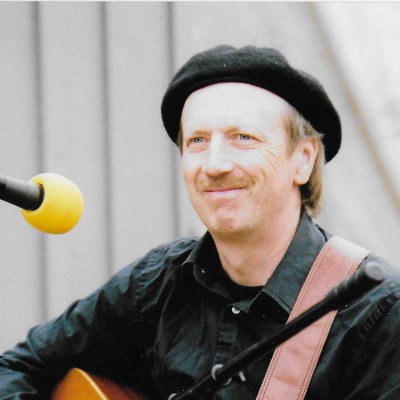
Michelle McIntyre is a PR Consultant and IBM vet in Saratoga, California. She thanks Mark L. and Jennifer Yoder for their event notes. Credits: The first photo is Scott Budman and that is from the NBC Bay Area website. The second is of Don Clark and that’s his LinkedIn profile photo. Clark is also a musician.
Do SuperBowl commercials work? This year’s ads were expensive at $7 million each. They are designed to create a buzz. That means they get people talking, just like powerful public relations campaigns.
A 2015 McKinsey & Company study says that word of mouth accounts for 20-50% of purchases. I’ll comment on three that worked on me, a Gen Xer:
1. Dunkings boy band with Ben Affleck, Jennifer Lopez, Matt Damon, and Tom Brady — I like this one the best and it’s one that my friends are mentioning the most. I like math and Matt starred in a popular math movie. He also does a good deadpan look and eye roll line in the ad. Matt and Ben are super likable. Bennifer is a thing again. It reminded me that I love Dunkin coffee and now I want to go to Dunkin. I wasn’t thinking about it before. I am already a huge Dunkin Donuts fan and always go back to Dunkin Donuts in Euclid, OH, where I grew up, for a cup of the best coffee in the world and sometimes a donut. Dunkin came late to San Jose, California, where I live so it became a more beloved brand when it was very hard to get.
2. Mayo Cat with Kate McKinnon — Cat mom is searching in the fridge for a snack. The cat says, “Meow” or “mayo” depending on how you hear it. Kate represents the LGBQT community so it’s a politically correct and modern ad: She’s the first openly gay SNL cast member. A+ on the diversity front. The cat gets on a popular morning show due to its gift of gab. The concept is clever and people love animals in ads: Think Clydesdale horses and the puppy. I added it here because my brother-in-law in New Jersey mentioned it to me as his number one. It’s cute but two things turn me off so it’s not my winner. First I don’t like the concept of Pete Davidson dating a cat: It’s gross weird. By the way, when he was on SNL he was by far my favorite cast member. He’s hilarious like Adam Sandler. The second reason this did not win first place is that they took the ad premise too far. I would have added a dog that said, “Woof” but meaning “roof” instead of acting like a meow is a big deal.
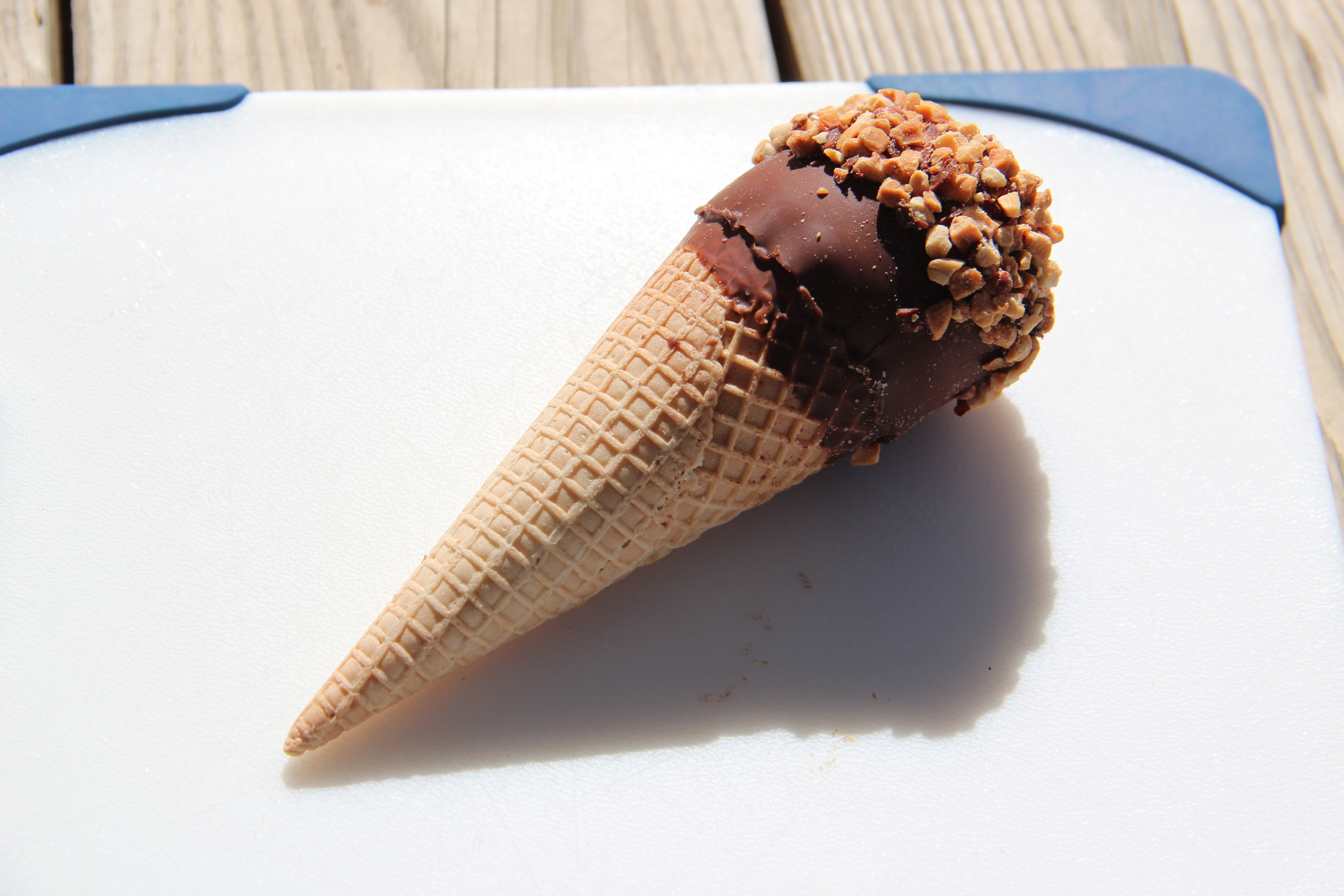
3. Dr. Umstick. I watched this once and it took me a minute to realize that it’s Drumstick ice cream treats. Get it? Dr. Umstick = drumstick. The fact that it was not obvious made it clever. Now I’m craving Drumsticks as a result and I have mentioned the ad as funny and clever to friends and family. Will I buy more Drumstick ice cream treats? Time will tell. I try to buy more leafy greens than any ice cream at this time of year. See the Nestlé Drumstick photo above.
By the way I did not like the Bud Light ad with Peyton Manning. I did not understand it, for one. Secondly, I’m tired of seeing Manning’s face everywhere. Third, Coors Light tastes better than Bud Light. I don’t think an ad can make something taste good. I was tired of Tom Brady too but putting him in an ad with Affleck and Damon made sense because they are associated with Boston. He’s most associated with the N.E. Patriots.
Nestlé Drumstick Photo Credit: Wikipedia Thomson200
###
Michelle McIntyre is a tech public relations consultant based in the Silicon Valley who has represented a variety of b2b and b2c startups from fintech and AI to martech and data analytics. A ranked future of work influencer with 1.8 million impressions on Quora, she has also represented unicorns and big brands such as IBM (HW, SW, services, research breakthroughs), Microsoft (PR and content marketing), Bill, Moloco, and Alation. She’s on the PRSA Silicon Valley board and was 2017 VLAB volunteer of the year. Please contact her if you have news to share. michelle@michellemcintyrecommunications.com
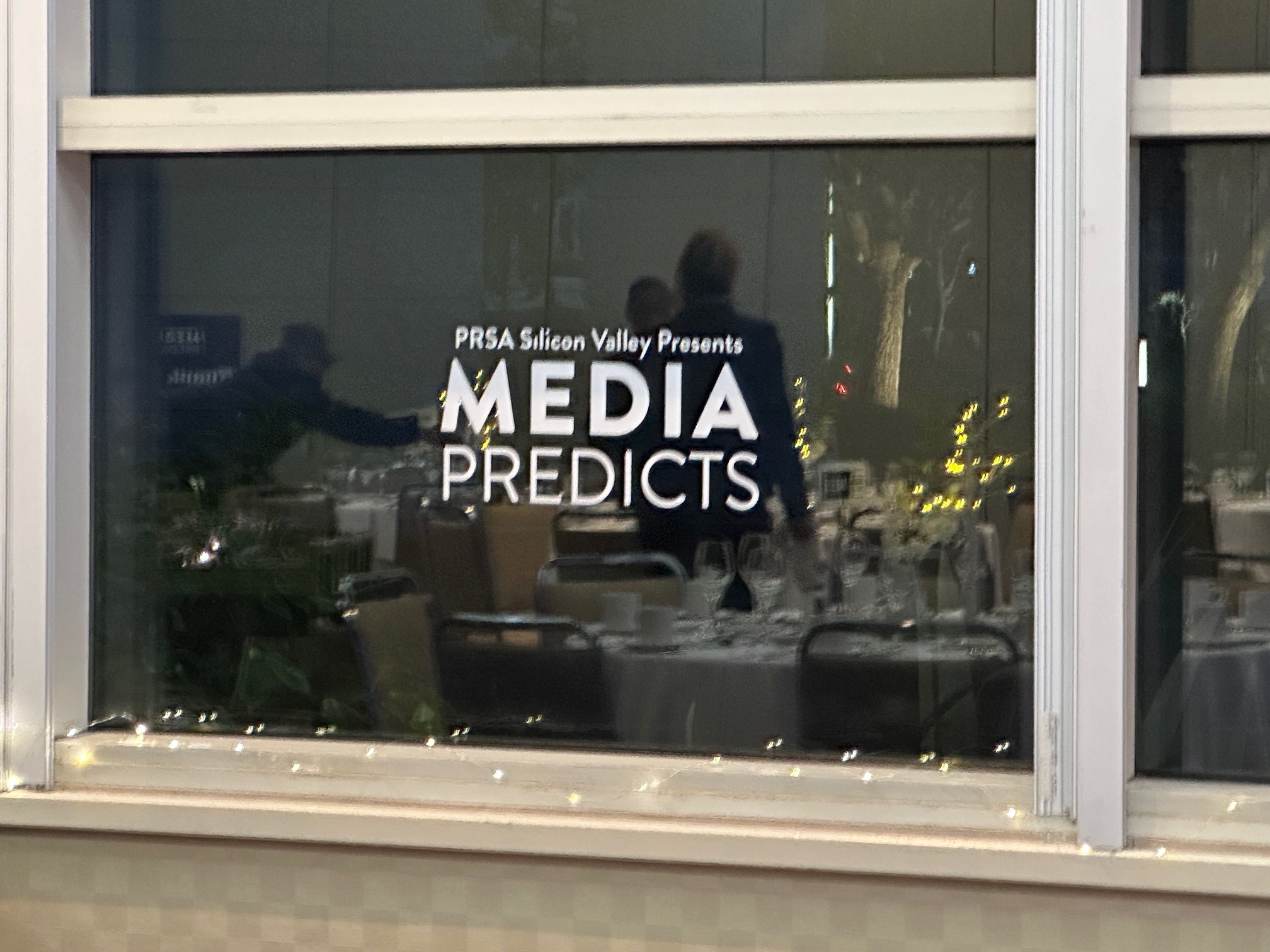
I enjoyed being a part of the PRSA Silicon Valley team in 2023 and that was especially true the night of the annual Media Predicts event Dec. 6th at The Grand Bay Hotel on Redwood Shores.
I had so much fun I raised my hand to be vice president of marketing for the chapter this year. In other news, Tara Thomas stepped up and will continue in the programs executive role. Yay team and I’m already looking forward to Media Predicts 2024. In other big news my South Bay buddy Mike Sanchez took on the PRSA SV Secretary role.
Part of the reason I like volunteering is that I’m a freelancer: PRSA SV gives me teammates and dare I say, friends. Face it. We do develop friendships at work. You spend 30 to 60 hours a week working so this is goodness.
I have partnered with other freelancers to serve clients and pitch prospects. I recommend it; the slight downside is you DM a lot which is time consuming. This could be an upside if you are friends. Having a bad day? Message your freelancer partner for a few kind words of support.
Truth be told, I also made friends working with my 2023 robotics software client. Our interviews were in person (TechCrunch’s Brian Heater, Mercury News’s Sal Pizarro, several broadcast. Shameless plug, i know.) and it gave me a chance to better get to know them.
Anyhoo… back to Media Predicts. Head of programs Tara noticed my early arrival to the hotel and relaxed stance. Someone had plopped a glass of wine in my hand so I looked pretty ‘cushy.’
Everyone else is running around setting up with serious looks on their faces. Meghan Fintland was on stage practicing her welcome. Jeannie Entin was helping the 11 student volunteers get situated.
My typical volunteer roles are writing and editing: I’m an extrovert and it’s hard for me to ‘focus’ during events. Give me a great meal and a dance floor. The food was surprisingly good and we did leverage the dance floor and DJ at Media Predicts.
Flashback memory of another volunteer gig: I tried to staff the welcome table at a TEDxSanJoseCA event but was quickly pulled off because an attendee wanted to have a deeper conversation. I did better handling the publicity. At Santana Row, KTVU interviewed Gold Medalist Swimmer and Speaker Dana Vollmer. Dana who held the Gold Medal in the butterfly overcame a heart defect. The same reporter interviewed a scout leader when I volunteered at council. I enjoy working with broadcast. (Shout out to Sharon Chin, Scott Budman; the list of on-air friends whom I greatly respect goes on and on.)
Back to MP23. Tara quickly assigned me to window decal application. That went fine and the space looked captivating with the next level decor including the lit-up letters spelling PRSA. (Tara: The S is in my garage. Readers please see the S photo below.)
I finally felt useful on event night and the decals were not crooked. Yessss.
5 Honorees
Who got awards that night? PRSA Silicon Valley Chapter President Meghan Fintland and President-elect Jeannie Entin presented awards to three PR professionals, Camille Clark and Alannah McDermott co-honorees for Board Member of the Year and Jeremiah Lineberger who achieved the Young Professionals Award. An older person can win because the point is to be new to PR. In fact to this day I have no idea how old Jeremiah is.
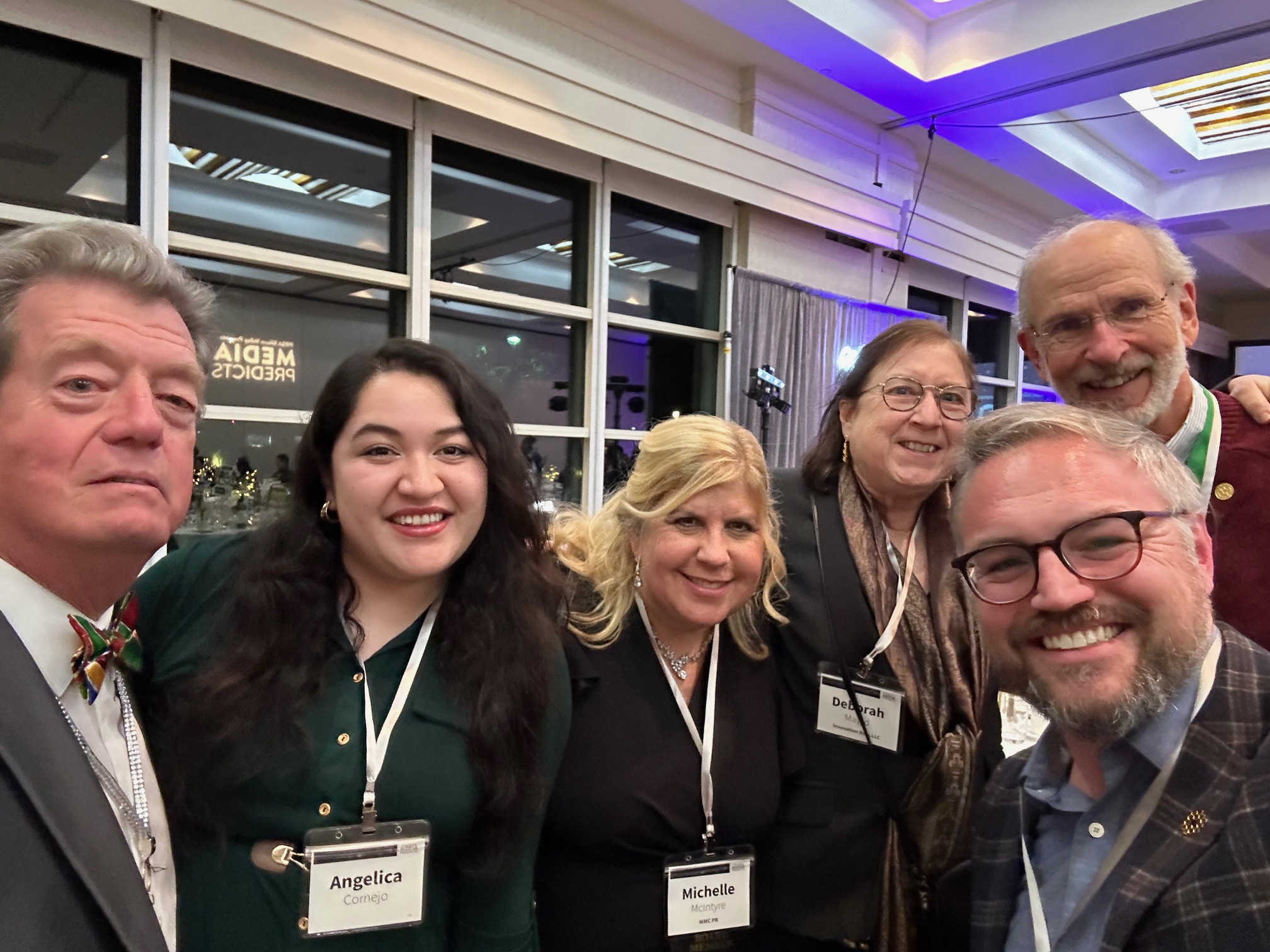
Former National PRSA President Gerry Corbett presented David Vossbrink with his PRSA Fellows Medallion. I was honored to be at Gerry and David’s MP23 table. (Some of my awesome table mates are below.)
Noel-Schure’s award acceptance comments brought audience members to tears. The comment that stuck with me the most is, “The secret sauce is to continue to operate in kindness.”
She mentioned several entertainers that she represents including Chloe X Halle, John Legend, and Jessica Simpson. Yvette Noel-Schure spent most of 2023 as the publicist for Beyoncé’s record-breaking Renaissance World Tour. To my friends who like Prince: She represented him too!
The 2023 Media Predicts panel included Moderator Rochelle Nadhiri, Shawn Chitnis, Connie Guglielmo, Kayli Hays and Eric Savitz. That story with their comments is here.
###
Who am I? I’m Michelle McIntyre, the new PRSA SV VP of marketing, a PR freelancer, IBM vet, and author of this story. I’m accepting new clients in 2024. Please hit me up for a breakfast meeting to discuss how to get your business attention. I like Bell Tower cafe in Saratoga. If you don’t want to talk about work, the drinks at night option works too. I love going up to Berkeley!
Be aware that PRSA Silicon Valley is devoted to diversity and mentoring. We invite you to get involved and check the website for new scholarship opportunities. Proceeds from MP23 went to diversity programs.
Photo credit: I took them with my iPhone 14 Pro. Camile Clark took the first photo selfie-style. I can’t remember who took the one of the group of us but it was taken with my iPhone.
Controversial robo taxis did not make the ‘first cut’
Three MIT Technology Review representatives held an event today to unveil their breakthrough list of technology for 2024. The items are timely now, more consumer-y than in years past, and according to the editors are “big meaty technologies poised to change the world.”
The surprising thing to me is that the first thing I saw when entering the LinkedIn live virtual event was a message in comment saying something like, check out our list of breakthroughs that did not make the list here.
My message to industry folks reading this is, if your technology was not included, feel free to write to them and give your feedback. Hire or contact your PR pro to help you say it in an interesting way.
During the event, a communications engagement representative interviewed Amy Nordrum, executive editor of operations, and Mat Honan, the editor in chief who is based in San Francisco. I liked the Bear decoration on the wall behind him. I thought he might be a UC Berkeley grad but his LinkedIn says he went to University of Georgia and Emory.
How do they decide on the list? PR people, university researchers and company folks pitch them solutions throughout the year, and they are considered. Journalists need interesting pitches so that their editors okay their ideas so they don’t just toss out ideas to be nice to someone they may have met with.
My experience is that they are open to in-person meetings. You need to be able to clearly articulate why your offering matters. A quality PR consultant can help figure out how to phrase something to get a response from MIT Tech Review.
I’ve taken many technologists to meet their editors: Typically the true breakthrough news gets coverage in a feature.
Relationship building is beneficial too. They might meet for a few minutes to shake your hand and make a new contact for future projects. If you are pitching a conference meeting, try to get in touch at least six weeks in advance and ditch the industry jargon when doing so.
MIT Technology Review editors mentioned weight loss drugs, AI for Everything, the Twitter Killers List, the first gene editing treatments based on CRISPR, Super-Efficient Solar Cells, Mixed Reality Headsets, and Solar Geo-Engineering technologies. Please visit the outlet’s website for the full list here.
Examples of Twitter Killers mentioned were Mastodon, Threads and Blue Sky. Threads is up to 100 million users: I find engagement hard though due to lack of hashtag capabilities. Discord and Slack were smartly brought up. Slack is universally used by all people I do business with. Discord is popular with Gen Zs but I don’t like the way you can make your identity secret there.
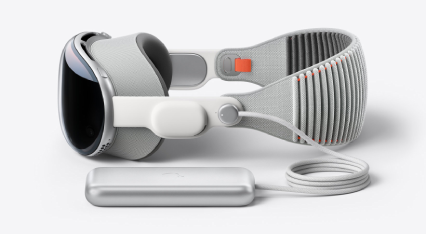
Apple’s Vision Pro Headset which will be out in February was mentioned. (See the photo that goes with this story. Photo credit goes to Wikipedia.)
The editors said to keep in mind that mixed reality headsets have not done well in the past with consumers. They added they were more impressed with the underlying technology because of how you can be present where you are and also be in or near something that’s virtual. Apparently, it’s wicked awesome, as they say in ‘Bahston.’ (I used to live in Salem, MA.)
They mentioned that Mexico has banned some solar geoengineered experiments.
They deeply and passionately stressed what did not make the list. Honan said that he’s been testing robo taxis in San Francisco and because of Cruz running over and dragging a pedestrian, they took it off the list. They mentioned Waymo expanding its robo taxi program. As an aside, I never heard anyone say anything bad about Waymo so they must be the darling of the autonomous vehicles industry.
They added that some new Alzheimer’s drugs had major side effects and there was an experiment in Asia that showcased male to male reproduction. Wow!
They invited the audience and readers to vote on what the last item should be. The options are thermal batteries, lab grown meat and robo taxis.
The purpose of this story is to help clients and prospective clients understand what makes journalists tick. If you understand media outlets, it’s easier to get their attention and coverage. Hire a PR consultant if you need help with media relations.
###
Michelle McIntyre is a global tech PR consultant who lives in the Silicon Valley, IBM PR vet and VP of Marketing for PRSA Silicon Valley.
Gordon Moore’s ‘Guest Post’ was Published in Electronics on April 19, 1965
“Integrated circuits will lead to wonders such as home computers, or at least terminals connected to a central computer, automatic controls for automobiles and personal portable communications equipment,” Gordon Moore said in a story for Electronics Magazine that was published on April 19, 1965.
Georgia Tech made this paper available via this PDF. It’s a nice reprint because it has key sections highlighted and is easily accessible.
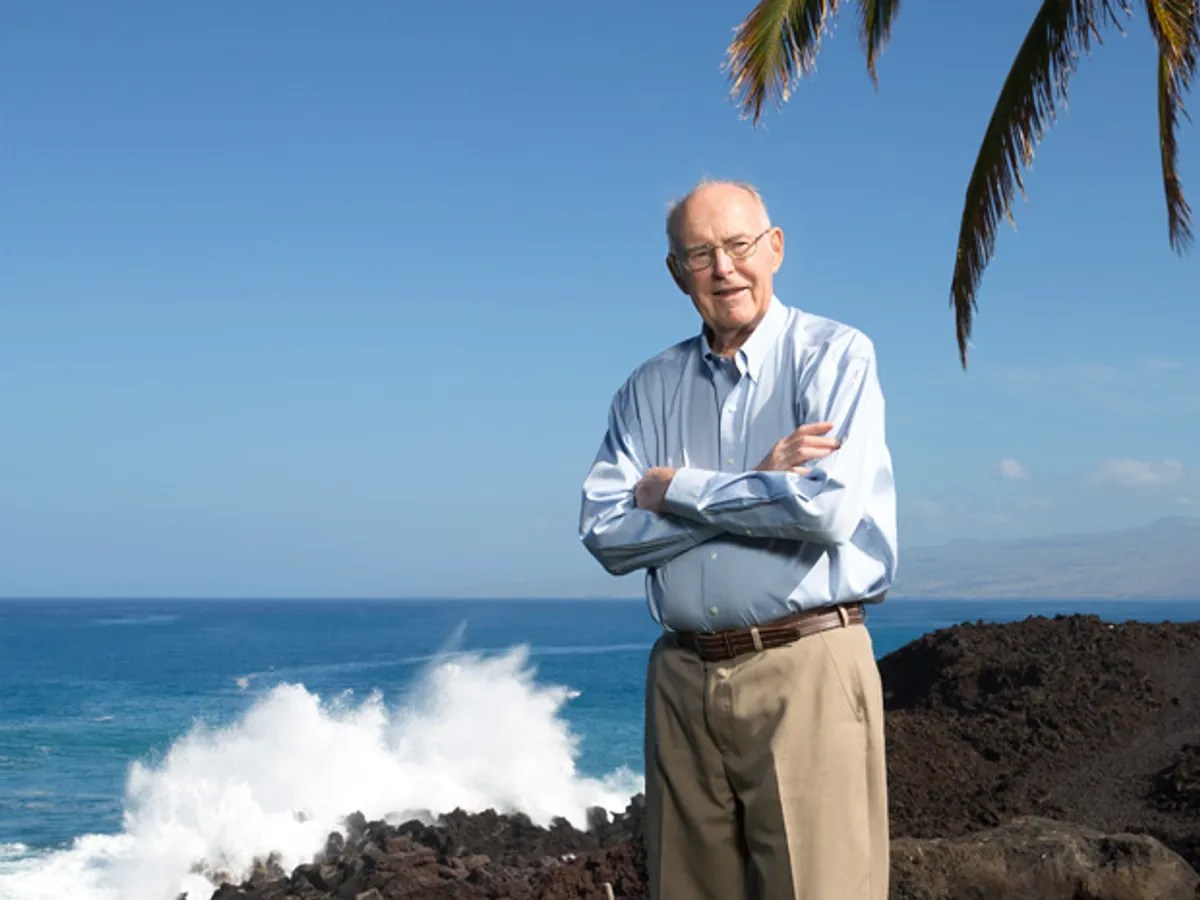
On March 24, 2023, the co-founder of Intel and Fairchild Semiconductor Gordon Moore passed. He was 94. Many of us in tech had the pleasure of meeting him. He could often be found shaking hands at major Silicon Valley tech events. He started his undergrad degree at San Jose State University, finished at UC Berkeley and went on to earn a PhD in physical sciences from Caltech. The photo of Moore below was published in IEEE Spectrum and taken by Olivier Koning. I like it because it shows his California roots. He was born in San Francisco.
I met Moore at the Computer History Museum: My IBM VC Group colleague introduced me to him. He was pleasant and low key: We posed for a photo together. He is known as the technologist who came up with the concept of Moore’s law in 1965.
The reason the ‘law’ is much talked about is that it has to also do with cost effectiveness and the miniaturization of electronics. Some call it the basis of the digital revolution. This has driven many facets of the tech industry over the past 55+ years.
Did you know that the concept resulted from a PR ‘guest post’ opportunity? Okay, it wasn’t technically a post because it was printed in a hard copy magazine but that’s what we call them today. A ‘post’ refers to something published online usually on a media outlet’s website. Byliner is another name for it.
In the early 1960s, an Electronics journalist asked Moore to write an expert paper for the magazine and make a prediction. It became Moore’s law. It wasn’t called a law yet. In 1975, a decade after the paper was published, a professor at Caltech started popularizing the term “Moore’s law.” That stuck. That was good PR for Caltech because Moore received his PhD there.
Moore’s law is simply that the number of integrated circuit transistors doubles every two years. It’s an observation and projection of a historical trend.
It’s not actually a law of physics despite the label. It’s, according to Wikipedia, “an empirical relationship linked to gains from experience in production.”
Does Moore’s Law hold true today? Some argue it does but my husband, David McIntyre, a director of product planning for a multi-billion dollar tech company says it really depends because not all semiconductors have remained monolithic.
Here is a graph that explains the relationship between ICs and semiconductors:
Semiconductors, sometimes referred to as integrated circuits (ICs) or microchips, are made from pure elements, typically silicon or germanium, or compounds such as gallium arsenide…Due to their role in the fabrication of electronic devices, semiconductors are an important part of our lives. Imagine life without electronic devices. There would be no smartphones, radios, TVs, computers, video games, or advanced medical diagnostic equipment.” – Semiconductor(dot)org website
If you want to learn more about Moore’s law, I recommend reading John Markoff‘s NYTimes stories like this one. By the way, a note for my PR friends — check out the photo in the Markoff story. It’s by Paul Sakuma formerly Associated Press. He’s a fantastic photographer for hire and a friend of the PR folks in Silicon Valley.
The Passing of a Tech Legend:
Rest in peace Gordon Moore who died a few days ago. Thanks for writing that ‘guest post.’ Your words had a huge impact on the way people described technology for many years and is still referenced in stories, speeches, technical papers, PhD dissertations, and books today.
###
Michelle McIntyre is a Silicon Valley-based PR consultant and IBM vet celebrating 10 years in business, working for herself, this year. She recently joined the PRSA Silicon Valley board of directors. Her favorite clients have been in AI, robotics, martech, collaboration, data analytics, and venture capital. She lives in Saratoga, Calif., with her husband and big dog. Her son, a UC Berkeley student, has done math research at Georgia Tech and UConn.
Here are five unique tips on how to get your freelance PR work bills paid on time.
After 10 years in business, I have never had a client not pay me and only one payment was late.
I noticed many PR and media changes over the past decade. Paid content like the infamous Forbes Council has become more acceptable in PR plans. More ‘non journalist’ contributors are being viewed as serious reporters. The line has blurred between analyst and writer. Podcasts were popular, then unpopular and now they are back in style again, or “fire” as Gen zs like to say. Tech reporters have too many assignments and seem way overpitched. One reporter told me he typically had to file five stories a day. That’s 25 a week and 100 per month.
The best idea to get some media attention for a company is to hire an experienced PR pro, one who has kept up with all of these changes.
Once you do PR for a client, what can you do to make sure you get paid at all, and on time? Here are five tips:
Tag on a late fee. Don’t be afraid to tell someone who just hired you or plans to hire you that if payment is significantly late, that you are going to charge a late fee. Notify them ahead of time, not after it’s late. Ten percent is fair. I had a data analytics client that ran out of funds while waiting on new VC funding. The CFO told me that because of my late fee, I was literally getting paid first among the list of vendors.
Assign a number to each invoice. If you assign each a number, accounts payable can quickly refer to each invoice later if there is a problem. I had a minor issue with a longtime European client. Assigning invoice numbers is a life saver time wise. Why? If you label it “February” you can’t tell if it’s for work performed that month or the one prior. And which year? I had sent them 60 invoices over five years so that is five Februarys. Once a European bank started tagging on big money transfer fees after three years. In order to get the client to reimburse me I had to articulate which invoice the fee related to.
Check the fees before agreeing to use a particular service for payments: I tried using PayPal with a Canadian client and the fees were outrageous. They were a percentage of the amount tagged on and it came right off the amount I was getting paid. I seem to recall the number being over $100! The client was so frustrated over Canada to U.S. PayPal business transactions that he opened a bank in the U.S. to pay me, and probably other vendors. I use Bill and Zelle now. That brings me to the next tip.
Automate. Use a service like Bill or Zelle. I use Bill sometimes and it works fine for freelance invoices: Its basic service has no fee. Bill tip: If you have trouble signing up, switch browsers. I love Zelle for paying service providers. I have not used it yet to receive client money, but that may be in my future. I paid my personal trainer via Zelle. I like that it’s fee free. There are a few limits: Zelle is only available in the U.S. A small business can use it as long as their bank offers it through their mobile banking app or online banking service. You can only send up to a certain amount via Zelle in a particular timeframe. Other tips are only pay people you trust with Zelle and treat it like cash.
Get creative to avoid spending hours problem solving. I comped an early-stage startup because solving the billing problem would have cost me a lot of time. A CEO from London asked me for a meeting. I gave him launch advice. He insisted on paying me for two hours. We disagreed on how I’d get paid because I didn’t want to give a stranger my bank account number for the transfer. We had no mutual friends, and he didn’t have a LinkedIn photo. Due to the low amount of dollars, I said, I waive the fee, and have a great day. Otherwise, it would have cost me 10 more hours and a lot of stress.
In summary, employ smart invoice and accounting practices from the start. Thinking that the worst can happen will help you get paid, and on time.
Good luck to all of the new PR freelancers out there.
###
Michelle McIntyre is a Silicon Valley PR consultant, IBM vet and the new head of editorial content at PRSA Silicon Valley. @fromMcIntyre
Full disclosure: The new PRSA SV president Meghan Fintland does PR for Early Warning, owner of Zelle.
This story was edited for brevity on March 7, 2023.
During the pandemic, podcasting experienced stunning growth, and podcast audiences diversified. According to Business of Apps, more Americans listen to podcasts than have Netflix accounts. The Wall Street Journal reported yesterday that SiriusXM bought Conan O’Brien’s podcast network for an estimated $150 Million.
Every major media outlet seems to have them; some like Adweek are launching podcast networks; and many companies wants their executives on as guests.
Here are some tips on helping podcast producers find guests
Consider a podcast sponsorships budget. Think six months ahead with podcasts. Ask your client or CEO if they want to set aside some budget to sponsor a podcast or a few of them. CXChronicles is a top 10 customer experience podcast. The last time I spoke with the host, he said that he required a quality, timely guest and a few hundred dollars to promote it.
Listen to at least 10 minutes of a podcast before reaching out to the host. It’s way easier to place a client on a show after you listened to it. You can hear the person’s tone and personality: Would it click or clash with your spokesperson’s? Better yet, listen to a couple of full episodes. Let it play in the background while you work.
Know which ones don’t interview guests. Be careful about pitching using an expert’s biography when the podcast is two journalists bantering about news and trends. One example is Mike Malone and Scott Budman’s The Silicon Insider podcast. I know Malone from a volunteer gig. It’s an awesome podcast by the way. It focuses on what’s super timely at that moment.
As an aside, it’s wise to always read or listen to a media outlet before you get in touch with its editor.
###
Michelle McIntyre is a public relations consultant, IBM vet, and member of the PRSA Silicon Valley chapter. Her advice on Quora has garnered 1.2 million views. Follow her on Twitter @FromMichelle [“Mic” photo credit: Canva]
I often remind my PR clients and CEO friends to create stunning photographs if they want big media attention. A clear photo with great lighting that tells a story can be the difference between starring in the lead of a story, being buried in the last graph or not being mentioned at all.
Therefore, prior to a publicity push, hire a photographer, like Paul Sakuma who is in the Silicon Valley, or take some clear and pro-like photos with a high-end smartphone. Only use your phone as a last resort. Maybe you have bootstrapped, early-stage startup. A quality photographer’s work is priceless and the investment will be well worth it.
Photo credit: Canva
For executive head shots, go to a nearby studio or set up a shoot at a nearby park. (And follow the pro tips for head shots like don’t wear a logo on your shirt and long sleeves look better than short.)
A phenomenal set of images can mean the difference between being featured in several minutes of a TV spot or 10 seconds. What’s neat is that a set of photos can be run as a video on a TV or online show. CNBC, Cheddar, Bloomberg TV, or the local and national networks like ABC, CBS and NBC all appreciate a nice set of photos.
My neighbors run an IT company that helps Silicon Valley companies set up their new offices, onboard new equipment or workers, and transition employees to work anywhere roles.
Early on they were asked by The Mercury News for an interview about how a husband and wife can work so well together personally and professionally. This was around Valentines’ Day. They asked me for a tip before the interview. The franchise PR team had set it up. I was asked for the special sauce in helping the reporter.
I told my friends, “Own the photo. When the newspaper writer asks if you are free for a photo shoot, say, ‘Yes,’ or proactively invite them to your office for the shoot.” They did and they ended up being featured in a big part of the newspaper section that morning. Their photo was large and it got their brand positive attention. People saw it and their brand name whether they read the story or not. They starred in the lead of the story.
The co-founders of the IT company have been in business about a decade; they just acquired another franchise office so they are doing well.
A photograph that is clear and tells a story will be welcome by journalists. photo credit: Canva
The other example happened recently. Although I’m known for technology media relations for software as a service or SaaS companies, I also volunteer helping local not for profits, e.g. the Boy Scouts of America council. (The big campaign we conducted recently was telling the world about the first female Eagle Scouts: That got awesome coverage by the way.)
Anyway, a local major broadcast network wanted to cover various summer camps opening up after a lot of people in Northern California got the COVID vaccine. The TV reporter asked for photos of a particular camp, Hi-Sierra for the show. Note that these were photos for a TV spot. Most people think you have to have b-roll. You don’t. Anyway, the BSA team had a stunning collection of high-resolution camp photos all in one place. I was able to scan the group and pick out the top ones to make the journalist’s deadline. They were featured in a slide show on TV along with an interview with the camp director. It was beautiful coverage.
Just yesterday a business reporter asked me if any of my PR agency clients had photos of their cool local work sites I could share. At about the same time a trade reporter asked for photos for a story based on a press release about an award. I was pleased when my clients gave me quality images for them. The writers were quite pleased as well.
In summary, if you want your organization to star in a story or get more time in a TV news spot, hire a photographer to take a set of quality photos for your next public relations campaign. As an aside, a phenomenal image can also make your social media posts pop.
###
Michelle McIntyre consults for Aircover Communications. An IBM PR vet, she also runs her own freelance PR practice and is a ranked future of work influencer. @FromMichelle on Twitter.
“Companies are under greater scrutiny than ever before,” warns Howard Bragman, founder of La Brea Communications public relations firm in Beverly Hills, Calif. The firm serves celebrities, doctors, CEOs, elected officials, regular folks and others. He lists Monica Lewinsky’s father as a client. An endorsement quote from TMZ’s Harvey Levin graces the home page of the firm’s website.
He was the speaker at this week’s PRSA-SV weekly event.
Definition.net defines a crisis as “An unstable situation, in political, social, economic or military affairs, especially one involving an impending abrupt change.”
Creative public relations professionals might see a problem as an opportunity to get a quote or an opinion in a media story. But Bragman says very few communications folks can successfully do this. He cautions not trying to benefit from bad things happening.
Bragman who has been doing image work for a few years says now there are many ways to stir up image trouble. A PR crisis used to involve sex, drugs and rock and roll. But now there is social media and more of an emphasis on political correctness. An interesting side comment he made related to politics is the trend for Republican men to not want to get the COVID vaccine.
Bragman commented on ‘larger than life’ tech industry leaders like Elon Musk. He says they are like celebrities: They tend to hang around celebrities (which is true: Musk did marry a performer) and live “larger than life.” Another example is Ashton Kutcher who is known for backing tech startups and his acting career. Kutcher is both in a sense — a celebrity and entrepreneur — which is not uncommon these days.
In advising people like Steve Jobs, Bragman says, “Be careful about taking their authenticity.” I agree with his assessment: Advise CEO celebrities to not break the law but generally be themselves.
He cited the importance of knowing the laws that affect a situation. He commented, “Be sensitive when discussing solutions but bring in an attorney when needed.”
###
Michelle McIntyre is a PR freelancer in the Silicon Valley, IBM vet and syndicated blogger with 500,000+ impressions on Quora. @fromMichelle on Twitter @Michelle408 on Clubhouse.
Thank you PRSA-SV board for scheduling this informative Friday Forum event.
Company marketers are constantly wondering about consumer sentiment. Without this knowledge it’s hard to determine if business decisions make sense. Attitudes massively affect how freelance workers, startups and large businesses market themselves.
Kyle Drop, president and cofounder of Morning Consult says his company frequently reviews citizen sentiment, often daily. The good news he says is, “The future is going to be positive.” (And I don’t think he was referring to positive COVID tests.) He meant we’re moving to a happier more hopeful era. “How does the saying go? The night is always darkest before the dawn,” he added.
“Trust in institutions was in the dumps before the inauguration…but now Spring is coming,” added Dropp. Morning Consult gained some notoriety as being a more accurate election pollster.
It was refreshing to hear the upbeat attitude in his tone.
He elaborated. The details about what people are thinking will help CEOs, human resources and communications folks better figure out what to say or do during times of Civil unrest. Keep quiet, or say or do something?
The answer is do or say the right thing. And don’t do the wrong thing. One example of acting ethically is when corporate political action committees or PACs stopped donating to politicians that voted to overturn the recent valid election.
Institutional trust affects the bottom line: He said that 37 percent of people polled recently have stopped buying from a brand they consider to be unethical.
Lastly Dropp added that young adults do expect and like when CEOs take an ethical stand on societal issues. Therefore, if you are trying to hire, retain or sell to Generation Z and the like, do and say ethical things.
My key takeaway from his comments given during a Silicon Valley Public Relations Society of America event is that a quality public relations professional or team and data are both important to a company’s bottom line.
###
Michelle McIntyre is an award winning Silicon Valley PR consultant and IBM vet. @FromMichelle on Twitter








 ––––––––––– MMC ––––––––––––– Michelle McIntyre Communications