2026 Predictions and Career Advice from Top Journalists 

PRSA SV Media Predicts Did Not Disappoint

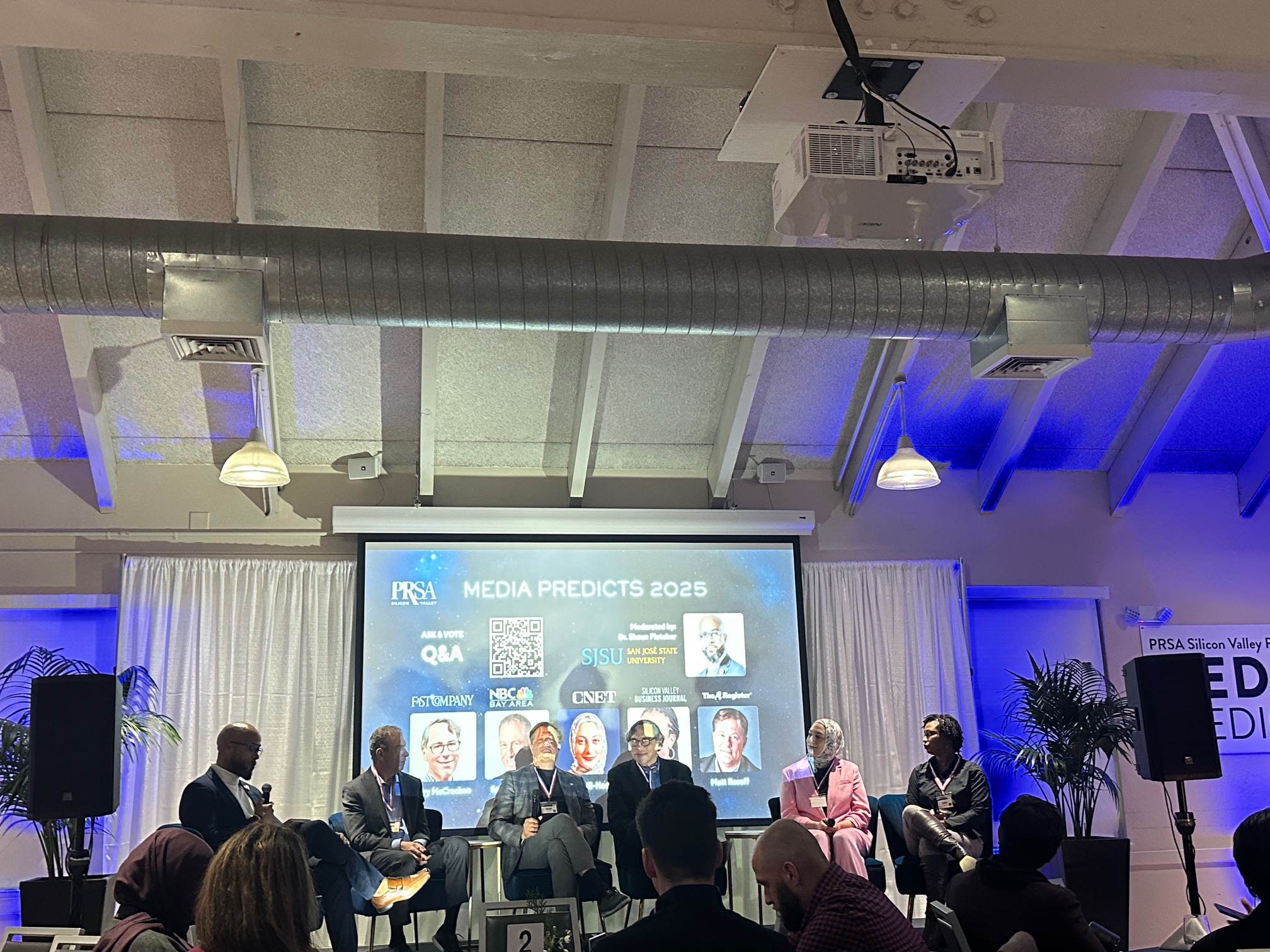
PRSA Silicon Valley Media Predicts panel and gala event happened on December 11, 2025 at the Belmont Sports Complex just off of 101. They discussed Bay Area real estate, GenAI versus SEO, autonomous vehicles, robotics, Substack newsletters and a myriad of other topics. Parking was easy and the sunset views during set up were breathtaking since the event venue was up a flight of stairs and there were big windows.

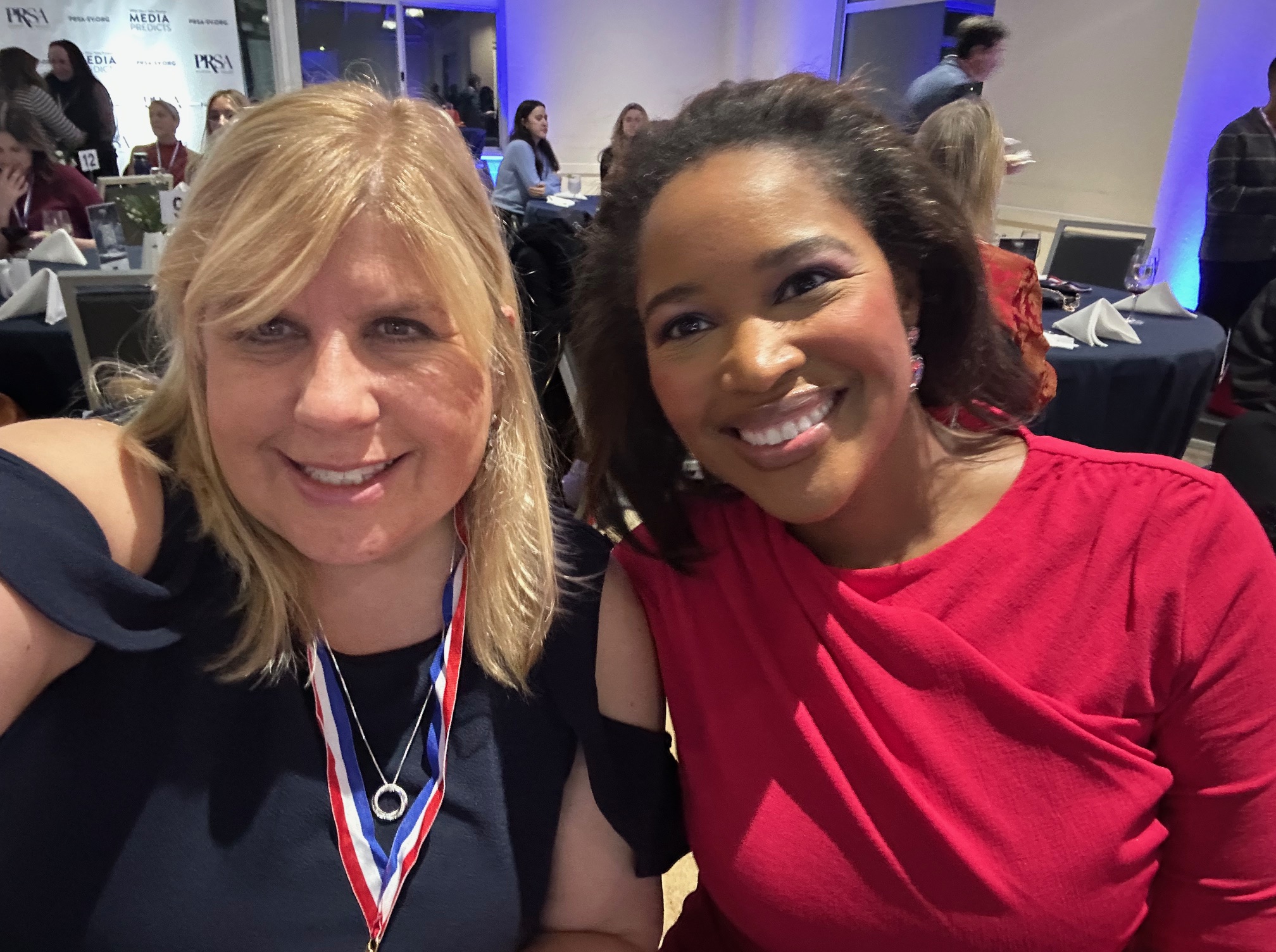
Dr. Shaun Fletcher of San Jose State moderated a panel made up of Ms. Abrar Al-Heeti of CNET, Matt Rosoff of The Register, Scott Budman of NBC Bay Area, Asia Martin of Silicon Valley Business Journal and Harry McCracken of Fast Company. 

The food was an eye-fetching buffet set up of many different heavy appetizers and tasty sweets, and they offered both an open bar and really good coffee at the start. The theme was sports and attendees could shoot baskets or play tabletop games. (Yes, I shot baskets.) The giveaways were high top tennis shoe key chains and mini spirit foam hands, the ones you see at games. Board members Mark Lewis and Jennifer Yoder and San Jose State’s PRSSA president received President’s Awards from President and Emcee Jeannie Entin

This story focuses on three parts. Predictions, advice for people starting out in their careers and story pitching tips. 

What they said about 2026 predictions: 

Matt Rosoff: I look forward to a new type of device that’s not a phone that uses AI. I also see a resurgence of crypto. 

Asia Martin: I’ll be looking at how much of our lives will be infiltrated by AI. AI is doing this without proper regulation. There’s a ton of personal information in AI. AI needs to benefit humanity. 

Scott Budman: Privacy  and security as they relate to AI will be important. A lot of what is happening in AI is in the future. When will people demand payment for use of their data?

Harry McCracken: Harry brought up a Rivian event he attended earlier that day as well as seeing ebikes.

Advice on starting a new career:

Abrar Al-Heeti (pink suit): When people tell you to do something besides what you want to do, don’t listen to them. Do what you’re passionate about. 

Asia Martin: Stay abreast of what’s happening in the world. Research and read about the companies you are interviewing with.

Matt Rosoff: Figure out what you will be a specialist in. What can you become an expert on? What can you be known for? (So true. Most of my experienced friends in tech PR have a specialty like semiconductors, fintech, AI or security.)

How to pitch them:

Scott Budman: I receive around 80 pitches a day but I only cover one story per day. You don’t need to pitch me four or five times. If you pitch me a healthcare story I’m calling back. 

McCracken: I have my own set of experts. I don’t need more. Target your pitches, make them brief and personalized. Put the most important information at the top in news releases.

Abrar Al-Heeti: I cover phones for CNET. I don’t like when a small startup emails me five times and it’s not on my beat.

Asia Martin: I don’t like when I’m offered an out of area spokesperson who can comment on the Silicon Valley. I want someone local. 

Matt Rosoff: Realize that The Register is an international media outlet based in the U.K. Read it before you pitch. After the panel, Rosoff messaged me and added, “When I was talking about knowing The Register, it’s really more about our subject matter — B2B tech for IT pros, mostly, with the occasional offbeat science type story.”

Their most viewed stories:

Scott Budman said it was the Elizabeth Holmes story for a year and he had much international interest in this. Recall that one of the Holmes-Sunny Balwani tweets garnered 15 million views.

Abrar Al-Heeti: CNET’s tariff stories got the most clicks. As a reminder she covers phones.

The group also discussed SEO versus GenAI and brought up real estate a few times, especially Asia Martin who covers commercial real estate and Scott Budman who asked, “Can young people who grew up here afford to buy housing here?” Martin said that AI has impacted real estate because companies hiring for AI need office space. However a company lays off because of AI and that affects housing. 

It was interesting that Martin mentioned residential housing a lot even though her beat was commercial. A lot of news stories and thoughts often go back to how things affect citizens. 

Roles as company story tellers and relationship-builders are important. Please join a public relations group or network with colleagues to gain support for this career choice, and to share best practices. 

Thank you PRSA Silicon Valley for donating your time to run this event especially Tara Thomas as well as giving all proceeds to the diversity and multicultural college scholarships. 

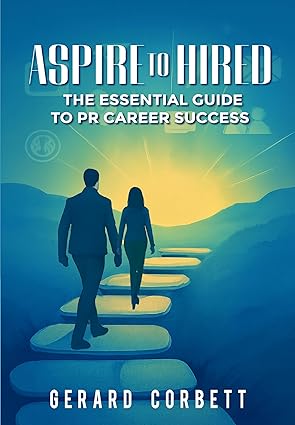
Please check out my friend Gerard Corbett’s new book “Aspire to Hired: The Essential Guide to PR Career Success” here. Gerry is a public relations rock star in the PRSA National and local chapters. 

 ###

This story was written by Michelle McIntyre a PR consultant, IBM vet, and former VP of Marketing, PRSA SV. Michelle lives in Saratoga, Calif., with her husband and big dog, Ringo. Her son is half way through his mathematics PhD program at Duke. He’s studying probability and teaching math to undergrads.

And shout out to our small but mighty, Media Predicts Table 6! Deidre Wright, Scott Budman, Albert Hu and myself.

Photo credits: I took all of the photos here except for Gerry Corbett’s book cover which was borrowed from Amazon.

To Succeed in AI, Know and Use These 10 Terms Including “Token” and “Inference”

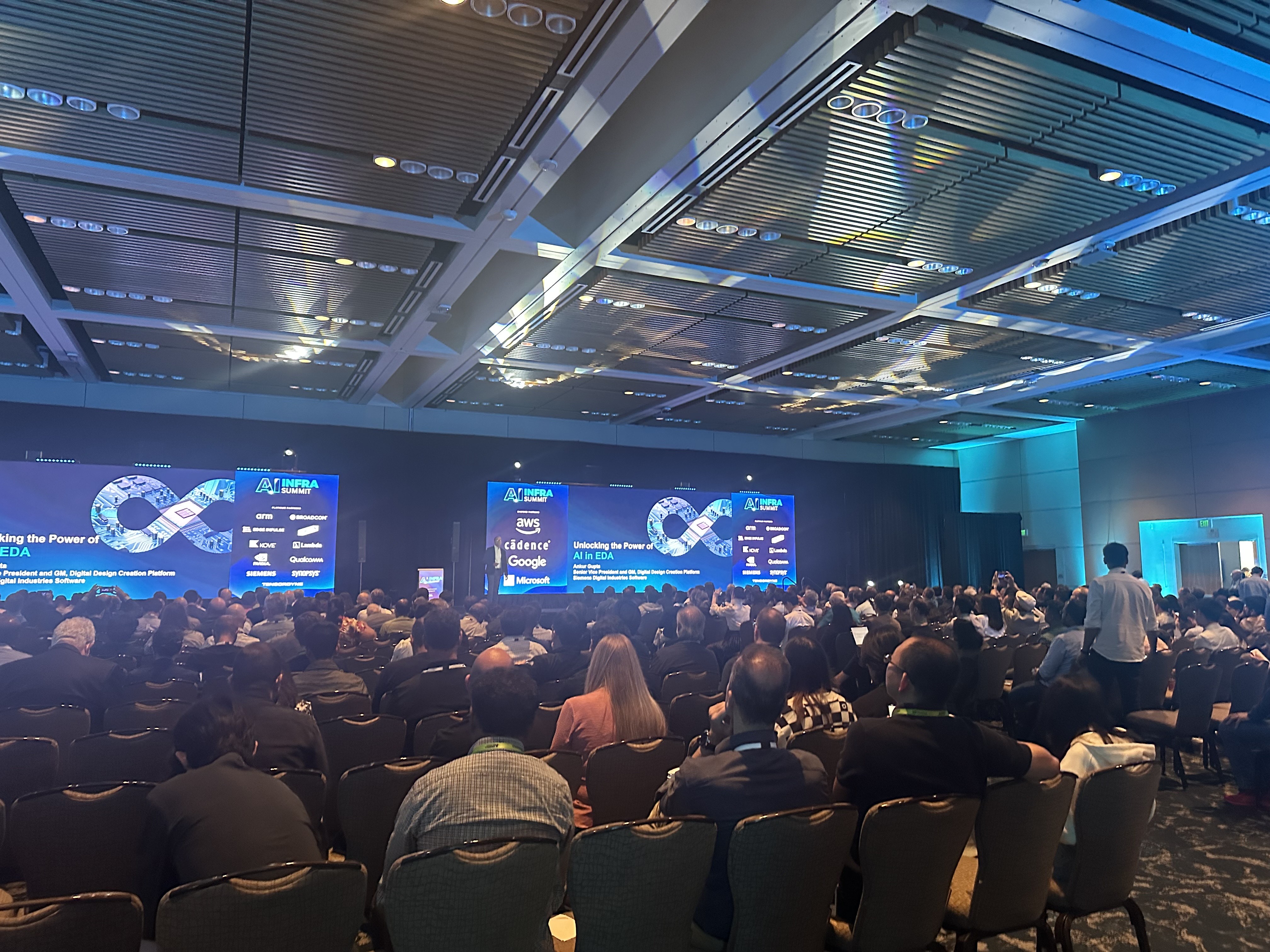
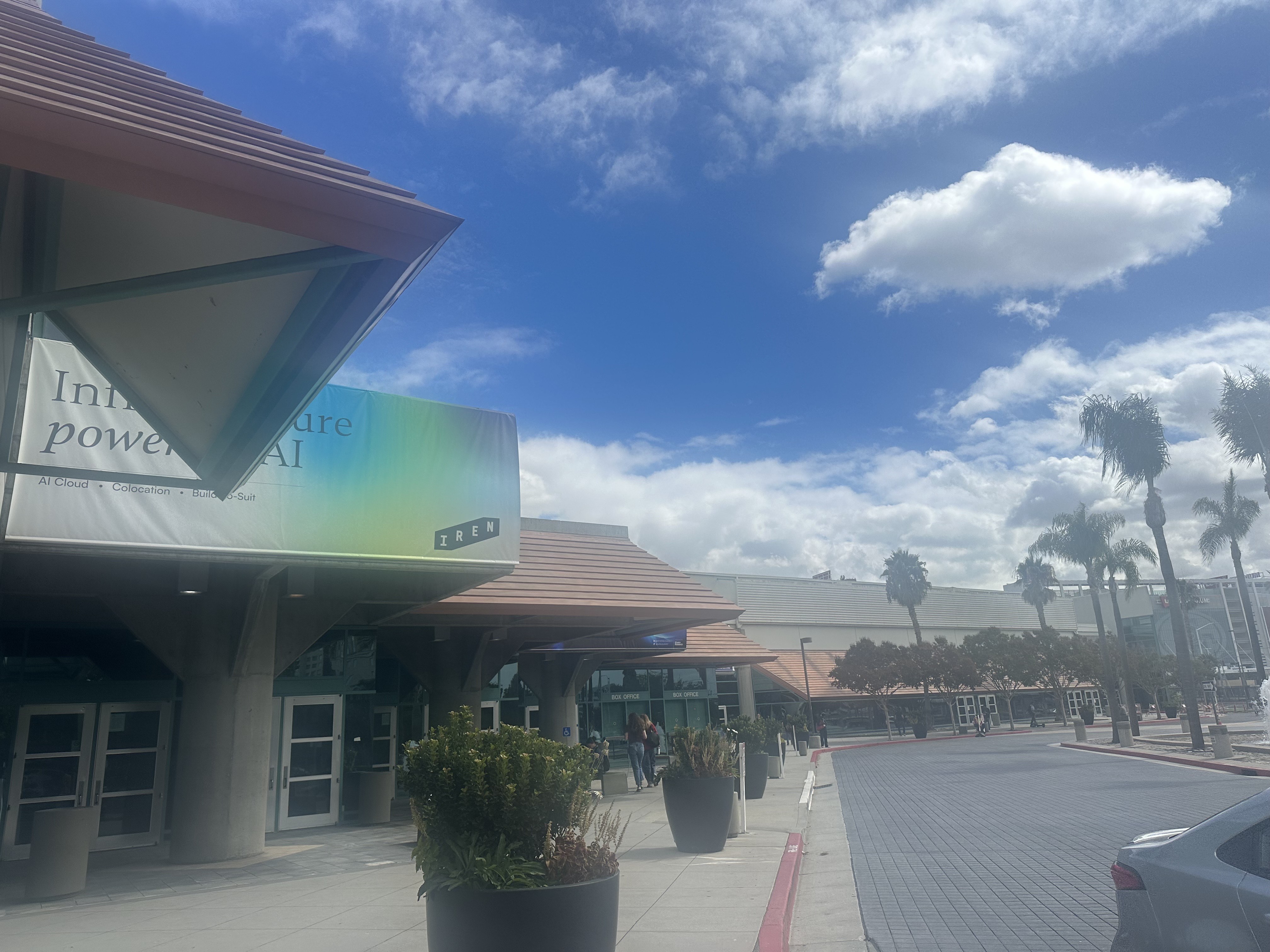
Today I attended day one of the AI Infra Summit at the Santa Clara Convention Center. Around 4,000 registered which is up from 1,500 last year. By the way, infra stands for infrastructure. Speakers addressed what you need for AI. 

 I noticed a trend. Speakers used a few AI-related terms over and over like “inference” and “token.” They liked to say, “AI factories” instead of or more than just “data centers.” The term math or AI math was tossed around a lot. Tensordyne booth had a digital sign that went so far as to say, “AI is math.” 

I decided to blog about the AI terms used by speakers that got my attention at AI Infra. 

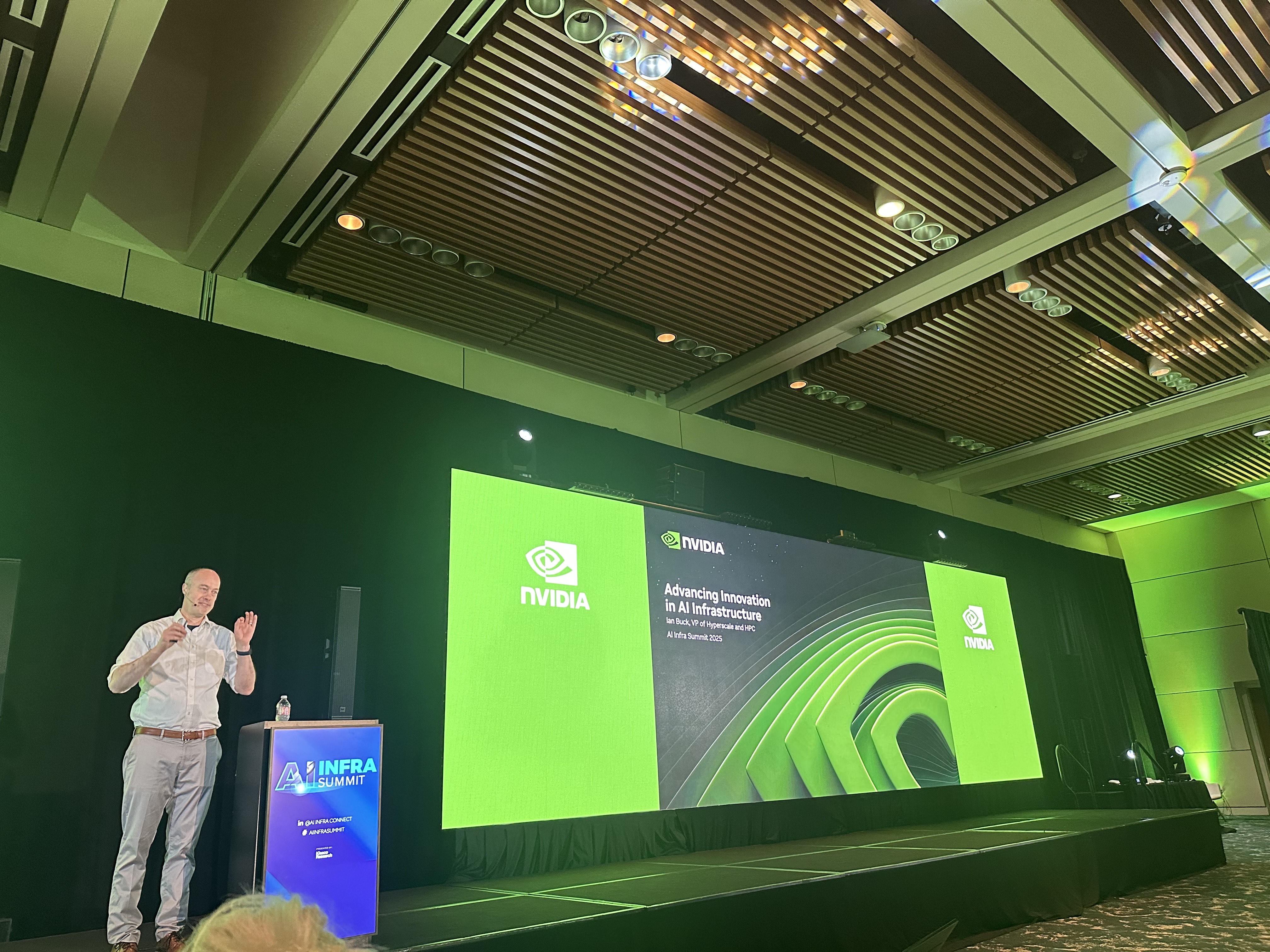
I sat through the press conference (photo below) featuring five companies, including two very young startups, as well as mainstage key notes by Meta, NVIDIA, AWS, Kove (unique software-based memory) and Siemens.

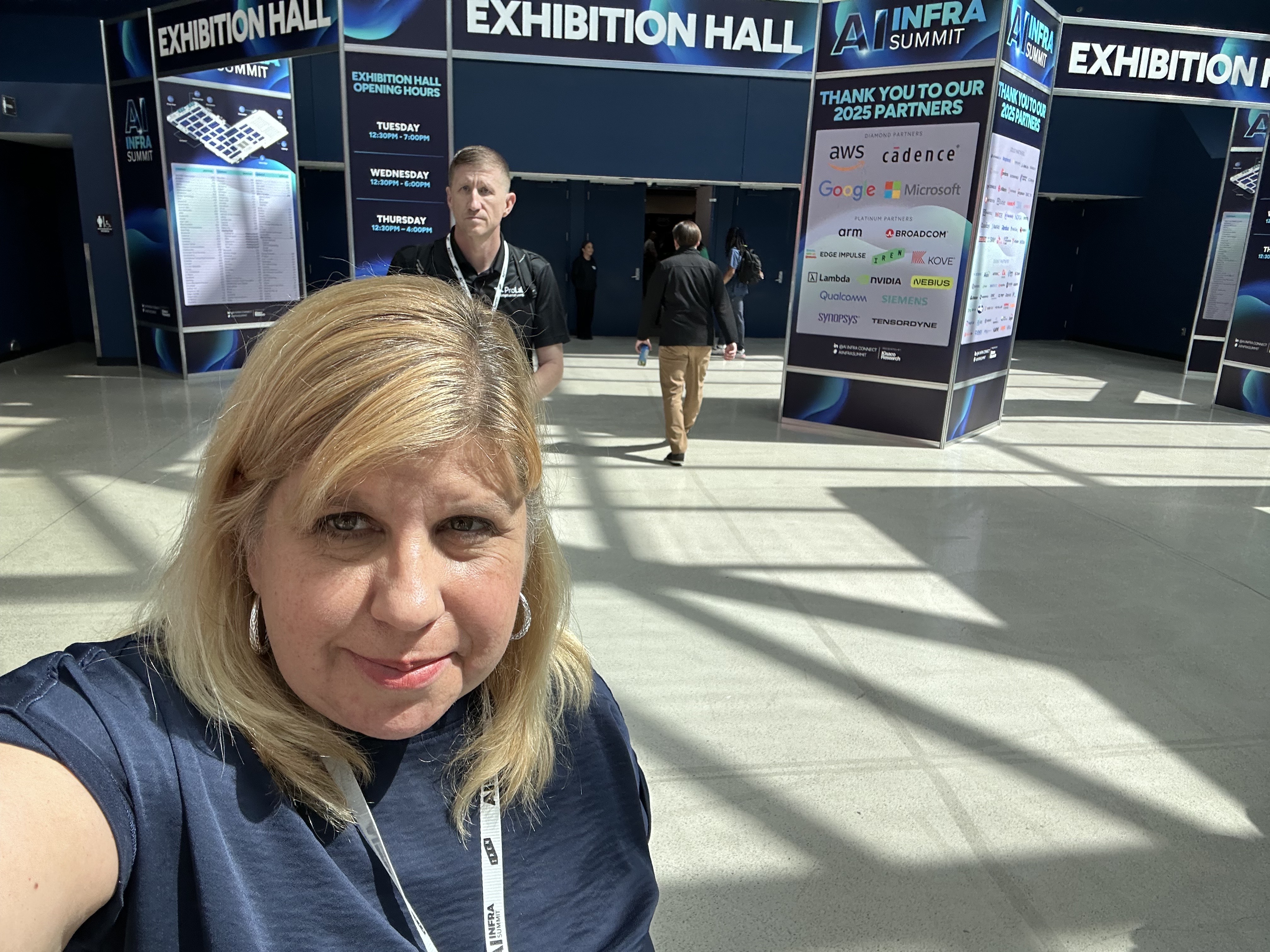
Thank you Royal Huang, PhD and CTO of SuperTech FT – a 5013c that teaches young people a practicum of physical AI and robotics – for checking my list of terms and commenting. Full disclosure is that SuperTech FT sponsored my conference attendance. Huang is an AI consultant who has worked in automobile robotics, health tech, edtech and more. (Royal is pictured below under the tiger in the AI Infra exhibit hall.)

Here’s my list of Top 10 AI Infra conference terms:

  1. INFERENCE: I heard this dozens of times and on many slides from the start of the press conference at 8:15 am right through to the last mainstage keynote speaker hours later. AI inference is the process of using a trained artificial intelligence model to generate predictions, insights or outputs from new, unseen data. Dr. John Overton, Kove’s CEO and a PhD, showed a slide that said, “Unlocking AI inference.” Kove innovates by making unique software-based memory.
  2. TOKENS: NVIDIA’s website says, “Tokens are tiny units of data that come from breaking down bigger chunks of information.” It adds, “The language and currency of AI tokens are units of data processed by AI models during training and inference, enabling prediction generation and reasoning.” Speaking of tokens, NVIDIA’s VP of Hyperscale, Ian Buck, PhD, announced a new GPU today, called Rubin CPX. It will be online by the end of 2026 and it will be able to handle “one million tokens” which apparently is a big deal. It reminds me of that Austin Power movie line, “1 million dollars.”

3. AI FACTORIES: Speakers said “AI factories” much more than data centers on their slides. Not new news but still interesting are Meta’s plans to build a ginormous data center that can handle very advanced AI. Today, one gigawatt which can power all of San Francisco is considered big. Yee Jiun Song, VP of Engineering, Meta, and also a PhD, mentioned in the mainstage keynote one that a five-gigawatt data center is planned! This will be called Hyperion and be the size of Manhattan. 

Royal Huang commented on this topic, “Think of it this way. The data center is the soil and AI is the crop.” 

These next three are more commonly used by business people:

4. LLMs: A lot of speakers talked about training large language models or LLMs. 

5. AI Math: Today’s speakers said “math” several times. AI performs calculations. AI enables calculations. AI can save or cost a lot of money. There is a lot of math involved apparently. Recall that Tensordyne’s booth had a digital sign that said, “AI is math.”

I asked a person sitting next to me at lunch, Asif Batada, Sr. Product Marketing Manager of Alphawave Semi, if he thought math was important and used often in AI. He said, “Yes, math is like water,” and then switched the word to, “oil.” He elaborated, “Math is like oil; smart people are working on optimally using oil.” Interesting analogy.

6. GPUs and CPUs:  A GPU is defined as a specialized electronic circuit designed to rapidly process and render images, videos and animations as well as do scientific computing, AI and machine learning. NVIDIA Rubin CPX (a future product) is a GPU. Fun fact: NeuReality’s CEO said during the press conference that you don’t want to cram too many GPUs together because that could cause performance to suffer. I guess there’s an assumption that more GPUs are better. He says, not necessarily. And a CPU is a semiconductor chip that acts as the brain of a computer. 

These last words or terms are a bit overused but still valid:

7. OPEN SOURCE: Several mentioned that their product worked with many other brands of technology. Open computing is still a big deal. 

8. SCALE: AI Consultant Huang advised that, “Everyone says they scale. But scaling is the toughest thing to do.” I’m not a huge fan of this term for this reason. Almost everyone in tech claims they “scale.” It’s better to give the proof as opposed to just stating the claim. 

9. SAVING ENERGY and driving efficiency: Everyone mentioned this. A lot. Huang commented, “When you build a data center everyone is after being energy efficient.”

10. NVIDIA, the only proper noun on the list. And as a bonus number 10, Anthropic. Many companies said that their product is used by NVIDIA or they have been working with them. The AWS speaker name dropped working with both NVIDIA and Anthropic.

Royal Huang commented that he thought AI agents, agentic AI or multi-agents should have been included in my top 10. However, I didn’t hear many speakers mention them today. I do recall AWS mentioning it. Huang added that edge AI was also important. He had planned to see many agentic AI talks at the AI Infra conference which goes through September 11th. 

###

Michelle McIntyre is a Silicon Valley-based PR consultant and IBM vet. As a social media influencer and blogger, she’s sometimes invited to press conferences. She is attending AI Infra on behalf of SuperTech FT, a robotics non-profit that trains (mostly) young people to do ‘physical AI.’

Photos: Michelle McIntyre took all of the photos here. The stuffed animal booth give away is from a company called Xage Security.

68% Surveyed by USC Annenberg Say Humans will Remain Essential to PR 

USC Annenberg’s Global Communications Report examined trends affecting the public relations (PR) profession in the second half of 2025. 

The report team surveyed more than 1,000 PR professionals and like my trusty Nissan Rogue tires or the number of members of Metallica, there are four trends. They are AI, hybrid and remote work, the changing media landscape, and political polarization.

Let’s examine two, AI and political polarization. 

Sixty percent of respondents say AI will have a positive impact on the PR profession while 68% said that humans will remain essential to public relations. I agree with this thinking because at its heart, PR is about relationship-building. I literally get hired as a consultant because I know people. 

As an aside, the biggest use of AI in communications was social media according to USC’s timely report. And Gen Z PR people were the most AI-optimistic: 75% who responded said that AI decreased their workload.

The second trend that’s blaring louder than Metallica Guitarist Kirk Hammett at Levi’s Stadium Friday night, is political polarization. 

The U.S. and in some respects, the rest of the world, is divided in two. Either you are for the President of the U.S. or you can’t stand him. The reason why is that if you respect U.S. laws, it seems more ethical to be against him. But then, how can you be against the President? Do you advise your employer to take a stand on this?

And if you do media relations, it’s also wise to not approve of the President because he says he disrespects major media outlets. Theoretically a PR pro needs to respect outlets like Associated Press.

But if you speak out one way or the other customers or ‘investors’ can get upset. At its heart this has to do with the fact that if you take a strong stand either way, you could lose big revenue. Imagine what Harvard and most major colleges are going through right now. 

My advice is to hire an experienced and skilled PR professional to help navigate messages during this polarizing time. Pepper in an attorney’s viewpoint when tens of millions of dollars are at stake. 

By the way, Metallica’s famous four members never mentioned politics once Friday night at Levi’s! I guess their PR team told them to not bring up a politically polarizing topic.

###

Michelle McIntyre is an award-winning tech PR consultant in the Silicon Valley, and IBM vet. The photo of USC above is from its Wikipedia page.

PR Professionals:  9 Pieces of Advice from Fast Company Editors

Winning awards can boost brand recognition, encourage innovation and create meeting and networking opportunities. Awards that matter are worth the investment of time and money.

Some have a fee so marketing folks, budget dollars for these in 2025. 

Today I attended Fast Company’s video meeting session regarding how to fill out their “World Changing Ideas” awards forms for maximum success. 2024 winners are here. The session was called the “2025 World Changing Ideas Awards Informational Q&A.” 

Senior Editor Aimee Rawlins, Executive Editor, Digital, Morgan Clendaniel and a few others presented. To me, most of the advice applies to creating a variety of PR materials from news releases to pitches. 

They conveyed these nine tips: 

  1. Focus on the past 12 months.
  2. It’s okay to say, “Not for publication” if it’s too early to disclose information.
  3. It matters that you show “capacity growth” with numbers.
  4. Don’t use jargon or marketing speak. We can tell when you lift it off of the website. We know marketing jargon. This was repeated a lot and with passion!
  5. Describe how it compares to others. Where does it sit in the market?
  6. Use the actual name of the solution, project or service. 
  7. Don’t use superlatives. Say what it is, plainly. 
  8. The words need to explain it as fully as possible without URL links.
  9. If a section has a 500-word limit, don’t go beyond that. They read thousands of applications and have to get through them all. 

It takes hours to research these awards criteria and advise clients so I appreciated the information session or “sesh” as some like to say. It was better than collecting and reading a lot of tips material. Plus, I was able to attend a ‘freebie’ senior editor panel.

How Can PR Help You Win Awards?

A skilled PR practitioner is to me, similar to a journalist. They will do the investigative reporting at their company and find out what makes the item super cool and useful and then articulate that efficiently. Apparently, you want to NOT copy paste from the website. 

I appreciated the tips immensely (<excuse the superlative!) because they can apply to any public relations materials that are shared with journalists. 

The application deadline for Fast Company’s World Changing Ideas Awards is this Friday, December 6, at 11:59 p.m. PT. 

As an aside, the woman worker image was produced by ChatGPT on December 4, 2024. I asked for an image of a 45-year-old woman office worker with a laptop.

###Michelle McIntyre is the president of Michelle McIntyre Communications LLC, a tech PR consulting firm. She’s on the board of PRSA Silicon Valley. To buy a ticket to the 17th annual Media Predicts gala and panel event happening Dec. 10 in San Carlos, California, visit this link here. A panel of journalists from ABC7, Business Insider, NY Times, and TechStrong, will give you tips on working with them and you can even meet them to say, “Hello.”

Michelle is FromMichelle on BlueSky and she has 2.7 million views on Quora.

The CEO & President of the Federal Reserve Bank of San Francisco Mary C. Daly Sees Cautious Optimism in the Economy, Says the Goal is an Inflation Rate of 2 Percent 

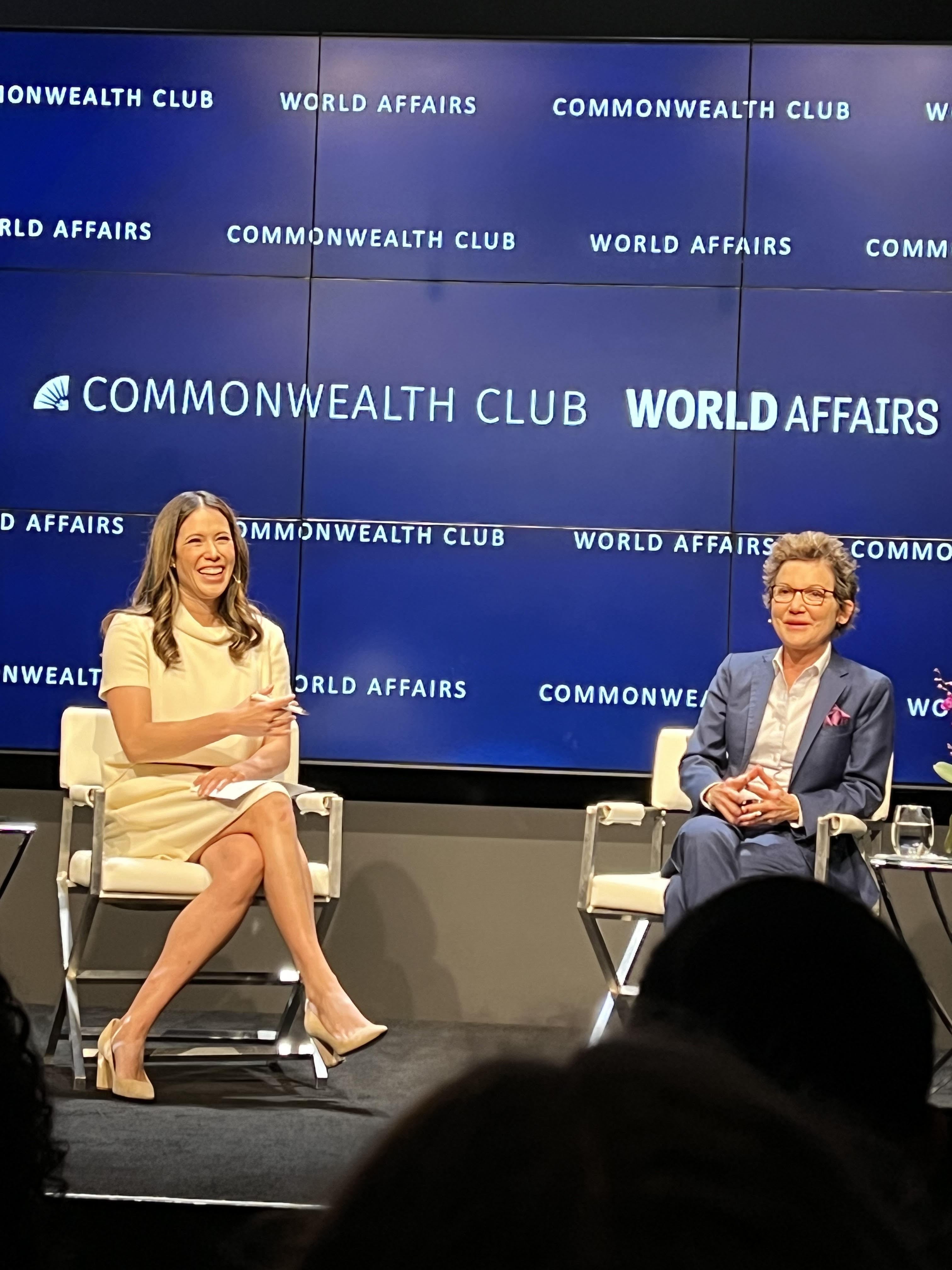
The president and CEO of the Federal Reserve Bank of San Francisco, Mary C. Daly delivered remarks on monetary policy and the economy at the Commonwealth Club in San Francisco which is in a sweet location at 110 Embarcadero, in between Fisherman’s Wharf and AT+T Park where the San Francisco Giants play. (Photo of Deirdre Bosa of CNBC and Daly is by Jeannie Entin.)

Naturally Daly focused on inflation and jobs which is what a lot of we citizens care about the most. I was dismayed seeing my dog Ringo’s Rachel Ray brand dog food go from $17 to $34 due to inflation. The good news is that the new cost has stuck for a while. If it doesn’t go up soon I’ll be happy! (The Ringo photo by me is below. He’s a big boy and eats a lot of dog food.)

Daly, who holds an undergrad degree from University of Illinois and a PhD from Syracuse University, said, “We (The Federal Reserve) need to restore price stability and do so without a painful impact on the economy.” She added, “We are still in a fight to bring inflation down to two percent.” 

What is Inflation at Now? 

Inflation looks like it’s around three percent according to the U.S. Inflation Calculator website. This is a very cool chart. Check out the year it was at 7%. 

She said that people are confident that inflation will come down to two percent. She added that the decline in unemployment is declining more slowly than the decline in inflation. Monetary policy is working but it will take more work, added Daly.  She also said that the Bay Area has a lot of innovation that could come and help productivity. She touched on supply and demand and how that affects the economy. (Argh. Thoughts of Econ 101 and 102 undergrad classes are flowing back into my brain. I simultaneously love and hate this topic. Understanding the economy is important if you have a career in public relations. We typically spend a lot of time with company leaders and sometimes advice on business strategy.)

But, Daly added, things are pretty much in balance, in regards to demand and supply of workers. 

Look back to 2022 Daly says. At one point, unemployment was very low and job vacancies were high. As interest rates rose, the vacancies reversed. In April 2024, the vacancies slid down, as per her graphic. We need to have the labor market slow down a bit to bring inflation down, says Daly.  

My opinion is this is the stressful thing about the economy. If companies hire a lot they have less money. They lay off and stock prices might go up. Running a business is tricky business! Back to Mary…

Mary C. Daly summarized by saying, “We are in a better place than 2023. Inflation has come down and the labor market is solid. But we are not there yet. To thrive, people need price stability and jobs.”

I can hear that Queen song in my head. “I want it all. And I want it now.” Balance is hard but I think the Fed is doing a good job. Hopefully my beloved Rachel Ray dog food will stay the same price for a long time!

As an aside, Daly is a great speaker and from the MidWest like me. I could hear that Midwest roots vibe in her messages. Although I love the location of the Embarcadero near all of the cool touristy stuff, I attended Daly’s talk online.

Thanks San Francisco Press Club for streaming it and making it very easy to attend. I serve on the board of PRSA Silicon Valley with Curtis Sparrer who is the president of the SF Press Club and he extended a personal invitation to me. Curtis is a busy bee.

Look for a more detailed story on this talk from Jennifer Yoder on the PRSA Silicon Valley website soon. Deirdre Bosa, anchor of CNBC’s tech-focused franchise, “TechCheck,” based out of the network’s San Francisco Bureau, interviewed Mary C. Daly on stage after her remarks. Yoder’s story will incorporate more of what Bosa said. Here is the YouTube video URL: https://www.youtube.com/watch?v=hrY3957xQ-A

In closing, here is a reminder of what we learned in econ 101 class taken verbatim from the Federal reserve website:

How does the Federal Reserve affect inflation and employment?

As the Federal Reserve conducts monetary policy, it influences employment and inflation primarily through using its policy tools to influence the availability and cost of credit in the economy.

The primary tool the Federal Reserve uses to conduct monetary policy is the federal funds rate—the rate that banks pay for overnight borrowing in the federal funds market. Changes in the federal funds rate influence other interest rates that in turn influence borrowing costs for households and businesses as well as broader financial conditions.

For example, when interest rates go down, it becomes cheaper to borrow, so households are more willing to buy goods and services, and businesses are in a better position to purchase items to expand their businesses, such as property and equipment. Businesses can also hire more workers, influencing employment. And the stronger demand for goods and services may push wages and other costs higher, influencing inflation.

During economic downturns, the Fed may lower the federal funds rate to its lower bound near zero. In such times, if additional support is desired, the Fed can use other tools to influence financial conditions in support of its goals.

However, there are many factors that affect inflation and employment. And while the linkages from monetary policy to both inflation and employment are not direct or immediate, monetary policy is an important factor.

###

Michelle McIntyre is a PR consultant, IBM vet and head of marketing for PRSA Silicon Valley. She is a Quora influencer in the area of elite college admissions, with 1.9 million views there. McIntyre, a graduate of Ohio University’s EW Scripps School of Journalism currently has a 4.0 GPA in Stanford Continuing Studies. Jeannie Entin who snapped the beautiful event photo for this story is the president-elect of PRSA Silicon Valley.

Do My Favorite News Wires Match Yours? Expert Tips on Issuing News Releases

When you make a news announcement, do you use a news wire? Here’s how it works. You write a news release, pick a photo and upload it to a newswire distribution service that will shoot it out to the internet for you. 

Then you see a report of where it ran and, wallah, your news is out.

Any traditional PR pro who is skilled at media relations will tell you that you can also skip the wire and pitch it to a few key journalists directly. For B2B news, it might be ten to 20 contacts. For consumer mainstream news it might be more like 500 news outlets. As an aside, the best stories are features. Reporters writing these stories love scoops. Wire releases are the opposite of scoops so use them wisely. 

I like a combo of sharing the news using a news wire service and pitching journalists directly. 

The four news wire services I like are PR Newswire, BusinessWire, EIN Newswire and PRWeb. This is from recent experience. No one is sponsoring my endorsements. 

PR Newswire and Business Wire are pricey, roughly $1,500-$2,000 for a news release and image or other media like a video: These two carry the big brand names and make your organization look richer. I like both equally, e.g. service provided. 

My PR friend Laura Desmarais adds: “News wires are essential for distributing news to a wide audience and ensuring timely updates. My corporate clients need to work with a trusted source, and they like either Business Wire or PR Newswire. They typically stay with one rather than switching resources for a difference in service.”

As a heads up, when you talk to a salesperson from these services, they will attempt to upsell you to four or five releases to save money. With EIN, it’s approximately $399 for four or five releases last I checked. Business Wire will offer you five press releases for around $4,000-$5,000. Prices depend on how long your press release is; What is the number of words? You save money if you buy a bunch at once. I typically buy one at a time.

5 quick tips when considering a news wire service:

  1. Although you can post your news to your own website easily enough these days, with wires like EIN and PRWeb, any company or nonprofit can afford a newswire. Hire a PR consultant to guide you through the process the first time. 
  2. Always post an image or better yet, a newsy video. I advised a client just this month to make and post a talking head video with their newswire release and KRON 4 ran it on their website. On the other hand, another PR friend, Mark Lewis, says if you’re in a budget crunch, just use a photo or video link in the wire release.
  3. When you call the newswire service, tell them the number of words so you can get an accurate price. Long releases cost more. They can’t get you a proper quote without length.
  4. Contact the news wire service about your news a couple of days in advance so you can troubleshoot any problems.
  5. Allow a few hours to work with the news wire editor to get the details correct, such as proper photo captions and to correct errors they may catch. They typically proofread and will alert you to mistakes. I find editors very helpful. 

Try a news wire if you haven’t already. There are price options for all budgets these days. Combined with some direct pitching, your news exposure should be pretty decent. 

###

Michelle McIntyre is a Silicon Valley-based PR consultant and PR agency and IBM veteran. Her website is here

3 PR TRENDS SHAPING 2024 from LATIN AMERICA, MALAYSIA AND NIGERIA

I enjoyed hearing journalists and PR professionals speak here in the San Francisco Bay Area recently, from the San Francisco Press Club interview with the NY Times SF bureau chief to the Public Relations Society of America Silicon Valley Media Predicts panel featuring Barron’s, Business Insider, CNET, and CBS News Bay Area. 

Changes brought about by artificial intelligence overshadowed both of those conversations. These were all locals albeit with global perspectives. 

I wanted to know what folks beyond Northern California thought about 2024 so I did some digging. Here is insight from Latin America, Malaysia, and Nigeria’s PR leaders:

  1. AI continues to shape industries including PR agency billing. – Andy See Teong Leng, President of PRGN and former president of PRCA of Malaysia:

“Looking ahead to 2024, Andy (See) predicts that AI will continue to shape the industry, and he emphasizes the importance of humanizing communications in the face of technological advancements. He highlights the growing significance of sustainability and ESG (environmental, social, and corporate governance) communications, urging PR and communications professionals to advise their clients on genuine and authentic approaches to social responsibility.”  Link to more input from and a podcast with Mr. See here

In his podcast segment with Abbie Fink and Adrian McIntyre, he said that GenAI may impact how agencies charge clients. Why? Because AI has sped up work. 

  1. Authenticity rules communications. – Olanrewaju Alaka, executive, Laerryblue Media, Nigeria

“In a world saturated with information, authenticity emerges as the linchpin of effective communication. I foresee a PR landscape where brands will strive to be more genuine, embracing transparency as a cornerstone of their narratives. The human touch, I believe, will be the catalyst for building lasting connections with audiences.” For more details from Mr. Alaka, visit this link. His further comments discuss the importance of visual storytelling and PR campaigns with a higher purpose. 

  1. DEI-related actions reinforce stakeholder trust. -Institute for Public Relations, Latin American Communication Monitor (LACM)

The LACM analyzed trends in Latin America’s PR field and what professionals predict for 2024. A survey of 1,134 communications professionals from 20 countries was conducted from May to June 2022. There were multiple key findings. One is that “actions on diversity, equity, and inclusion (DEI) reinforced stakeholder trust.”

The survey went on to reveal that “empathetic leadership increased engagement, improved mental health, and reduced turnover.” For more information from the LACM look here.

In addition to attending the local PR dinners, panels, and fun networking mixers be sure to take the pulse of what international leaders are saying to have a fuller understanding of our diverse and spread-out world. Because one of the major 2024 PR trends is the human touch, continue to attend events in person in 2024 to deepen relationships and forge new ones.

###

Michelle McIntyre is a PR Consultant and IBM Veteran based in Saratoga, California, a suburb of Silicon Valley. 

3 Reasons Why Queen Elizabeth’s Passing Matters to the World

I have fond memories of seeing the Britain’s Royal Family including Queen Elizabeth on Edinburgh’s Royal Mile in July of 2012, a decade ago while on vacation with my husband. We happened to be there when Prince William was being inducted into the Order of the Thistle for his 30th birthday. 

Credit: Wikimedia Commons, Queen Elizabeth II in 2015

As you may have seen from the BBC news report, the Queen, 96, passed today at Balmoral Castle near Aberdeen, Scotland. There were rumors that she may have suffered a stroke. May she rest in peace and yes, it does make me a bit sad. She ruled as the Queen literally my entire life.

As a publicist, I had to think hard about how this will affect my clients and publicity outreach during the next week or so. Instead of sending several notes, I decided to write this. 

Several reporters will care about this a lot, and when it comes to the news airwaves and in particular broadcast and ‘major media’ this story and related news will take up a lot of space. Recall that 2.5 billion people watched Princess Diana’s funeral. That’s up there with World Cup soccer viewership which was around 3.5 billion in 2018.

Here are three ways the passing of the Queen of England will affect business dealings in the next few weeks:

  1. The Monarchy, while admittedly a tad antiquated, has an influence over many world decisions and happenings. Whether you like it or not, the Queen’s viewpoint and charity choices mattered. Recall the time she used a Cisco WebEx (not a Zoom) to communicate to promote safe social distancing during Covid. 
  2. A change in power, whether it’s an elected government or ‘royal’ affects markets. Stocks may be affected by this. When Charles is declared ‘King Charles III’ which may have happened already, I’m curious how markets will react.
  3. The Royal Family, especially Prince William and Princess Kate and their adorable children are ‘bellwethers of happiness’ to much of the world. Despite the cost of castle upkeep and governments budgets being tight, many eyes globally enjoy reading about the family regularly: When there is good news, it makes them happy. Royal weddings are some of the most watched and beloved events worldwide. Marriages and grandkids make people happy and give them hope for the world. A death of this magnitude may make many millions sad. 

My public relations advice to you is to be aware of the Queen’s passing, be sensitive when reaching out to others, because it’s upsetting news to many, and expect it to have an effect on some business dealings and markets.

###

Michelle McIntyre is a Silicon Valley-based technology publicist and IBM vet. @FromMichelle on Twitter. Photo credit: Wikimedia Commons, Queen Elizabeth II in 2015.

3 Tips on Pitching Podcasts for the Second Half of 2022

During the pandemic, podcasting experienced stunning growth, and podcast audiences diversified. According to Business of Apps, more Americans listen to podcasts than have Netflix accounts. The Wall Street Journal reported yesterday that SiriusXM bought Conan O’Brien’s podcast network for an estimated $150 Million.

Every major media outlet seems to have them; some like Adweek are launching podcast networks; and many companies wants their executives on as guests.

Here are some tips on helping podcast producers find guests

  1. Consider a podcast sponsorships budget. Think six months ahead with podcasts. Ask your client or CEO if they want to set aside some budget to sponsor a podcast or a few of them. CXChronicles is a top 10 customer experience podcast. The last time I spoke with the host, he said that he required a quality, timely guest and a few hundred dollars to promote it.
  2. Listen to at least 10 minutes of a podcast before reaching out to the host. It’s way easier to place a client on a show after you listened to it. You can hear the person’s tone and personality: Would it click or clash with your spokesperson’s? Better yet, listen to a couple of full episodes. Let it play in the background while you work.
  3. Know which ones don’t interview guests. Be careful about pitching using an expert’s biography when the podcast is two journalists bantering about news and trends. One example is Mike Malone and Scott Budman’s The Silicon Insider podcast. I know Malone from a volunteer gig. It’s an awesome podcast by the way. It focuses on what’s super timely at that moment.

As an aside, it’s wise to always read or listen to a media outlet before you get in touch with its editor.

###

Michelle McIntyre is a public relations consultant, IBM vet, and member of the PRSA Silicon Valley chapter. Her advice on Quora has garnered 1.2 million views. Follow her on Twitter @FromMichelle [“Mic” photo credit: Canva]

7 Steps to Help You Get to Know Business Press in a Post Pandemic World

I help a variety of business journalists with their stories on a regular basis: I enjoy seeing these people at events, which are now mostly online, chatting with them daily at Twitter, and reading the interesting things that they write.

I subscribe to a lot of daily newsletters, such as Morning Brew, and check the Twitter feed often. Reporters are often smart and funny, so I enjoy my job.

Think you know how to do media relations? If you’ve been a publicist for more than five years like me, it’s important to refresh the way that you do things in this post pandemic world. Tip: We are now in an epidemic.

The PR profession has changed quite a bit since the pandemic hit: It’s five times harder to develop relationships now because there are very few in person meetings and conferences. Previously you’d run into a reporter a conference or party, or you’d hold a mixer, like a wine tasting, with journalists. That rarely happens anymore in the technology business world.

Here are seven things to do to develop better relationships with business press in modern times:

  1. Make the note short. I was advised in a media relations refresher class at Stanford Continuing Studies to make emailed pitches no longer than 250 words. The instructor a former San Francisco Chronicle reporter, was very good. This tip works.
  2. Personalize the pitch. Make it friendly to their time zone, location and topics they seem to really like covering. Consider a journalist as your client, not your client as your client. Read what they tweeted in the past hour. If you pretend that a journalist is paying you, you’ll treat them with more respect and in turn get better results.
  3. Write a compelling subject line. But don’t make it click bait. People don’t like being tricked. An example is, “The shocking news about Prince William” when it is about how he likes Nutella on his bread instead of the more appropriate and healthier avocado, not true probably, but I’m trying to make a point. Your mind jumped to, “The prince is having an affair.” Treat journalists with respect. They are people. Treat them the way you want to be treated.
  4. Always read a journalist’s Tweet or recent story first. Looking up their stories helps because sometimes you find out that they haven’t written in a couple of years and took a corporate job. Then don’t waste the outreach time, unless you want to network with a peer.
  5. Be brave but not annoying. A follow up by text or LinkedIn direct message might be needed. If you have hard news that you know is major, but the reporter hasn’t opened the email note yet, figure out a polite but direct way to get their attention.
  6. Be sensitive to COVID concerns when setting up meetings. Don’t push an in-person coffee meeting on someone who is more at risk for COVID. “Read the room” as the saying goes. I set up an in-person meeting with a reporter who tweeted, “I would like to meet c-suite executives in person” recently. Note that an online tip has less of a chance of getting canceled. A reporter or executive with breakthrough COVID might still attend the meeting.
  7. Don’t overpitch your favorite journalists. I need to keep reminding myself of this. I’ve heard two editors say that they like hearing from certain PR people no more than four times per year.  This one is hard to follow if you serve a large number of clients. I typically serve between two and five PR clients at any given time.

On a final note, use these tips for trade reporters as well. Trade reporters need to be treated with respect as well. Don’t save the “weak pitch” for the trades. Give them strong spokespersons and relevant news as well. Trade press cover business topics as well.  ###

Michelle McIntyre is a Silicon Valley-based PR consultant who helps startups and their VCs get valuable attention. Prior to that she was the West Coast PR manager for IBM. @fromMichelle on Twitter