Unknown's avatar

About Michelle McIntyre

Silicon Valley PR Consultant

Guy Kawasaki says Entrepreneurs Make these Top 10 Mistakes

ImageGuy Kawasaki spoke at The Startup Conference this week. (Photo credit: Guy Kawasaki)

By Michelle McIntyre

Investor, TED Speaker, startup expert, former Apple evangelist and author of nine books, Guy Kawasaki gave a talk called “The Top 10 Mistakes Entrepreneurs Make” at The Startup Conference in Redwood City, Calif., Wednesday. He is currently chief evangelist of Canva, an online graphic design tool.

Kawasaki has a BA from Stanford University and an MBA from UCLA as well as an honorary doctorate from Babson College.

As a PR and business strategy consultant to many startups, nothing he said shocked or amazed me but his side comments and answers to audience were very funny. He has always had a way of giving business advice in an entertaining and highly digestible fashion.

Here is his list of 10 top entrepreneur mistakes:

Mistake 1 Multiply big numbers by one percent to calculate market size.

Solution: Entrepreneurs should calculate from the bottom up and have realistic expectations.

Mistake 2 Scale too fast.

Solution: “Eat what you kill.”

Mistake 3 Form partnerships, or just focus too much on them.

Solution: Focus on sales. Kawasaki says, “Sales ‘fixes’ everything!”

Mistake 4 Focus on the pitch.

Solution: Focus on the prototype. Code writing software is more important than Microsoft PowerPoint.

Mistake 5 Use too many slides.

Solution: Use the 10-20-30 rule. It is 10 slides or less, 20 minutes in length and no smaller than 30 point type. I agree with this. In fact, I tell clients no more than six slides.

Mistake 6 Make serial progress.

Solution: make “parallel progress.” Startups need to multitask and be flexible instead of deciding that everything must be done in an exact order.

Mistake 7 Try to retain control. It’s a mistake to think that if you own 51% of the company, you can call all of the shots. Most decisions voted on in the board room are decided ahead of time.

Solution: Instead of focusing on how much of pie you have, focus on “making a bigger pie.”

Mistake 8 Use patents for defensibility.

Solution: Use success. He cautioned against mentioning patents more than once in a pitch.

Mistake 9 Hire in your own image.

Solution: Hire to complement. If you are a male founder, look for a female to round out the management team. Diversity is good for business.

Mistake 10 Befriend your investors.

Solution: Simply exceed expectations.

ImageEnchantment is one of nine books by Guy Kawasaki. (Photo credit: Guy Kawasaki)

My key takeaway was that early stage startups need to make their top two priorities developing a quality product and building the user base. Nothing else is as important.

###
Michelle McIntyre, @FromMichelle, is a PR consultant for tech startups, an IBM vet, on the executive team for TEDxSanJoseCA and director with Silicon Valley International Association of Business Communicators.


What Prospective Employers Find Out about You on Social Media

According to a story, “Should Companies Monitor Their Employees’ Social Media?” in the May 12, 2014 edition of The Wall Street Journal, job candidates need to beware that prospective employers are tracking their social media networks to get a glimpse of what they are like.

Image

The story covered results of a survey sponsored by Careerbuilder.com.

Although the article doesn’t refer to consultant candidates, there is no doubt they use similar research methods to check them out as well.

Here are the sites that employers are using to research candidates:
Facebook: 65%
LinkedIn: 63%
Twitter: 16%

Here’s what employers look for when they research a candidate using social media:
To see if the candidate presents himself/herself professionally: 65%
To see if the prospect is a good fit for company culture: 51%
To learn more about the candidate’s qualifications: 45%
To see if he or she is well-rounded: 35%
To look for reasons not to hire the candidate: 12%

Not surprisingly, here is what survey responders said hurt candidates:
Candidate posted provocative or inappropriate photos or info: 50%
Got a good feel for candidates personality: 50%
Candidates showed a wide array of interests: 50%
Background supported professional qualifications: 49%
Evidence of creativity: 46%
Excellent communication skills: 43%
Great references: 38%

Prospective employers need to be careful as well. The story says that these searches put the employers at liability. The story says that “An employer who learns than an applicant is gay, Moslem, disabled, or over 40 years old, and then hires someone else may face discrimination charges.”

To read the entire article, visit wsj.com.  The most interesting stats are on page R2 of the print edition.

If you haven’t bought a hard copy of The Wall Street Journal lately, pick up a copy at Starbucks or at a neighborhood store. It’s nice to read an actual “print edition” newspaper every once in a while.Of course you could also subscribe and get it at home or at the office.

###

Michelle McIntyre is president of Michelle McIntyre Communications LLC, on the executive team of TEDxSanJoseCA, and director of communications for SVIABC. She’s @FromMichelle on Twitter.

Software Experts Advise Startup CEOs to Build those Ecosystems

Facebook recently announced it was buying WhatsApp for a whopping $19 billion. WhatsApp is valuable because it has 450 million users and is adding one million new ones per day according to the company.

The app allows people to send each other text and photo messages via the Internet, and will help Facebook grow stronger in the mobile market. A Time article described the deal as “epic” due to the humongous price paid.

Many billion dollar companies have blossomed recently because their apps have been adopted by a huge amount of people.  

And when an app becomes very popular, it can turn into a platform. Facebook, Salesforce.com and Twitter are all platform companies. Other companies make apps that work with them, making them even more popular and innovative.

Developing, building the ecosystem for and monetizing apps and platforms were topics discussed at the SVForum event “Apps to Platforms” Thursday, February 20th, at the McEnery Convention Center in San Jose.

About 150 people made up mostly software start-up founders and developer relations executives from large companies like Dell, IBM, Google and Microsoft, and a few consultants like me attended.

San Jose Mayor Chuck Reed gave the opening remarks, stating more than once that San Jose is the capital of the Silicon Valley. To me, the Silicon Valley is mostly the South Bay and San Jose is the largest city here so I agree with him. Sorry, San Francisco.

Here are some of the other comments from the panelist and keynote speakers.

In the first panel, Adrian Cockcroft, technical fellow, Battery Ventures and Netflix’s former cloud architect said, “There are three questions to ask when developing a killer app. They are, ‘Is it easy to use? How will it spread, and how do you monetize it?’”

Randy Heffner, vice president, Forrester Research says that the granddaddy of APIs, which are tools that help the software programs talk to eachother, Amazon.com took off because it opened its API to mom and pop and boutique websites and blogs. He emphasized the link between APIs and the concept of the internet of things, or how many automated things in our lives are connected.

However, Heidi Williams, director of platform engineering at Box, cautioned, “If you give people all the control in the world, it can lock you in later.” She added that Box’s platform strategy is to build, distribute and monetize.

Saad Khan, Partner, CMEA Capital, who started as an intern at IBM alphaWorks team in the late 90s when I was also working at Big Blue, elaborated on the importance of connecting the software dots. “We’re going to an automated world where everything is modular and connected,” said Khan.

Image

Another keynote speaker stressed the importance of ecosystem in creating innovation. “A platform is a lot more powerful when you can get someone else to build it,” added Matt Thompson, general manager, developers and platforms, Microsoft.

John Wolport, IBM’s Seeker of Awesomeness (his actual title), and creator of its unique Extreme Blue internal incubator program says that a company like Big Blue adds integrity and helps with partner engagement.

ImageAn audience member asked him, “How can start-up founders and big company workers get along? Their situations are so different.”

Wolport said that there are a lot of entrepreneurs within IBM they are not so different after all.

John Sheehan, CEO, Runscope, stressed the importance of platforms saying simply, “They bring you an audience.” Sheehan used to work for Twilio, which started as platform which is uncommon.

Image

SVForum is an organization that fosters networking and best practices among members of the technology startup community. The group recently moved its office to San Jose from the North Bay. Its new CEO is Ms. Adiba Barney. @SVForum on Twitter.

###

Michelle McIntyre is a public relations consultant, executive member of TEDxSanJoseCA, director with the Silicon Valley International Association of Business Communicators, and an IBM vet. @FromMichelle on Twitter

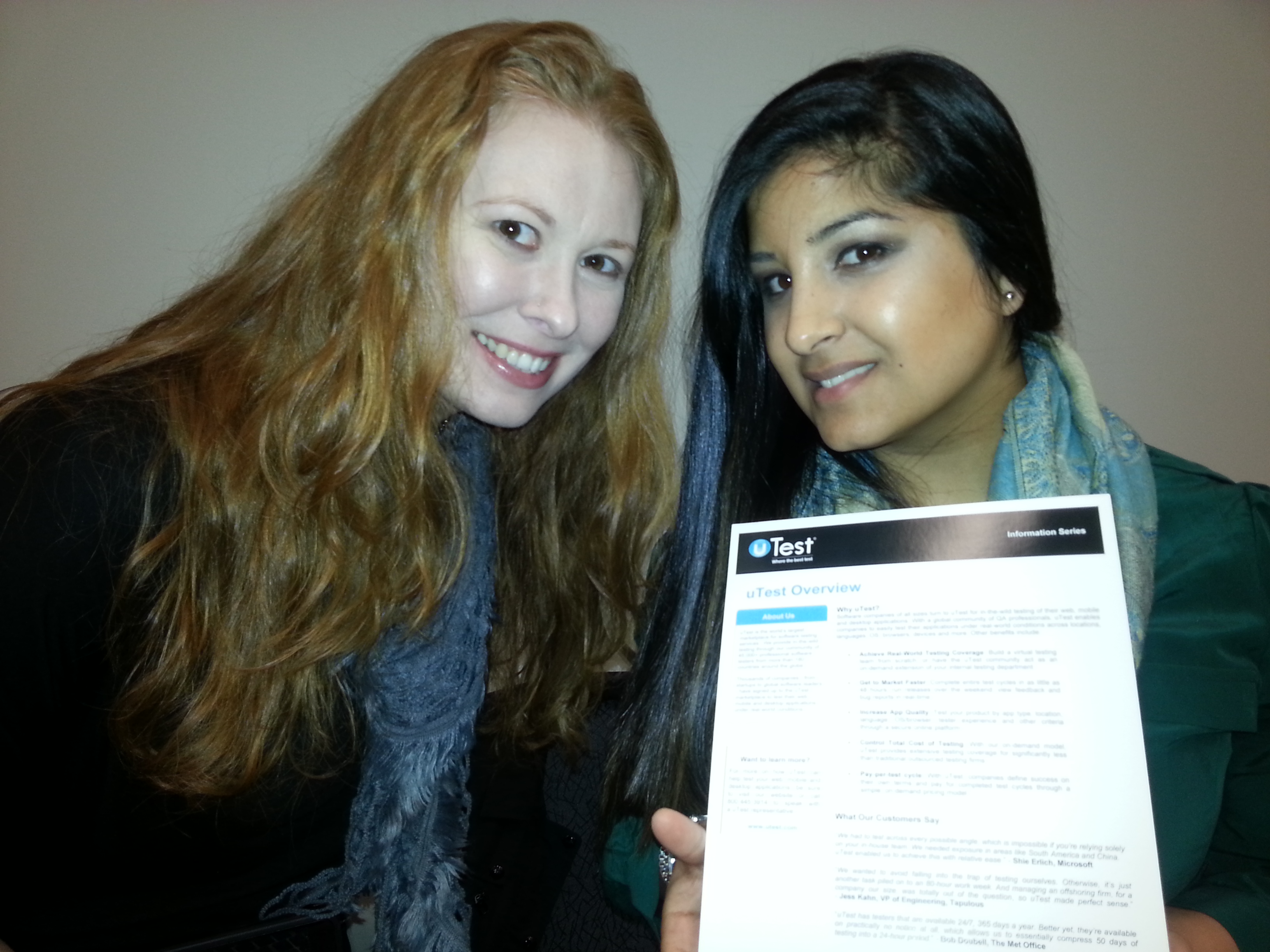
The photos were taken by Michelle McIntyre. They are of, in this order, Saad Khan, Partner, CMEA Capital; John Wolport of IBM; and project managers at the uTest booth.

Silicon Valley Entrepreneur Rock Stars on the Next Big Thing in Technology

On Monday January 27, three seasoned entrepreneur rock stars manned the panel chairs at an SVForum event at IBM in Foster City, Calif., giving several dozen early stage start-up founders advice on the dos and don’ts of successfully getting their tech businesses off the ground.
Image
 
The event “The New Venture in 2014 – Choosing the Right Idea, Building the Team, and Getting the Venture Started” was moderated by John Lee, vice president, Silicon Valley Bank.
 
The software-savvy panel included Spreecast CEO and founder of StubHub Jeff Fluhr, Couchbase CEO Bob Wiederhold who was at the helm of Transitive when it was sold to IBM, and Ullas Naik, founder of Streamlined VenturesNaik is a seed stage angel investor whose various firms have backed 200 technology start-ups. Fifty are currently active investments.
 
The three generally agreed that Silicon Valley is the best place to start a technology company because it’s so entrepreneur-friendly.
 
“The technology ecosystem is robust in the Silicon Valley. Your management team should be based here. The way to think about it is if you want to make movies, you move to Los Angeles, not St. Louis,” said Naik.
 
They also said to choose a co-founder whom you know well and that a company’s strategic advisors should receive some sort of equity in order to be truly useful and not just a bunch of impressive names and photos on the website.
 
The panelists had strong opinions on recruiting co-founders. Fluhr said that he founded StubHub with a former Stanford B-school classmate. He added, “It is best if you have known someone a long time, so choose a friend you have worked with before or know from school.” 
 
Naik said, “I typically don’t invest in companies that have related co-founders, for example brothers or husband and wife. I also don’t like to invest in solo founders. There is too much to do. Co-founders who have just met three months ago are also red flag.”
 
He admitted that there are exceptions to the rule, for example, Cisco was founded by a husband and wife team. 
 
An audience member asked the panelists to comment on the next big thing in technology.

Jeff Fluhr said Bitcoin, the alternative form of currency was intriguing.
 
Database company CEO Bob Wiederhold said Big Data and the Internet of Things are important in his market and driving a lot of investments.
Image
Ullas Naik added that data and what people are doing with it as well as wearables are the next big things in technology. Naik also said, “I believe that an alternative form of currency will be big, but not Bitcoin.”
 
If you are interested in getting more hot tips from top technology company founders and investors, SVForum invites you to attend the APPs to Platforms event in in San Jose, Calif., on Feb. 20. Register at svforum.org. The all-day event is priced at under $200.
 
Follow SVForum on Twitter @SVForum.
###
Michelle McIntyre is a tech PR consultant with 10 awards for outstanding results at top PR agencies and Fortune 500 companies. She’s a director with Silicon Valley International Association of Business Communicators and on the executive team at TEDxSanJoseCa. She’s @FromMichelle on Twitter
 

Photo 1: Jeff Fluhr
Photo 2: Bob Wiederhold

Do You Charge for an e-Book?

By Michelle McIntyre

Oakland-based business coach for midlife entrepreneurs, Dina Eisenberg recently spoke to my Women in Consulting (WIC) group in Los Gatos last week about how to kick start an information product or “infoproduct” business.

Image

An information product is any product or service that you can sell to people to provide them with information. It includes e-books, books, audios, CDs, DVDs, seminars, videos, tele-seminars and more.

Because the event description mentioned her law degree and creating a “passive income,” I was expecting tips on self-employed (S.E.) IRAs and 401Ks. I had just set up a S.E. 401K so I figured it will probably be redundant to what I already just learned after spending hours with a Fidelity representative to set up my own plan. I went to the meeting anyway for the networking. 

 I was pleasantly surprised when Eisenberg started talking though.  

What it was really about was creating sustainable income to make, what Eisenberg calls “a cushion for life’s bumps.”  Consultants and entrepreneurs who are typically actively involved in delivering their service benefit from creating passive income streams that work, even when they cannot.

A self-proclaimed “information product junkie,” Eisenberg has also produced a range of products from online courses to retreats and subscription programs.

She said she it all started when her husband, whom she considers a successful entrepreneur just like herself, went on disability for two years due to a medical issue that has since mostly gone away. He was her fiancé at the time.

She shared her tactics with the consultants, many of whom had created their own infoproducts. Several consultants had their products on hand and the talk turned into a brainstorm and information share of sorts instead of just a presentation.

Two of her messages stuck in my mind.

First, start charging!  Yes, the internet is awash in free material however, people will pay for the exact right product that solves their specific problem at that time. Don’t assume you have to start with free.

Second, ask first.  The difference between a profitable infoproduct and one that flops is research.  Search Linkedin threads and comments for a wealth of topic ideas for your information product.

To learn more about Dina Eisenberg, visit her website at http://infoproductdoctor.com/.

Here are related Twitter handles.

WIC: @WIConsult

Dina Eisenberg: @DinaEisenberg

The author of this post: @FromMichelle


###
Michelle McIntyre is a blogger and high tech PR consultant based in Saratoga, Calif. She’s also the director of marketing communications for the Silicon Valley International Association of Business Communicators and on the executive team for TEDxSanJoseCA.


15 Tips to Become a more Effective Entrepreneur

by Michelle McIntyre


Late last year, my Silicon Valley entrepreneur meet-up group gathered for a breakfast networking session. During the event, participants shared answers to two questions posed by Host Sean Murphy.


Image


He asked, “What have you learned in 2013 that will make you more effective as an entrepreneur in 2014?” He added, “What will you stop doing to make time for it?”


There was a tremendous amount of experience and knowledge in the room and I found the 15 tips quite valuable. Here they are.


1. Be more patient.
2. Fail faster.
3. Focus early on value proposition, less on technical implementation.
4. Drop less important details.
5. Hire more carefully. Fire faster.
6. Stop coding so much. Spend more time on sales. (Several attendees were software developers.)
7. Delegate more and more effectively.
8. Always build a simpler product than you first dreamed of.
9. Network more. Listen more.
10. Take a step back and look at the bigger picture.
11. Plan more. It’s really hard to recover wasted hours.
12. Take more time to listen.
13. More focus on time management and effective action.
14. Concentrate on one line of business. Focus for effect.
15. Build on strengths.


Thank you, Sean Murphy, for sharing your meeting notes with me for this article.


 ###


Michelle McIntyre, a high tech press relations consultant in Saratoga, Calif., is on the executive team of TEDxSanJoseCA and the director of marketing communications for the Silicon Valley International Association of Business Communicators. 


10 Tips on Podcasting from the Host of Amateur Traveler

Chris Christensen, San Francisco Bay Area resident and co-founder of a new website called Blogger Bridge which connects bloggers to people who want to hire them just spoke to my entrepreneurs Meetup group in Sunnyvale about how to build your reputation through podcasting.

He also owns and runs AmateurTraveler.com which is a popular online travel show (more than a million downloads a year) that focuses primarily on travel destinations. It includes a weekly audio podcast, a video podcast, and a blog. Here’s a sample episode. This particular one is called “Travel to Morocco: Episode 397.”

http://africa.amateurtraveler.com/travel-morocco-travel-podcast/

Image

A podcast is a show on any topic in audio or video format that is an attachment to a blog through an RSS feed.

Christensen says podcasting is a great way to build your brand. Here are 10 tips on podcasting from his talk:

1. Podcasting is in style again mostly due to the growth of mobile. After a relatively quiet period of a few short years, podcasting is hot again. People listen to or watch broadcasts on the go while walking the dog, driving or exercising through smartphones or other mobile devices.

2. Podcast consumption is stronger in audio. Audio files sizes are smaller and they are more easily consumed on the go, for example, while driving. It’s hard and of course illegal to watch a video while driving.

3. Microphones popular with podcasters range in price from around $100 to $350.  Styles include larger ones that stand by themselves, smaller ones that you hold in your hand and teeny tiny ones that are designed to hook up to a smartphone. Christensen likes the Blue Yeti brand the best.

4. Podcasting is a very personal medium. People may act they you are old friends when you first meet them.

5. Podcasting is not great for immediate response marketing, for example, if you need someone to click on something or take a fast action. Christensen likes evergreen content the best but also says that news shows can be popular too.

6. Podcasting is great for building a reputation or brand. This is because if done right, podcasting can establish you as an expert.

7. Roundtable discussions through Google Hangouts are becoming all the rage now. Link your Hangout account to your YouTube account and the session can be recorded for re-play.

8. Not all podcasts need to be edited. If you do need to edit, Christensen recommends Garage Band available on the Mac and Audacity.

9. You can just post your podcast on your own blog or syndicate.  Christensen recommends sites like Libsyn.com or Rawvoice.com for syndication.

10. Allow up to eight hours to plan, finish and promote one podcast.  Christensen’s “feature-length” travel podcast takes eight hours. A non-edited show takes two to three times the length of the show. A scripted show takes more time. An edited show takes Christensen about an hour per 10 minutes of audio to edit.

In case you are wondering, Christensen is highly envied by the other entrepreneurs in our meet-up group because he actually gets all expenses paid trips around the globe due to the large following of his travel website. Way to go, Chris!

###

Michelle McIntyre is a high tech public relations consultant in Saratoga, Calif., who also blogs for several West Silicon Valley Patch news sites.  Her website is http://www.michellemcintyrecommunications.com

Her Twitter handle is @FromMichelle

Photo credit (camel): iStockPhoto.com

A Shocking Statistic about Millennials and Digital Shopping

By Michelle McIntyre

Image

In recent months, business partners and clients have been using the term “Millennials” a lot.

Millennials, also called Generation Y, are young adults who are now around 18 to 34 years old.  They are social. They are mobile. They are a target for those marketing to a group with uber online buying power.

I’ve been wondering why this group of consumers has become so important so I did some research and found one fact that shocked me.

“Hooked on Social Networking” Blogger and mom to two young Millennials, Holly Nielsen said that some have more buying power because they are living at home with their parents longer and therefore have more disposable income because they are not paying rent.

On the other hand, Nielsen says, some have less extra money because they are paying off their student loans. She added that Millennials grew up with social networking and smartphones so they are totally comfortable on-line.

The Chief Marketing Officer Council just published some facts and figures about this category in a story introducing a new initiative called “Turning Social Feeds into Business Leads.”

The description of the program on the council’s website uses the automotive industry as an example.

It says that Millennials are a lucrative target for automobile manufacturers because they make up 40 percent of the total available car buying population, contributing $200 billion to the U.S. economy annually.

It adds that there’s been a massive acceleration of social media usage, with 70 percent of consumers using social media to learn about other customer experiences when making car-buying decisions. Visit this link for more details about this CMO Council initiative.

Lastly, a recent eMarketer story discusses Millennial online buying trends including one that surprised me.

It said that male Millennials were more into mobile shopping than their female counterparts.

I used to think that women beat men in all areas of shopping but it’s just not so.

The report discussed a January 2013 survey of U.S. Internet users and uncovered these facts about male Millennials:

  • They currently earn more* than, and are happier at work, than their female counterparts. 
  • 43% said they typically shop on auction sites, while only 31% of females gave this response
  • 40% said that in a perfect world they would buy everything online while only 33% female said this
  • 24% typically shop and buy using their mobile devices while only 19% of females said they do so

This definitely shows that young men are a hot target for digital marketers.

Feel free to follow the Twitter feeds of people and organizations mentioned in this story including @CMO_Council, @eMarketer, @HollyNielsen, @FromMichelle. 

###

*One part of this is not so surprising. Men have always earned more than women for the same jobs. The ratio is 77 cents to the dollar so that wasn’t overly shocking. By the way, this is unfair and it needs to change.

SV-IABC Power Panel on Motivating Workers to be Excellent

Image

SV-IABC Power Panel on Motivating Workers to be Excellent

Thank you to these SV-IABC panelists who tonight at our event in Santa Clara, Calif., spoke about creating a motivated workforce that fosters innovation and excellence. From left to right: Moderator Meta Mehling, Principal, Meta Mehling and Associates; Sarah Peterson, Sr. Manager of Technology Communications at Intuit; Francesca Karpel, Director, Internal Communications, NetApp; and Jennifer Johnston, Sr. Director, Marketing and Communications at Salesforce. The next event on killer presentations and “slideology” is mid-day on Nov. 14. For details, visit http://sv.iabc.com/

Tips from VC Heidi Roizen: Three Things to Never Do When Starting a Company

Image

Today Heidi Roizen spoke to 35 female company founders including myself about learning from failure at Procopio law firm in Menlo Park, Calif. The event was held by Women Startup Lab Meetup group.

Roizen is a venture capitalist with Draper Fisher Jurvetson (DFJ) who also teaches entrepreneurship at Stanford University. 

In the early 80s she founded personal computer software company T/Maker and later sold it at a nice profit to the delight of her investors including VC Ann Winblad of Hummer Winblad Venture Partners. 

This was an interesting time to be in software because it was before it was hot.  At the time Lotus Development was getting started and Bill Gates, a friend of Roizen’s, was also a frequent co-conspirator at fledgling PC industry events.

I actually did PR for Lotus for several years long after it was bought by IBM. While I was there it had been rebranded enterprise collaboration software and social business which was definitely a smart move by Big Blue. 

After selling T/Maker, Roizen became vice president of developer relations at Apple Computer and after that, a partner at another VC firm before she joined DFJ. It was interesting to hear that she works part time for DFJ now, often from her home office. 

During her talk on learning from failure, Roizen emphasized the importance of knowing the numbers behind your business as well as being realistic.  

She had many great tips but highlighted three main things to avoid when starting a company.

1. RIGIDITY. Instead, be flexible and open to changing your plan based timely analysis of how things are going.  If you are not seeing the results, then quickly change up what you are doing in order to get them. 

2. PERSONAL FINANCIAL RISK. Roizen said she has seen more than one entrepreneur declare personal bankruptcy as a result of borrowing money to exercise stock options (known as the ‘cashless exercise’) and then being required to pay that money back when the company does not live up to its early promise.  She says personal financial pressure can create a hidden agenda and lead entrepreneurs to make bad decisions.

3. ASSUME A DEAL WITH A BIG COMPANY IS THE PANACEA. She once invested in a company that partnered with UPS. The company placed way too much emphasis on the deal as a key to success. Things didn’t pan out exactly as expected.  In 20/20 hindsight, they realized that although it’s a hugely successful shipping company, UPS’s business reasons for doing the deal were not aligned with what would make the startup successful.  

When I asked Roizen about hot technologies she immediately mentioned how mobile is ubiquitous and the importance for designing software for mobility. She also mentioned fellow DFJ VC Steve Jurvetson’s interest in the space industry pointing out the SpaceX launch that happened a few days ago.

The energy in the room during Roizen’s talk was high and I would like to thank Women Start-up Lab co-founder Ari Horie, my former coworker in IBM Storage in the late 90s, for working so hard with her team to put on such a fantastic venue. 

###

Final note

Here are the Twitter handles of organizations mentioned in the story: @DFJvc, @HeidiRoizen, @WS_Lab, @Humwin, and @FromMichelle.