2026 Predictions and Career Advice from Top Journalists 

PRSA SV Media Predicts Did Not Disappoint

PRSA Silicon Valley Media Predicts panel and gala event happened on December 11, 2025 at the Belmont Sports Complex just off of 101. They discussed Bay Area real estate, GenAI versus SEO, autonomous vehicles, robotics, Substack newsletters and a myriad of other topics. Parking was easy and the sunset views during set up were breathtaking since the event venue was up a flight of stairs and there were big windows.
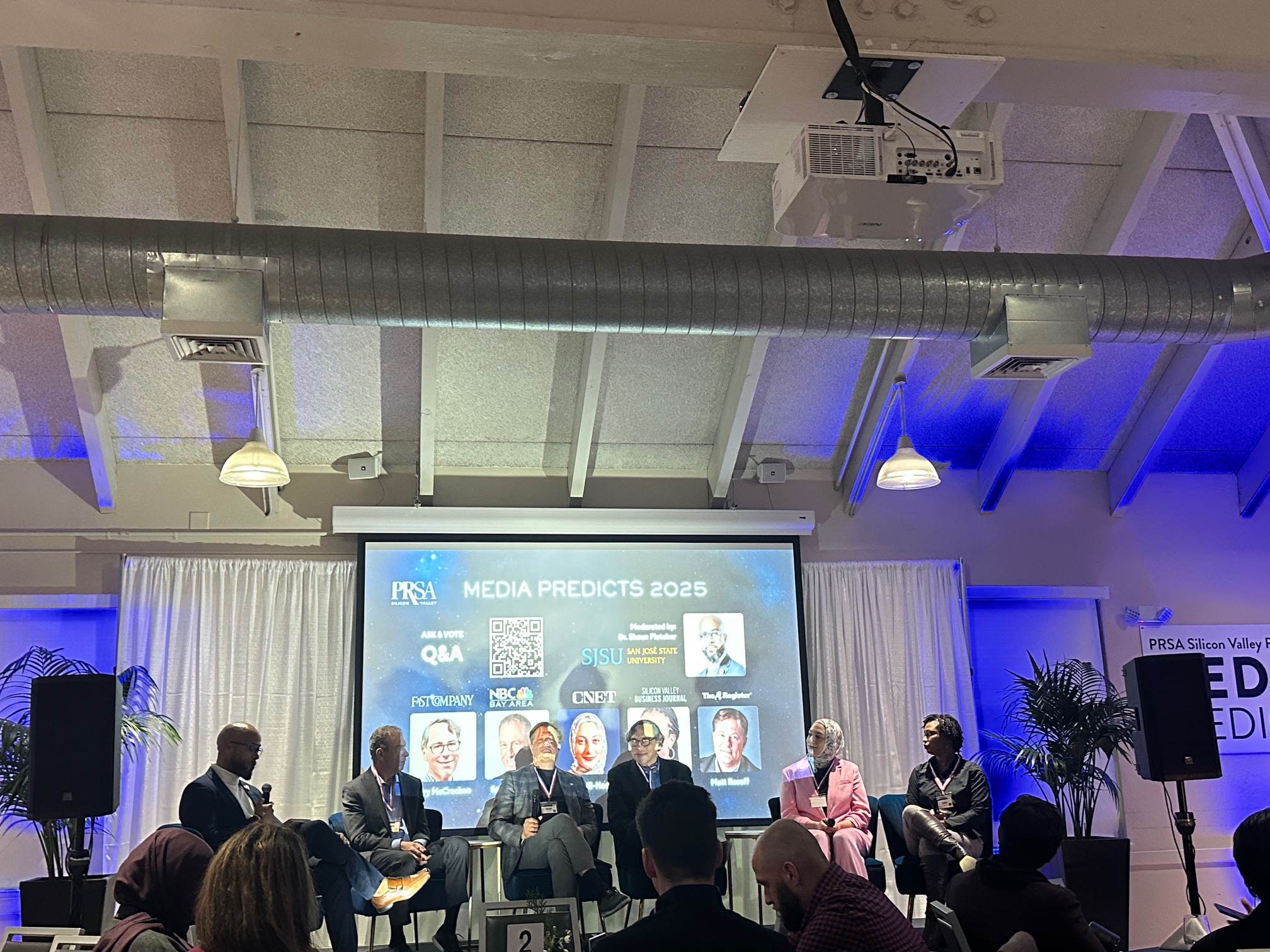
Dr. Shaun Fletcher of San Jose State moderated a panel made up of Ms. Abrar Al-Heeti of CNET, Matt Rosoff of The Register, Scott Budman of NBC Bay Area, Asia Martin of Silicon Valley Business Journal and Harry McCracken of Fast Company. 

The food was an eye-fetching buffet set up of many different heavy appetizers and tasty sweets, and they offered both an open bar and really good coffee at the start. The theme was sports and attendees could shoot baskets or play tabletop games. (Yes, I shot baskets.) The giveaways were high top tennis shoe key chains and mini spirit foam hands, the ones you see at games. Board members Mark Lewis and Jennifer Yoder and San Jose State’s PRSSA president received President’s Awards from President and Emcee Jeannie Entin

This story focuses on three parts. Predictions, advice for people starting out in their careers and story pitching tips. 

What they said about 2026 predictions: 

Matt Rosoff: I look forward to a new type of device that’s not a phone that uses AI. I also see a resurgence of crypto. 

Asia Martin: I’ll be looking at how much of our lives will be infiltrated by AI. AI is doing this without proper regulation. There’s a ton of personal information in AI. AI needs to benefit humanity. 

Scott Budman: Privacy  and security as they relate to AI will be important. A lot of what is happening in AI is in the future. When will people demand payment for use of their data?

Harry McCracken: Harry brought up a Rivian event he attended earlier that day as well as seeing ebikes.

Advice on starting a new career:

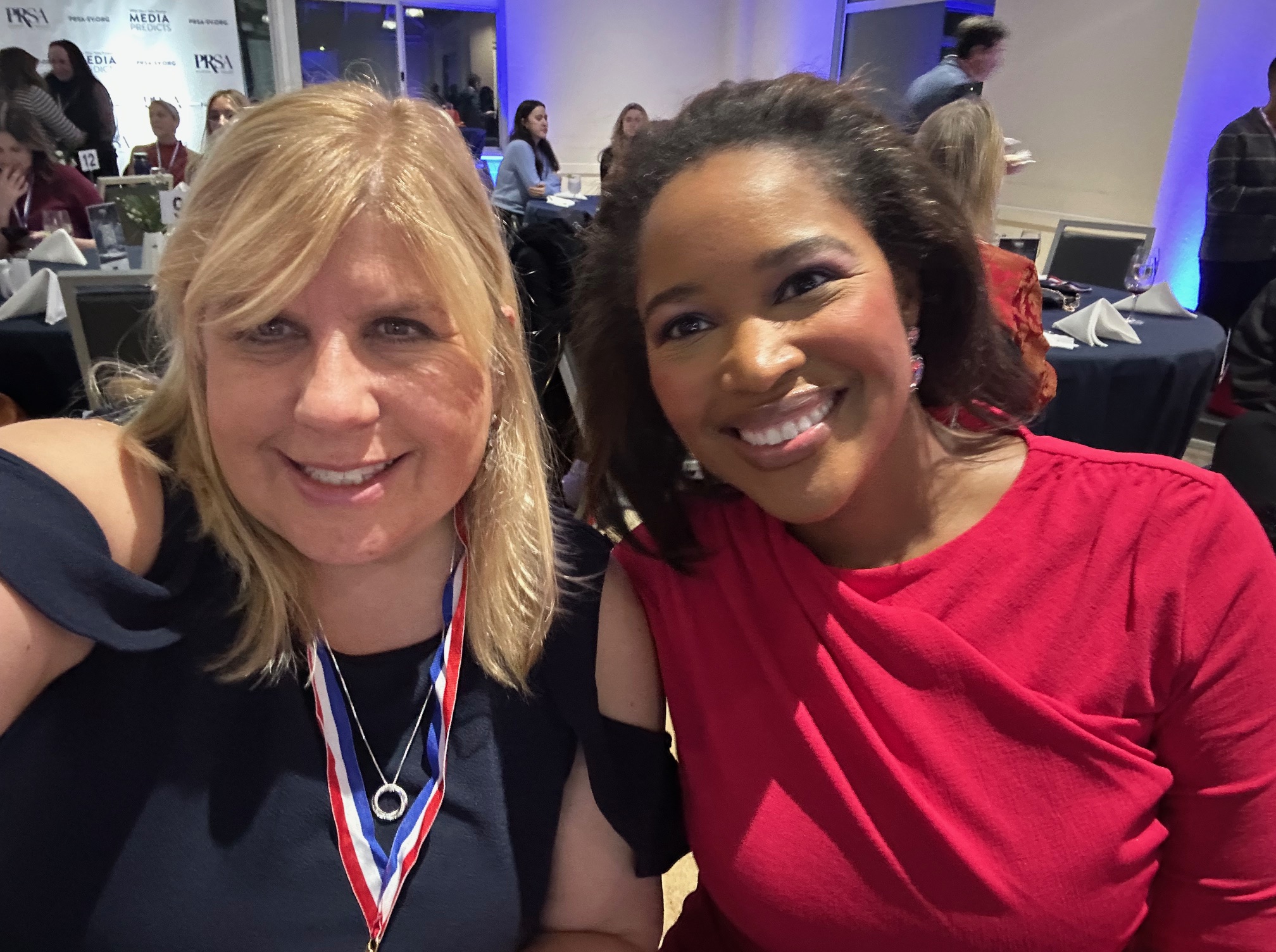
Abrar Al-Heeti (pink suit): When people tell you to do something besides what you want to do, don’t listen to them. Do what you’re passionate about. 

Asia Martin: Stay abreast of what’s happening in the world. Research and read about the companies you are interviewing with.

Matt Rosoff: Figure out what you will be a specialist in. What can you become an expert on? What can you be known for? (So true. Most of my experienced friends in tech PR have a specialty like semiconductors, fintech, AI or security.)
How to pitch them:

Scott Budman: I receive around 80 pitches a day but I only cover one story per day. You don’t need to pitch me four or five times. If you pitch me a healthcare story I’m calling back. 

McCracken: I have my own set of experts. I don’t need more. Target your pitches, make them brief and personalized. Put the most important information at the top in news releases.

Abrar Al-Heeti: I cover phones for CNET. I don’t like when a small startup emails me five times and it’s not on my beat.

Asia Martin: I don’t like when I’m offered an out of area spokesperson who can comment on the Silicon Valley. I want someone local. 

Matt Rosoff: Realize that The Register is an international media outlet based in the U.K. Read it before you pitch. After the panel, Rosoff messaged me and added, “When I was talking about knowing The Register, it’s really more about our subject matter — B2B tech for IT pros, mostly, with the occasional offbeat science type story.”

Their most viewed stories:

Scott Budman said it was the Elizabeth Holmes story for a year and he had much international interest in this. Recall that one of the Holmes-Sunny Balwani tweets garnered 15 million views.

Abrar Al-Heeti: CNET’s tariff stories got the most clicks. As a reminder she covers phones.

The group also discussed SEO versus GenAI and brought up real estate a few times, especially Asia Martin who covers commercial real estate and Scott Budman who asked, “Can young people who grew up here afford to buy housing here?” Martin said that AI has impacted real estate because companies hiring for AI need office space. However a company lays off because of AI and that affects housing. 

It was interesting that Martin mentioned residential housing a lot even though her beat was commercial. A lot of news stories and thoughts often go back to how things affect citizens. 

Roles as company story tellers and relationship-builders are important. Please join a public relations group or network with colleagues to gain support for this career choice, and to share best practices. 

Thank you PRSA Silicon Valley for donating your time to run this event especially Tara Thomas as well as giving all proceeds to the diversity and multicultural college scholarships. 

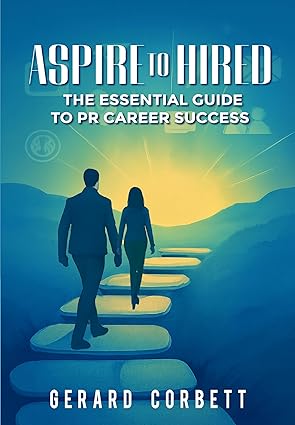
Please check out my friend Gerard Corbett’s new book “Aspire to Hired: The Essential Guide to PR Career Success” here. Gerry is a public relations rock star in the PRSA National and local chapters. 
 ###

This story was written by Michelle McIntyre a PR consultant, IBM vet, and former VP of Marketing, PRSA SV. Michelle lives in Saratoga, Calif., with her husband and big dog, Ringo. Her son is half way through his mathematics PhD program at Duke. He’s studying probability and teaching math to undergrads.

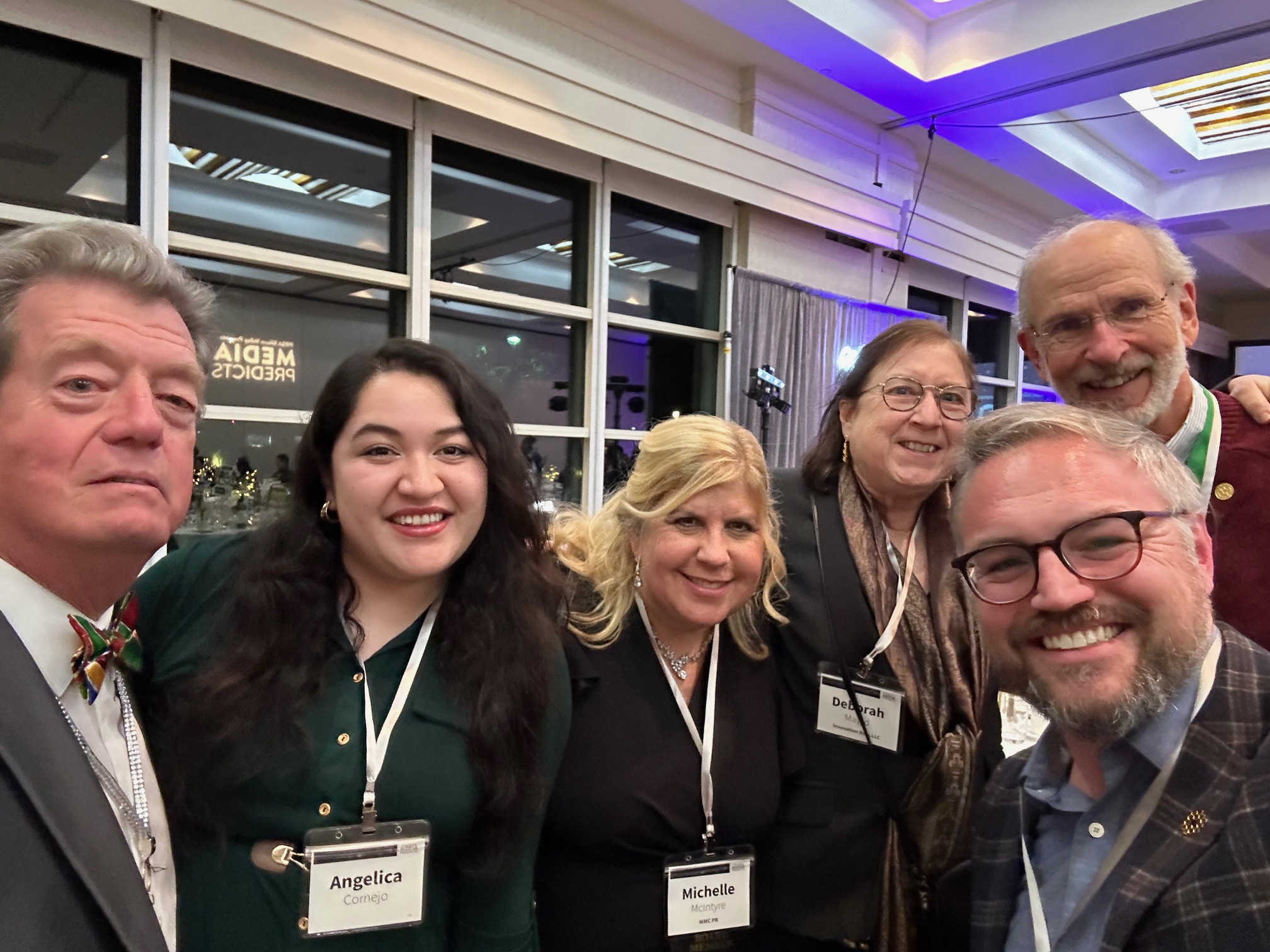
And shout out to our small but mighty, Media Predicts Table 6! Deidre Wright, Scott Budman, Albert Hu and myself.

Photo credits: I took all of the photos here except for Gerry Corbett’s book cover which was borrowed from Amazon.

PR Professionals:  9 Pieces of Advice from Fast Company Editors

Winning awards can boost brand recognition, encourage innovation and create meeting and networking opportunities. Awards that matter are worth the investment of time and money.

Some have a fee so marketing folks, budget dollars for these in 2025. 

Today I attended Fast Company’s video meeting session regarding how to fill out their “World Changing Ideas” awards forms for maximum success. 2024 winners are here. The session was called the “2025 World Changing Ideas Awards Informational Q&A.” 

Senior Editor Aimee Rawlins, Executive Editor, Digital, Morgan Clendaniel and a few others presented. To me, most of the advice applies to creating a variety of PR materials from news releases to pitches. 

They conveyed these nine tips: 

  1. Focus on the past 12 months.
  2. It’s okay to say, “Not for publication” if it’s too early to disclose information.
  3. It matters that you show “capacity growth” with numbers.
  4. Don’t use jargon or marketing speak. We can tell when you lift it off of the website. We know marketing jargon. This was repeated a lot and with passion!
  5. Describe how it compares to others. Where does it sit in the market?
  6. Use the actual name of the solution, project or service. 
  7. Don’t use superlatives. Say what it is, plainly. 
  8. The words need to explain it as fully as possible without URL links.
  9. If a section has a 500-word limit, don’t go beyond that. They read thousands of applications and have to get through them all. 

It takes hours to research these awards criteria and advise clients so I appreciated the information session or “sesh” as some like to say. It was better than collecting and reading a lot of tips material. Plus, I was able to attend a ‘freebie’ senior editor panel.

How Can PR Help You Win Awards?

A skilled PR practitioner is to me, similar to a journalist. They will do the investigative reporting at their company and find out what makes the item super cool and useful and then articulate that efficiently. Apparently, you want to NOT copy paste from the website. 

I appreciated the tips immensely (<excuse the superlative!) because they can apply to any public relations materials that are shared with journalists. 

The application deadline for Fast Company’s World Changing Ideas Awards is this Friday, December 6, at 11:59 p.m. PT. 

As an aside, the woman worker image was produced by ChatGPT on December 4, 2024. I asked for an image of a 45-year-old woman office worker with a laptop.

###Michelle McIntyre is the president of Michelle McIntyre Communications LLC, a tech PR consulting firm. She’s on the board of PRSA Silicon Valley. To buy a ticket to the 17th annual Media Predicts gala and panel event happening Dec. 10 in San Carlos, California, visit this link here. A panel of journalists from ABC7, Business Insider, NY Times, and TechStrong, will give you tips on working with them and you can even meet them to say, “Hello.”

Michelle is FromMichelle on BlueSky and she has 2.7 million views on Quora.

Inspired by a Speech on Kindness and a Decal Application Task, I Raised My Hand for a Bigger 2024 PRSA Management Role

I enjoyed being a part of the PRSA Silicon Valley team in 2023 and that was especially true the night of the annual Media Predicts event Dec. 6th at The Grand Bay Hotel on Redwood Shores. 

I had so much fun I raised my hand to be vice president of marketing for the chapter this year. In other news, Tara Thomas stepped up and will continue in the programs executive role. Yay team and I’m already looking forward to Media Predicts 2024. In other big news my South Bay buddy Mike Sanchez took on the PRSA SV Secretary role.

Part of the reason I like volunteering is that I’m a freelancer: PRSA SV gives me teammates and dare I say, friends. Face it. We do develop friendships at work. You spend 30 to 60 hours a week working so this is goodness.

I have partnered with other freelancers to serve clients and pitch prospects. I recommend it; the slight downside is you DM a lot which is time consuming. This could be an upside if you are friends. Having a bad day? Message your freelancer partner for a few kind words of support.

Truth be told, I also made friends working with my 2023 robotics software client. Our interviews were in person (TechCrunch’s Brian Heater, Mercury News’s Sal Pizarro, several broadcast. Shameless plug, i know.) and it gave me a chance to better get to know them. 

Anyhoo… back to Media Predicts. Head of programs Tara noticed my early arrival to the hotel and relaxed stance. Someone had plopped a glass of wine in my hand so I looked pretty ‘cushy.’ 

Everyone else is running around setting up with serious looks on their faces. Meghan Fintland was on stage practicing her welcome. Jeannie Entin was helping the 11 student volunteers get situated.

My typical volunteer roles are writing and editing: I’m an extrovert and it’s hard for me to ‘focus’ during events. Give me a great meal and a dance floor. The food was surprisingly good and we did leverage the dance floor and DJ at Media Predicts.

Flashback memory of another volunteer gig: I tried to staff the welcome table at a TEDxSanJoseCA event but was quickly pulled off because an attendee wanted to have a deeper conversation. I did better handling the publicity. At Santana Row, KTVU interviewed Gold Medalist Swimmer and Speaker Dana Vollmer. Dana who held the Gold Medal in the butterfly overcame a heart defect. The same reporter interviewed a scout leader when I volunteered at council. I enjoy working with broadcast. (Shout out to Sharon Chin, Scott Budman; the list of on-air friends whom I greatly respect goes on and on.)

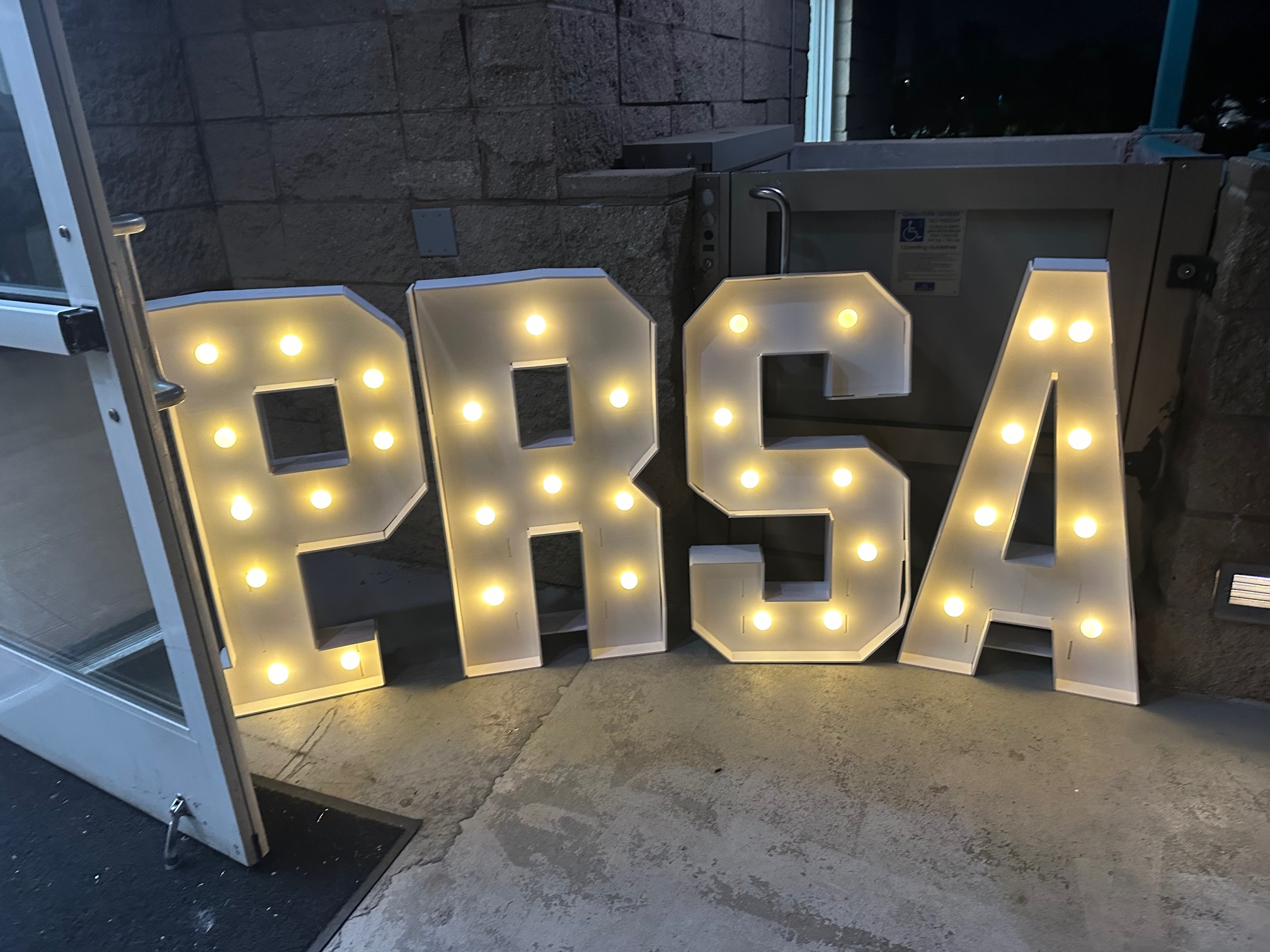
Back to MP23. Tara quickly assigned me to window decal application. That went fine and the space looked captivating with the next level decor including the lit-up letters spelling PRSA. (Tara: The S is in my garage. Readers please see the S photo below.)

I finally felt useful on event night and the decals were not crooked. Yessss.

5 Honorees

Who got awards that night? PRSA Silicon Valley Chapter President Meghan Fintland and President-elect Jeannie Entin presented awards to three PR professionals, Camille Clark and Alannah McDermott co-honorees for Board Member of the Year and Jeremiah Lineberger who achieved the Young Professionals Award. An older person can win because the point is to be new to PR. In fact to this day I have no idea how old Jeremiah is. 

Former National PRSA President Gerry Corbett presented David Vossbrink with his PRSA Fellows Medallion. I was honored to be at Gerry and David’s MP23 table. (Some of my awesome table mates are below.)

Kindness Counts, According to Honoree 

Global PR Powerhouse Yvette Noel-Schure was presented the chapter President’s Unity and Purpose Award by Rochelle Nadhiri.

Noel-Schure’s award acceptance comments brought audience members to tears. The comment that stuck with me the most is, “The secret sauce is to continue to operate in kindness.” 

She mentioned several entertainers that she represents including Chloe X Halle, John Legend, and Jessica Simpson. Yvette Noel-Schure spent most of 2023 as the publicist for Beyoncé’s record-breaking Renaissance World Tour. To my friends who like Prince: She represented him too! 

The 2023 Media Predicts panel included Moderator Rochelle Nadhiri, Shawn Chitnis, Connie Guglielmo, Kayli Hays and Eric Savitz. That story with their comments is here

###

Who am I? I’m Michelle McIntyre, the new PRSA SV VP of marketing, a PR freelancer, IBM vet, and author of this story. I’m accepting new clients in 2024. Please hit me up for a breakfast meeting to discuss how to get your business attention. I like Bell Tower cafe in Saratoga. If you don’t want to talk about work, the drinks at night option works too. I love going up to Berkeley!

Be aware that PRSA Silicon Valley is devoted to diversity and mentoring. We invite you to get involved and check the website for new scholarship opportunities. Proceeds from MP23 went to diversity programs.

Photo credit: I took them with my iPhone 14 Pro. Camile Clark took the first photo selfie-style. I can’t remember who took the one of the group of us but it was taken with my iPhone.

3 PR TRENDS SHAPING 2024 from LATIN AMERICA, MALAYSIA AND NIGERIA

I enjoyed hearing journalists and PR professionals speak here in the San Francisco Bay Area recently, from the San Francisco Press Club interview with the NY Times SF bureau chief to the Public Relations Society of America Silicon Valley Media Predicts panel featuring Barron’s, Business Insider, CNET, and CBS News Bay Area. 

Changes brought about by artificial intelligence overshadowed both of those conversations. These were all locals albeit with global perspectives. 

I wanted to know what folks beyond Northern California thought about 2024 so I did some digging. Here is insight from Latin America, Malaysia, and Nigeria’s PR leaders:

  1. AI continues to shape industries including PR agency billing. – Andy See Teong Leng, President of PRGN and former president of PRCA of Malaysia:

“Looking ahead to 2024, Andy (See) predicts that AI will continue to shape the industry, and he emphasizes the importance of humanizing communications in the face of technological advancements. He highlights the growing significance of sustainability and ESG (environmental, social, and corporate governance) communications, urging PR and communications professionals to advise their clients on genuine and authentic approaches to social responsibility.”  Link to more input from and a podcast with Mr. See here

In his podcast segment with Abbie Fink and Adrian McIntyre, he said that GenAI may impact how agencies charge clients. Why? Because AI has sped up work. 

  1. Authenticity rules communications. – Olanrewaju Alaka, executive, Laerryblue Media, Nigeria

“In a world saturated with information, authenticity emerges as the linchpin of effective communication. I foresee a PR landscape where brands will strive to be more genuine, embracing transparency as a cornerstone of their narratives. The human touch, I believe, will be the catalyst for building lasting connections with audiences.” For more details from Mr. Alaka, visit this link. His further comments discuss the importance of visual storytelling and PR campaigns with a higher purpose. 

  1. DEI-related actions reinforce stakeholder trust. -Institute for Public Relations, Latin American Communication Monitor (LACM)

The LACM analyzed trends in Latin America’s PR field and what professionals predict for 2024. A survey of 1,134 communications professionals from 20 countries was conducted from May to June 2022. There were multiple key findings. One is that “actions on diversity, equity, and inclusion (DEI) reinforced stakeholder trust.”

The survey went on to reveal that “empathetic leadership increased engagement, improved mental health, and reduced turnover.” For more information from the LACM look here.

In addition to attending the local PR dinners, panels, and fun networking mixers be sure to take the pulse of what international leaders are saying to have a fuller understanding of our diverse and spread-out world. Because one of the major 2024 PR trends is the human touch, continue to attend events in person in 2024 to deepen relationships and forge new ones.

###

Michelle McIntyre is a PR Consultant and IBM Veteran based in Saratoga, California, a suburb of Silicon Valley. 

3 Tips on Pitching Podcasts for the Second Half of 2022

During the pandemic, podcasting experienced stunning growth, and podcast audiences diversified. According to Business of Apps, more Americans listen to podcasts than have Netflix accounts. The Wall Street Journal reported yesterday that SiriusXM bought Conan O’Brien’s podcast network for an estimated $150 Million.

Every major media outlet seems to have them; some like Adweek are launching podcast networks; and many companies wants their executives on as guests.

Here are some tips on helping podcast producers find guests

  1. Consider a podcast sponsorships budget. Think six months ahead with podcasts. Ask your client or CEO if they want to set aside some budget to sponsor a podcast or a few of them. CXChronicles is a top 10 customer experience podcast. The last time I spoke with the host, he said that he required a quality, timely guest and a few hundred dollars to promote it.
  2. Listen to at least 10 minutes of a podcast before reaching out to the host. It’s way easier to place a client on a show after you listened to it. You can hear the person’s tone and personality: Would it click or clash with your spokesperson’s? Better yet, listen to a couple of full episodes. Let it play in the background while you work.
  3. Know which ones don’t interview guests. Be careful about pitching using an expert’s biography when the podcast is two journalists bantering about news and trends. One example is Mike Malone and Scott Budman’s The Silicon Insider podcast. I know Malone from a volunteer gig. It’s an awesome podcast by the way. It focuses on what’s super timely at that moment.

As an aside, it’s wise to always read or listen to a media outlet before you get in touch with its editor.

###

Michelle McIntyre is a public relations consultant, IBM vet, and member of the PRSA Silicon Valley chapter. Her advice on Quora has garnered 1.2 million views. Follow her on Twitter @FromMichelle [“Mic” photo credit: Canva]

3 Reasons Journalists Don’t Respond to Your Pitch

As a seasoned public relations professional, I’ve shared many story ideas and spokespersons’ bios with many journalists. I’ve successfully convinced journalists to cover something, when it made sense. I’ve learned a few things along the way.

Note that a PR person’s goal is a response. We know it’s ultimately results but a response can start to build a relationship which can lead to a story later.  Note that there are three response levels. Level one is the auto response that says something like, “I’m back in the office Thursday,” or “Thanks for your note. If you want to give us a guest post, send back something that’s 300 words, punchy and original with a 100-word bio.”

Level two is personal like, “Sounds good. Get back to me in a month.” Note that reporters often receive 75 -400 emails per day so they may not have time for any response. Level three response is something that creates or starts an editorial opportunity. This might mean answering a few questions or setting up an interview either by phone, video chat, in person or via email.

Digging deeper into this topic, here are a few reasons you may not get any response:

  1. It’s not timely. The journalist is devoted to only covering top world news event and your pitch does not relate to it. Joseph Menn just joined the Washington Post to cover digital threats. He has graciously accepted quality pitches and agreed to meet interesting smart spokespersons over the years but he typically only cares about the news making top headlines. I just checked his last several stories and they were on the Russia-Ukraine conflict cybersecurity.  What you can do about it: Don’t pitch that reporter unless what you have fits what they are covering at that time. According to Meltwater, 94% of PR pros agree that 1:1 email is the best way to pitch journalists. This includes easy file sharing, a personal introduction, and quality communication tracking. My interpretation of this stat is to not use the same pitch for 50 people. One to one means it’s easier to do a better job.
  2. The journalist does not need any more sources. Entrepreneur Editor Jason Feifer produced a podcast that included a logical tip. He says he does not need PR suggestions as to whom to interview or what to write. He has his own sources. He elaborated quite a bit on this. On the other hand, it seems to me that if you have some sort of “aha” story or unique character that you truly love for Entrepreneur, then he’s worth a shot once in a while. I appreciated his tip that if someone is a long shot, why bother them? He says when he responds, “No thanks,” many PR people say back, “I knew it was a poor fit but I had to try anyway, right?” Feifer’s attitude is that, no, you didn’t have to try. If it’s not a great fit, don’t do it.  What to do about it: Pitch someone else. Move on, unless you are 100 percent sure it’s a perfect fit. By the way, I think he’s being kind of grumpy when he says, “I don’t need anything from PR people.” He likely actually does.
  3. Your pitch is not tailored or missing an “aha.” The account leader writes a pitch that the client, a CMO or product manager, loves. It’s finalized and shared with the whole agency team. Each person shares it with 20 reporters. No editors respond except one who asks for an interview non related to that client. Maybe there’s an opportunity with another client because you have a good relationship with that editor and they remembered something you pitched them weeks prior. The problem is that the perfect PR pitch is tailored for one reporter or at least one media outlet only, or maybe at the most two to three. The more tailored it is, the higher the chance you have of it sticking. What to do about it: The solution is to edit the pitch so it’s interesting to each person you contact. It’s fine if you start with the “boring” pitch. Jazz it up some. One fix is to simplify the wording of the pitch so your 12-year-old child could understand it and say, “Aha.” Some pitches that I think are simple and effective are along the lines of: “This executive is a fifth-generation female entrepreneur and her company just went public,” This is the first female Eagle Scout in the entire Bay Area,” and “Their AI technology taught a car to teach itself how to park.”

In summary, be aware that timing is everything. Check what a journalist has been writing very recently before you send that email or message them. You might realize what you were about to pitch doesn’t make any sense. Lastly, if you are a startup founder having trouble getting journalists to respond, hire a PR consultant or agency to help.

###

Michelle McIntyre is an award-winning freelance technology public relations consultant in the Silicon Valley and IBM vet. Follow her on Twitter at @FromMichelle. She is also a member of PRSA-Silicon Valley.

The US Demographic is Fast Changing; 3 Tips on Reaching Ethnic Communities

The demographics of my town of Saratoga, a quaint village nestled in the foothills of the Santa Cruz Mountains – and by the way close to Apple, Cisco, Intel and Netflix headquarters — switched from mostly white to Asian probably around 2018. According to 2019 Census data, Saratoga is 49 percent Asian and 43 percent white.

This data is important and educational. Marketers need to realize how big the ethnic communities are in the U.S. and utilize smart tactics for reaching them.

If someone wants to reach the diverse audience here in my Silicon Valley village, made up of affluent technology executives, engineers, software developers, doctors and lawyers, teachers, plumbers, retirees, stay-at-home dads and moms, singles with no kids, and families, it’s wise to also talk to ethnic media when they are pitching stories.

Here are three tips on smart media relations or “PR” outreach to these groups:

  1. Tailor messages to community values. Vietnamese values are not necessarily the same as Indian ones. By the same token, some are.
  2. Use a trusted spokesperson. A colleague was the one that reached out to Sing Tao Daily for a PR campaign recently. I handled the main Silicon Valley newspaper as well as the broadcast networks like ABC, Fox and CBS. When it comes to Sing Tao Daily, my associate speaks their language and two of the people she highlighted in the story pitch were Chinese. Her help was greatly valued.
  3. Offer a stipend to trusted journalists at multi-cultural outlets. Julian Do who drives ethnic media services for clients like Blue Cross gave a unique tip during a gathering of PR professionals in Clubhouse recently. He said these media outlets are hurting for money and giving financial help by way of stipends helps immensely. He said it works adding that it does not influence the story. He compared it to buying advertising.

A good rule of thumb no matter what community you are trying to reach is to give something to the group that its constituents want or need.

Journalists like stories about the people they serve: Their readers or viewers, e.g. if it’s broadcast, like to hear “like” examples. Instead of pitching your standard U.S. company press release on a new product to an ethnic media outlet like Telemundo TV, form a story pitch around an interesting Latinx person at your organization who has impacted the community in a positive way.

###

Michelle McIntyre is an award-winning public relations consultant and IBM vet in the Silicon Valley. She’s @michelle408 in Clubhouse and @FromMichelle in Twitter. Some of these tips came from a PRSA-SV Clubhouse panel event.

85% of Jobs are Secured Via Networking: Here’s How to Do it Right

As a public relations professional I am often asked about how to best network. Building relationships is part of my job so this is a sensible inquiry.

The U.S. Bureau of Labor and Statistics concludes that 85 percent of jobs are filled by networking. This can apply to landing a consulting gig as well. If you are looking for work or have a spot on the client roster, remember the tip that many jobs are filled before or right when they are posted. That’s because of networking.

Today I attended a talk hosted by a group of PR professionals: Smart networking tips were discussed. The speaker was Robin Beaman, a PR agency owner who worked for the likes of Oprah Winfrey.

Here are a few networking tips from the talk:

Networking is true relationship-building. It’s making and maintaining a friendship. Think about how to treat a friend. Buddies are nice and supportive to one another through good times and bad.

Giving the other person what they want is part of networking. Yes, this says help someone else. Not all networking is about what the other person can do for you. It’s a two-way street.

Call and follow up. This is definitely true when setting up a job interview or PR agency introduction meeting. However, it can also be applied to networking. Ms. Beaman said that it was not a smooth one step process securing her PR advisor opportunity with Oprah Winfrey. She followed up several times.

Perseverance works. Have a can-do attitude when pursuing opportunities. Robin Beaman said she didn’t just get in touch and immediately get hired to work her PR magic at B.E.T and Oprah Winfrey’s company. It took the right mindset, accompanying hard work and a massive amount of follow up.

In summary, my advice is that attitude plays the biggest role in landing a work opportunity. When you set your mind to doing something and hyper focus on that goal you have a higher likelihood of achieving it.

###

Michelle McIntyre is a self-proclaimed Silicon Valley PR Diva, IBM PR vet, and syndicated blogger. She’s achieved 11 awards for outstanding media relations results. Follow her on Twitter @FromMichelle. @PRSASV hosted the event featuring Robin Beaman.

Worried About Ageism? Here are 2 Job Hunting Tips from PR Experts

Fifty year public relations industry Vet Gerry Corbett hosted a PRSA-SV talk today called “Ageism in the Workplace is Getting Old” with guest speakers and PR Practitioners Patti Temple Rocks and Scott Monty. 

Patti Temple Rocks is the author of “I’m Not Done. It’s Time to Talk about Ageism in the Workplace.”

Here are stats and advice that was shared: It mostly revolved around applying for jobs.

Ageism is Worse During the Pandemic

Ms. Rocks says that ageism is worse now because companies are cutting budgets during the pandemic; one way to do that is to get rid of the highest paid most experienced people. She added that ageism is rampant in tech and at PR agencies.

The following statistics which come from the website Builtin.com were shared by the moderator. Only 10 percent of people ages 65-69 work. Half of people 55-64 are employed, and half notice ageism when they enter their fifties. 

How can seasoned professionals rise above being viewed as too old?

First, when you look for a job utilize your network. Cold calling a company probably won’t work. In fact one speaker believed that sometimes artificial intelligence algorithms weed out older workers’ applications automatically. If you contact people who know and like you, you’ll have a way better chance. Another speaker commented that even young people get ignored because they didn’t use a friend at the company to get an interview.

Secondly, tailor your resume for each opportunity. This makes sense because if you have been working 20, 30, 40 or even 50 years you have done a whole heck of a lot. Instead of listing everything, choose things that showcase activity and results that are relevant to the job you’re applying for. It’s hard work figuring out what to say and not say but it pays off. And you don’t have to list things chronologically. 

The speakers agreed that ageism at the workplace is common but there are ways around it. Be smart when you reach out to companies for work.

###

Michelle McIntyre, the founder of Michelle McIntyre Communications, is a seasoned PR industry pro who helps tech companies and their VCs get attention. She has worked at IBM and three PR agencies including WE for Microsoft. @FromMichelle @PRSASV on Twitter

What’s Important To People During This Time of Uncertainty? Community, Gaming, and More

Many people who took a recent survey say a sense of tribe or community is important right now.

Andrea “Andy” Coville, CEO of public relations firm Brodeur Partners, author, and the guest speaker on today’s PRSA-SV Friday Forum, conveyed findings from a survey of around 2,500 U.S. citizens from Gen Z to Boomers about what’s important to them. 

She offered a few summaries like be authentic and a trusted source of information.

Furthermore when you are posting to social media, Coville added, convey information that people tend to agree upon. For example, no one will complain about a picture of your dog. She also said that sustainability is a smart topic to discuss.

I’ll add that there’s no doubt that a quality PR professional can advise in this regard. By the way I worked with Brodeur when I was in a corporate PR department.

Here are 13 points I found most interesting:

  1. A sense of community is very important. Feeling part of a tribe or community is key.
  2. It’s harder to change people’s perceptions right now.
  3. Society overall cares a lot about kindness, honesty and optimism.
  4. Many are discussing new career directions. It looks like Boomers are the least likely to have done this in 2020 though. People are questioning their values right now.
  5. If you are at a nonprofit and asking people for money, keep in mind that people are preoccupied with saving right now. They are giving, e.g. to colleges, which was the fourth top area of giving.
  6. Mentoring is a good gift to give. People will give you a lot of time right now, e.g. as opposed to 2014.
  7. Reliable information is hard to obtain.
  8. Gen Z folks, e.g. a 20 year old, share opinions and news partially to show that they align with a certain group.
  9. Millennials and Gen Xers share information more as a way to call someone out on a bad opinion.
  10. “Food and drink” is the top consumer category that people are loyal to right now.
  11. People tend to hang out with those who share their views. Why join a tribe or group? Friendship was cited as the top reason by 51%.
  12. Attitudes towards and at businesses have changed. This is happening in a bigger way in government, healthcare, branding and diversity and inclusion.
  13. There’s a rise in gaming among millennials, especially females. This was mentioned several times.

Andy Coville summarized her presentation by saying she looks forward to seeing a return to fun in branding. So do I, Andy. So do I.

Andrea Coville photo: WE Magazine

Community photo credit: Canva

####

Michelle McIntyre who authored this story is a global technology PR consultant, IBM vet and the volunteer media relations lead for the Silicon Valley Monterey Bay Council of Boy Scouts of America which now includes females: They recently celebrated their first female Eagle Scouts. @FromMichelle on Twitter Also follow @prsasv