
To Succeed in AI, Know and Use These 10 Terms Including “Token” and “Inference”

Today I attended day one of the AI Infra Summit at the Santa Clara Convention Center. Around 4,000 registered which is up from 1,500 last year. By the way, infra stands for infrastructure. Speakers addressed what you need for AI. 

 I noticed a trend. Speakers used a few AI-related terms over and over like “inference” and “token.” They liked to say, “AI factories” instead of or more than just “data centers.” The term math or AI math was tossed around a lot. Tensordyne booth had a digital sign that went so far as to say, “AI is math.” 

I decided to blog about the AI terms used by speakers that got my attention at AI Infra. 

I sat through the press conference (photo below) featuring five companies, including two very young startups, as well as mainstage key notes by Meta, NVIDIA, AWS, Kove (unique software-based memory) and Siemens.

Thank you Royal Huang, PhD and CTO of SuperTech FT – a 5013c that teaches young people a practicum of physical AI and robotics – for checking my list of terms and commenting. Full disclosure is that SuperTech FT sponsored my conference attendance. Huang is an AI consultant who has worked in automobile robotics, health tech, edtech and more. (Royal is pictured below under the tiger in the AI Infra exhibit hall.)

Here’s my list of Top 10 AI Infra conference terms:

  1. INFERENCE: I heard this dozens of times and on many slides from the start of the press conference at 8:15 am right through to the last mainstage keynote speaker hours later. AI inference is the process of using a trained artificial intelligence model to generate predictions, insights or outputs from new, unseen data. Dr. John Overton, Kove’s CEO and a PhD, showed a slide that said, “Unlocking AI inference.” Kove innovates by making unique software-based memory.
  2. TOKENS: NVIDIA’s website says, “Tokens are tiny units of data that come from breaking down bigger chunks of information.” It adds, “The language and currency of AI tokens are units of data processed by AI models during training and inference, enabling prediction generation and reasoning.” Speaking of tokens, NVIDIA’s VP of Hyperscale, Ian Buck, PhD, announced a new GPU today, called Rubin CPX. It will be online by the end of 2026 and it will be able to handle “one million tokens” which apparently is a big deal. It reminds me of that Austin Power movie line, “1 million dollars.”

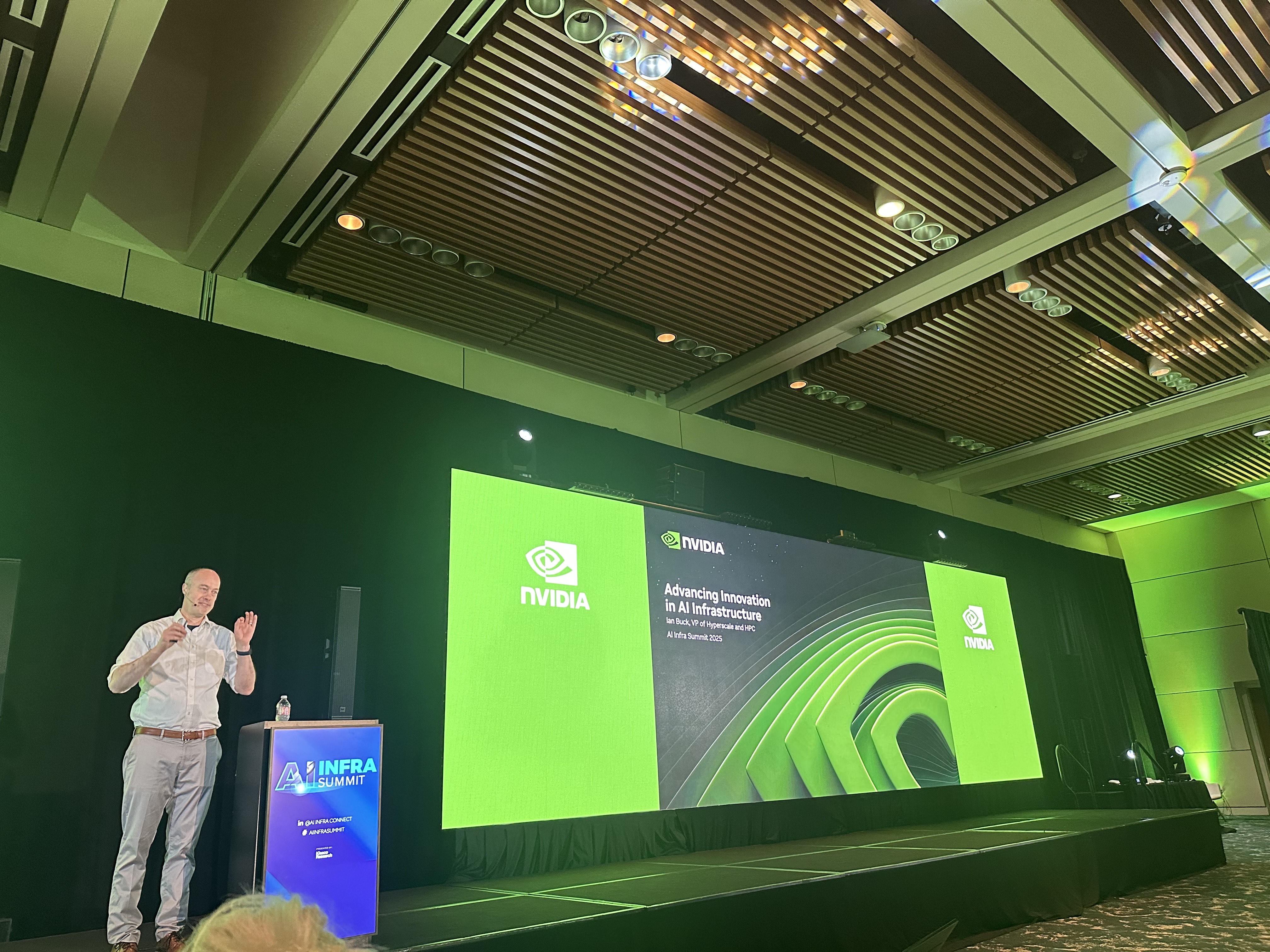
3. AI FACTORIES: Speakers said “AI factories” much more than data centers on their slides. Not new news but still interesting are Meta’s plans to build a ginormous data center that can handle very advanced AI. Today, one gigawatt which can power all of San Francisco is considered big. Yee Jiun Song, VP of Engineering, Meta, and also a PhD, mentioned in the mainstage keynote one that a five-gigawatt data center is planned! This will be called Hyperion and be the size of Manhattan. 

Royal Huang commented on this topic, “Think of it this way. The data center is the soil and AI is the crop.” 

These next three are more commonly used by business people:

4. LLMs: A lot of speakers talked about training large language models or LLMs. 

5. AI Math: Today’s speakers said “math” several times. AI performs calculations. AI enables calculations. AI can save or cost a lot of money. There is a lot of math involved apparently. Recall that Tensordyne’s booth had a digital sign that said, “AI is math.”

I asked a person sitting next to me at lunch, Asif Batada, Sr. Product Marketing Manager of Alphawave Semi, if he thought math was important and used often in AI. He said, “Yes, math is like water,” and then switched the word to, “oil.” He elaborated, “Math is like oil; smart people are working on optimally using oil.” Interesting analogy.

6. GPUs and CPUs:  A GPU is defined as a specialized electronic circuit designed to rapidly process and render images, videos and animations as well as do scientific computing, AI and machine learning. NVIDIA Rubin CPX (a future product) is a GPU. Fun fact: NeuReality’s CEO said during the press conference that you don’t want to cram too many GPUs together because that could cause performance to suffer. I guess there’s an assumption that more GPUs are better. He says, not necessarily. And a CPU is a semiconductor chip that acts as the brain of a computer. 

These last words or terms are a bit overused but still valid:

7. OPEN SOURCE: Several mentioned that their product worked with many other brands of technology. Open computing is still a big deal. 

8. SCALE: AI Consultant Huang advised that, “Everyone says they scale. But scaling is the toughest thing to do.” I’m not a huge fan of this term for this reason. Almost everyone in tech claims they “scale.” It’s better to give the proof as opposed to just stating the claim. 

9. SAVING ENERGY and driving efficiency: Everyone mentioned this. A lot. Huang commented, “When you build a data center everyone is after being energy efficient.”

10. NVIDIA, the only proper noun on the list. And as a bonus number 10, Anthropic. Many companies said that their product is used by NVIDIA or they have been working with them. The AWS speaker name dropped working with both NVIDIA and Anthropic.

Royal Huang commented that he thought AI agents, agentic AI or multi-agents should have been included in my top 10. However, I didn’t hear many speakers mention them today. I do recall AWS mentioning it. Huang added that edge AI was also important. He had planned to see many agentic AI talks at the AI Infra conference which goes through September 11th. 

###
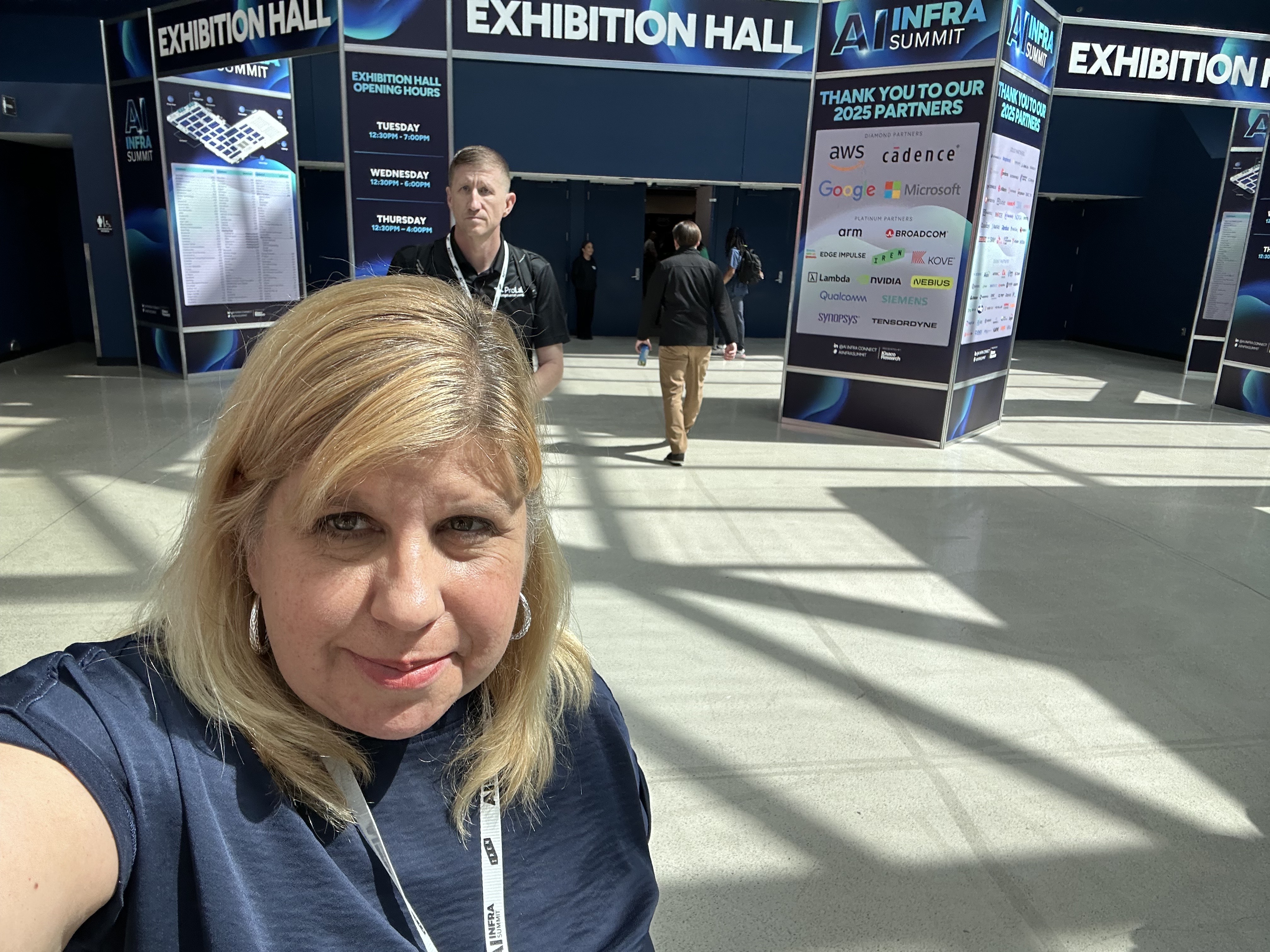
Michelle McIntyre is a Silicon Valley-based PR consultant and IBM vet. As a social media influencer and blogger, she’s sometimes invited to press conferences. She is attending AI Infra on behalf of SuperTech FT, a robotics non-profit that trains (mostly) young people to do ‘physical AI.’

Photos: Michelle McIntyre took all of the photos here. The stuffed animal booth give away is from a company called Xage Security.

Do My Favorite News Wires Match Yours? Expert Tips on Issuing News Releases

When you make a news announcement, do you use a news wire? Here’s how it works. You write a news release, pick a photo and upload it to a newswire distribution service that will shoot it out to the internet for you. 

Then you see a report of where it ran and, wallah, your news is out.

Any traditional PR pro who is skilled at media relations will tell you that you can also skip the wire and pitch it to a few key journalists directly. For B2B news, it might be ten to 20 contacts. For consumer mainstream news it might be more like 500 news outlets. As an aside, the best stories are features. Reporters writing these stories love scoops. Wire releases are the opposite of scoops so use them wisely. 

I like a combo of sharing the news using a news wire service and pitching journalists directly. 

The four news wire services I like are PR Newswire, BusinessWire, EIN Newswire and PRWeb. This is from recent experience. No one is sponsoring my endorsements. 

PR Newswire and Business Wire are pricey, roughly $1,500-$2,000 for a news release and image or other media like a video: These two carry the big brand names and make your organization look richer. I like both equally, e.g. service provided. 

My PR friend Laura Desmarais adds: “News wires are essential for distributing news to a wide audience and ensuring timely updates. My corporate clients need to work with a trusted source, and they like either Business Wire or PR Newswire. They typically stay with one rather than switching resources for a difference in service.”

As a heads up, when you talk to a salesperson from these services, they will attempt to upsell you to four or five releases to save money. With EIN, it’s approximately $399 for four or five releases last I checked. Business Wire will offer you five press releases for around $4,000-$5,000. Prices depend on how long your press release is; What is the number of words? You save money if you buy a bunch at once. I typically buy one at a time.

5 quick tips when considering a news wire service:

  1. Although you can post your news to your own website easily enough these days, with wires like EIN and PRWeb, any company or nonprofit can afford a newswire. Hire a PR consultant to guide you through the process the first time. 
  2. Always post an image or better yet, a newsy video. I advised a client just this month to make and post a talking head video with their newswire release and KRON 4 ran it on their website. On the other hand, another PR friend, Mark Lewis, says if you’re in a budget crunch, just use a photo or video link in the wire release.
  3. When you call the newswire service, tell them the number of words so you can get an accurate price. Long releases cost more. They can’t get you a proper quote without length.
  4. Contact the news wire service about your news a couple of days in advance so you can troubleshoot any problems.
  5. Allow a few hours to work with the news wire editor to get the details correct, such as proper photo captions and to correct errors they may catch. They typically proofread and will alert you to mistakes. I find editors very helpful. 

Try a news wire if you haven’t already. There are price options for all budgets these days. Combined with some direct pitching, your news exposure should be pretty decent. 

###

Michelle McIntyre is a Silicon Valley-based PR consultant and PR agency and IBM veteran. Her website is here

3 Tips on Pitching Podcasts for the Second Half of 2022

During the pandemic, podcasting experienced stunning growth, and podcast audiences diversified. According to Business of Apps, more Americans listen to podcasts than have Netflix accounts. The Wall Street Journal reported yesterday that SiriusXM bought Conan O’Brien’s podcast network for an estimated $150 Million.

Every major media outlet seems to have them; some like Adweek are launching podcast networks; and many companies wants their executives on as guests.

Here are some tips on helping podcast producers find guests

  1. Consider a podcast sponsorships budget. Think six months ahead with podcasts. Ask your client or CEO if they want to set aside some budget to sponsor a podcast or a few of them. CXChronicles is a top 10 customer experience podcast. The last time I spoke with the host, he said that he required a quality, timely guest and a few hundred dollars to promote it.
  2. Listen to at least 10 minutes of a podcast before reaching out to the host. It’s way easier to place a client on a show after you listened to it. You can hear the person’s tone and personality: Would it click or clash with your spokesperson’s? Better yet, listen to a couple of full episodes. Let it play in the background while you work.
  3. Know which ones don’t interview guests. Be careful about pitching using an expert’s biography when the podcast is two journalists bantering about news and trends. One example is Mike Malone and Scott Budman’s The Silicon Insider podcast. I know Malone from a volunteer gig. It’s an awesome podcast by the way. It focuses on what’s super timely at that moment.

As an aside, it’s wise to always read or listen to a media outlet before you get in touch with its editor.

###

Michelle McIntyre is a public relations consultant, IBM vet, and member of the PRSA Silicon Valley chapter. Her advice on Quora has garnered 1.2 million views. Follow her on Twitter @FromMichelle [“Mic” photo credit: Canva]

7 Steps to Help You Get to Know Business Press in a Post Pandemic World

I help a variety of business journalists with their stories on a regular basis: I enjoy seeing these people at events, which are now mostly online, chatting with them daily at Twitter, and reading the interesting things that they write.

I subscribe to a lot of daily newsletters, such as Morning Brew, and check the Twitter feed often. Reporters are often smart and funny, so I enjoy my job.

Think you know how to do media relations? If you’ve been a publicist for more than five years like me, it’s important to refresh the way that you do things in this post pandemic world. Tip: We are now in an epidemic.

The PR profession has changed quite a bit since the pandemic hit: It’s five times harder to develop relationships now because there are very few in person meetings and conferences. Previously you’d run into a reporter a conference or party, or you’d hold a mixer, like a wine tasting, with journalists. That rarely happens anymore in the technology business world.

Here are seven things to do to develop better relationships with business press in modern times:

  1. Make the note short. I was advised in a media relations refresher class at Stanford Continuing Studies to make emailed pitches no longer than 250 words. The instructor a former San Francisco Chronicle reporter, was very good. This tip works.
  2. Personalize the pitch. Make it friendly to their time zone, location and topics they seem to really like covering. Consider a journalist as your client, not your client as your client. Read what they tweeted in the past hour. If you pretend that a journalist is paying you, you’ll treat them with more respect and in turn get better results.
  3. Write a compelling subject line. But don’t make it click bait. People don’t like being tricked. An example is, “The shocking news about Prince William” when it is about how he likes Nutella on his bread instead of the more appropriate and healthier avocado, not true probably, but I’m trying to make a point. Your mind jumped to, “The prince is having an affair.” Treat journalists with respect. They are people. Treat them the way you want to be treated.
  4. Always read a journalist’s Tweet or recent story first. Looking up their stories helps because sometimes you find out that they haven’t written in a couple of years and took a corporate job. Then don’t waste the outreach time, unless you want to network with a peer.
  5. Be brave but not annoying. A follow up by text or LinkedIn direct message might be needed. If you have hard news that you know is major, but the reporter hasn’t opened the email note yet, figure out a polite but direct way to get their attention.
  6. Be sensitive to COVID concerns when setting up meetings. Don’t push an in-person coffee meeting on someone who is more at risk for COVID. “Read the room” as the saying goes. I set up an in-person meeting with a reporter who tweeted, “I would like to meet c-suite executives in person” recently. Note that an online tip has less of a chance of getting canceled. A reporter or executive with breakthrough COVID might still attend the meeting.
  7. Don’t overpitch your favorite journalists. I need to keep reminding myself of this. I’ve heard two editors say that they like hearing from certain PR people no more than four times per year.  This one is hard to follow if you serve a large number of clients. I typically serve between two and five PR clients at any given time.

On a final note, use these tips for trade reporters as well. Trade reporters need to be treated with respect as well. Don’t save the “weak pitch” for the trades. Give them strong spokespersons and relevant news as well. Trade press cover business topics as well.  ###

Michelle McIntyre is a Silicon Valley-based PR consultant who helps startups and their VCs get valuable attention. Prior to that she was the West Coast PR manager for IBM. @fromMichelle on Twitter

5 Tips for Startup Founders Like Be Nice and Work with Friendly People

Here are five premium pieces of advice offered by the speaker at my tech startup founders Meetup this morning. Alastair Hood, Ph.D., CEO, the founder of utilities analytics startup Verdafero had a unique angle to share. Founded in 2009, the company is web-based software that helps businesses more smartly manage their utility usage. 

What was unique was that Mr. Hood often peppered in comments about being nice and working with friendly people. I liked the tone of that and believe that I was hired several times as a PR consultant because I simply got along well with the marketing or PR leads or founders. 

Here were five key takeaways:

  1. Don’t take money from investors if you can help it. Their vision might not be yours. I’ve heard this time and time again. But my two cents is to scale big time after you gain a bunch of customers, you may need to take money from a trusted source.
  2. Always be nice to people, especially when bootstrapping. You may need a favor from them later. He shared that he ran into Mark Zuckerberg once.
  3. Don’t fall for the Silicon Valley bullsh– story. I believe what he meant was don’t think that starting a company is all glamour and big payouts. You have to work hard, meet with many customers and prospects and take risks.
  4. Look for other avenues to generate revenue while you are developing your solution. Perhaps a customer prospect would be interested in your consulting services while your software as a service or saas software product is being finalized.
  5. Work with people you like. You will spend a lot of time with them. Along the same theme, he added, hire a friendly attorney. I asked if all lawyers who work with startups require a major retainer and the response was, no.

It was seriously refreshing to hear about the importance of collaborating with nice and friendly folks. 

###

Michelle McIntyre is the founder of Michelle McIntyre Communications LLC, an IBM vet and Silicon Valley PR diva. She loves to garner big attention for large and small companies including VC firms and has achieved 11 awards for outstanding results. @FromMichelle on Twitter

7 Online Event Tips for Marketing and PR Professionals

Here are seven easy to follow video meeting best practices designed to massively improve your next online event. This will also boost the quality of your everyday remote work. The first one will take you “back to the future.”

Ethernet Wire Internet Connection — I first heard of using an Ethernet wire instead of wireless during my son’s freshman year at University of California Berkeley in the dorms. Amazingly, this was just last year. Ethernet is from the 1990s! This Back to the Future-type trick leads to faster and more reliable internet. Then I heard it again from a VLAB volunteer. VLAB has brought their emerging tech panels from in-person to online.

Back to the Future film photo credit: Alamy via BBC

Headset for Audio — Headsets or earbuds bring a microphone closer to the participants mouth. Make sure a headset is charged before an event. 

If Video Quality Fades Switch to All Audio or Phone — Immediately switch to all audio or turn off the online chat and dial in by phone if there is video disruption. Thanks Cisco Webex for this tip.

Shift Your Schedule — Join a video meeting five minutes early. This may mean setting your last meeting to end 15 minutes before the hour.

In Your Face Light Source — Webcams work best with a lot of light. It’s important that it not come from behind the participant like via a window. If there is a window there, close the curtain or shade. A lamp behind a laptop will help brighten a face evenly.

Focus on Eyeline — Placing your webcam at eye level looks best to viewers. Stack books underneath your laptop. This brings the camera more directly in front of the eyes as opposed to below. 

Work Outside the VPN — Turn your virtual private network or VPN off for higher quality online meeting or event service. I found this tip on the Webex website. They are known for security among other things so I’ll take their word for it.

Good luck with your next online meeting. I encourage you to share your tips with others. Thanks go to VLAB Volunteer Ms. Avery Hudson and Cisco’s Webex Collaboration website for these tips. 

###

Michelle McIntyre is a Silicon Valley tech PR diva, IBM vet, founder of Michelle McIntyre Communications LLC, and a long time community volunteer. She’s the media relations lead for the Silicon Valley Monterey Bay Council of Boy Scouts of America and has served on several executive boards including district PTA. 

PR Advice for Tech Startup Founders With One of A Kind Products

by Michelle McIntyre

As a seasoned public relations professional, I’ve enjoyed many productive and passionate discussions with genius technologists who want their “one of a kind” startup product covered by the media.

shutterstock_374219557

Here’s a tip for inventors. Quality feature stories are written because something is societally relevant, interesting cocktail conversation fodder or a unique problem solver. Journalists do want to know, how will this change the world?

During an initial consultation with a founder usually I start out by asking what is different about their new product or service.  Sadly 75 percent of the time the answer is, “There is no other product like ours.” And it’s hard to respond without objection because  99 percent of the time that’s not true. Usually I can find an example of several similar products via a simple internet search.

The secret to a company getting coverage is simple. Leave the ego at the door. Quit thinking a product is the only one of its kind and ask others like an experienced PR professional what is really interesting about your story.

One founder I met with was finalizing an app that tracked a child’s to-do list. I searched and found another app that made the exact same claim. They in turn switched to a communications plan that made more sense having to do with showcasing their expertise in productivity instead of touting its uniqueness. It had a beautiful interface by the way.

Another tip is when you share information with the person you have assigned PR to don’t hold back on the good stuff. One founder I worked with waited a few weeks to disclose he was born with a serious medical problem and had several surgeries to correct it. Through diet and exercise he overcame it. His online fitness community he created was partly born because of this rough start in life. As soon as he told me, I told a Business Insider writer. She liked this angle about the founder and wrote a feature about him and his co-founder.

This app was also quite unique though. It weeded out bully comments automatically. That in fact was an impressive feature and resulted in nice coverage in TIME. But when you start with a claim, that a new product is super unique, unless you have a third party expert saying it, it’s usually a turn-off to writers.

To quote Journalist Dean Takahashi via a story he filed on PR tips in Venturebeat a few years ago, “What I love is finding something unique and interesting to write about. I want to find something magical, and I think most journalists, even the most cynical of the bunch, share the joy of discovering something really cool. Sometimes the real story isn’t the game itself. It’s the person who made it.”

I don’t mean to call out a founder who is a hard working, award-winning and an obviously smart inventor. The point is be very careful about telling someone your product is one of a kind. It probably is not.

I worked with a brilliant technologist with an artificial intelligence startup who wrote a celebrated technical paper years before the formation of the company. The technological phenomenon discussed in the paper was “in” iPhone’s Siri. When I pitched a writer I started with that detail, its impact on technology that tens of millions of people use. (Last I checked around 41 million people used the Siri voice assistant.)

This business reporter filed a story soon after. And that story focused on the startup solution, the funding and its venture capitalist. But the hook was the impact of what was in that paper.

In summary, journalists get pummeled with hundreds of pitches and press releases a day. Make sure you leave your ego at the door when talking to them: test your story line or pitch on a friend or family member to see if they say, “That’s interesting.”

Let others decide what’s interesting about your startup story, trust their feedback and go with it. Be careful going down the path of saying it’s a one of a kind product. It likely is not.

Photo: Shutterstock

###

Michelle McIntyre is the president of Michelle McIntyre Communications LLC, a seven year old tech PR consulting firm. She’s the recipient of 11 awards for outstanding results mostly from IBM. She’s held numerous nonprofit executive board positions focused on enhancing the lives of children. @frommichelle on Twitter


10 Timely PR Tips To Not Ignore Right Now

[This story by Michelle McIntyre originated in the Huffington Post.]

shutterstock_169708865

Wow, it is hard to get press coverage these days. However, the results I’ve secured for my tech clients have been decent. How did I do it? I’ve had to constantly think hard, be creative and stay on top of things minute by minute to make stories happen.

Strategic outreach resulted in fairly recent stories in Business Insider, Bloomberg, FITNESS, Teen Vogue, TIME, Wired, Network World, Baseline Magazine and a few deep industry outlets like EBNOnline, EdTechDigest and Manufacturing Business Technology.

Here are 10 tips to keep in mind when doing press outreach in the second half of 2017. These guidelines help me daily.


1. Know when the journalist’s big conference or vacation is happening. Are they mostly looking for stories related to a conference they are attending? Conference-related news will be more likely get noticed at that time. I usually see vacation plans on Instagram and trade show comments on Twitter. An interview during your CEO’s West Coast press tour won’t likely be set up during a journalist’s honeymoon in Greece.


2. Don’t try to target too many media outlets at once. The best pitch is written for one reporter. Keep in mind that journalists like scoops. Some news campaigns will involve outreach to more people but if it’s not major news, be careful. Tom Foremski of ZDNet and Silicon Valley Watcher infamously says he doesn’t like press releases because they are “anti-scoop.”


3. Check the most recent contributed article guidelines before submitting an article. For example, TechCrunch published a story in early 2017 saying it’s now invite-only for new contributed writers. There are three ways to pitch Forbes: send a story to the editor; pitch an already successful blogger as a regular contributor; or pay a sponsorship fee for a monthly spot in “Community Voices.” How did I become a Huffington Post blogger? They invite people sometimes. I signed up during the last window. I also had a lot of blogging experience before signing up. I was syndicated by Business2Community before asking to be a Huffington Post blogger.


4. Beware of hiring SEO experts saying they know PR. I read a dozen PR trends stories to find new inspiration for this article; sadly two thirds were by search experts trying to look like PR people. The other third were real press relations experts. One of my favorite PR bloggers is Lou Hoffman. He’s an experienced PR guy who has a decent amount of knowledge about search engine optimization and content marketing. He’s not an SEO person claiming to know PR. A skilled PR person needs to know journalism. If they know about search too, that’s a plus. But many search experts don’t have a clue about journalism.

5. Make sure the spokesperson’s title is appropriate for the outlet or opportunity. There are many top B2B “IT” writers who like to interview CIOs or CEOs but no one else. So don’t pitch them a case study and interview with a controller or market analyst. Here’s a specific example. IDG Contributor Network is accepting bloggers right now; they don’t like writers who do product development or work directly with customers. They prefer CIOs, IT managers, and people who recommend technology. Folks who work at analyst firms or standards bodies would are okay.


6. Skip the “unpitchables.” There is a Forbes contributor named Louis Columbus who writes quality stories about analytics and enterprise software trends but is likely unpitchable. Why? His bio says he works for Ingram Cloud. Why would someone from Ingram Cloud accept an interview with most companies they are not targeting from a business standpoint? Note that a “light” note introducing the blogger to a client is not a bad thing in this case. But don’t expect much in return.


7. Write like a journalist. Is the pitch falling on deaf ears? Did you leave a message and send a follow up email? Have you not heard back? Did you know that many popular tech writers receive 400 emails per day? Make sure there is something interesting or surprising in the pitch. Continue to improve …


For the rest of the tips and the full story please visit Huffington Post at this link.

Photo credit: Shutterstock

###

This article was written by Michelle McIntyre, founder of MMC PR, executive member of TEDxSanJoseCA, VLAB 2017 Volunteer of the Year, IBM PR vet, and award-winning Silicon Valley technology publicist. Join 5,800 others and follow her on Twitter @FromMichelle

Premium Business Advice from the Founder of Buzzfeed

By Michelle McIntyre

Earlier this week I heard a talk by Jonah Peretti, CEO and founder of entertainment and news website Buzzfeed, which has 200 million unique visitors monthly.

1JonahPeretti.InforumphotobyMichelle

To put this in perspective, Business Insider, which is no slouch, has 15.9 million and Time.com has 8.9 million.

A graduate of MIT Media Lab, Peretti lives in Brooklyn, NY, and was interviewed on stage by investor Chris Dixon at a Commonwealth Club INFORUM meeting in San Francisco, Calif.

As if he didn’t already have enough cool things to put on his LinkedIn profile, Peretti also co-founded Huffington Post.

Buzzfeed is known for its list format stories like The 40 Greatest Dog GIFs of All Time and quizzes like “Which 90s Toy Are You?” Its staff of 800 includes serious journalists who cover a variety of news from global terrorist threats to politics.

Because its stories are regularly shared millions of times, founder Jonah Peretti is fast becoming known as the master of virality.

Although Buzzfeed is sometimes criticized by more traditional people for its “fluffy” journalism (no pun intended), the business model works.

Here are some of Jonah Peretti’s more interesting comments and pieces of advice from the event in the areas of content marketing and entrepreneurship.

1. We optimize for content shares at Buzzfeed. You won’t click on a story to find out it is a trick. Another site might imply in the headline that two celebrities are dating, but when you click through to the story, you find out it’s not true.

2. We don’t look down on the business and advertising side of things. While the groups here are independent, they also respect one another.

3. When it comes to creating ads, we embrace innovation.

4. Regarding the popularity of video, he joked, “We are headed back to a preliterate society where soon no one will use words.”

5. Sometimes you have to be indifferent to business to serve the consumer.

6. When determining what content to run, we ask, will it change lives? Will it change laws? On a human level, we ask, does this have meaning?

7. One of the hardest and most important things is to build a great team. Startups need people with shared values and who also want to go after something big.

8. How do I attract talent? I let people do their best work and be more productive than they would be somewhere else.

9. Set up small groups of people each with a lot of autonomy. Let them build things inside of a company.

Jonah Peretti was asked what he thought of the Buzzfeed parodies, for example on Click-hole. “If it’s a parody and funny, I love it. At Buzzfeed we don’t take ourselves too seriously.”

[The photo of Jonah Peretti on stage in San Francisco, Calif., was taken by Michelle McIntyre.]

###

15 Premium Tips to get Media Coverage in 2015

NewspaperGlassespurchasedfromCanvadec232014

By Michelle McIntyre

The reason it’s hard for your start-up to get media coverage is because of noise.

Take the app market. As of June 2014, there were 1.2 million apps in iTunes.

Imagine if just a quarter of them contacted a reporter on the same day as you. That’s several hundred thousand companies!

In fact, your email to Alyson Shontell of Business Insider about your new app feature is probably sitting unopened next to 299 others just like it in her inbox that she received that day.

So in order to get some attention, you need to intelligently contact the media.

Here are 15 timely tips to help your start-up get journalists’ attention in 2015. They come from my experiences with Bloomberg, Business Insider, Buzzfeed, KQED, Mashable, TechCrunch, San Francisco Chronicle, Thomson-Reuters, Wired, Wall Street Journal and others.

1. MAKE YOUR KEY POINT FIRST.

In a note to a reporter, don’t bury the lead. When you land a media interview, say your main point first. Don’t plan to show a 45-page presentation.

2. KEEP IT SHORT.

A reporter receives 100 to 300 e-mailed pitches a day. Their voice mail boxes fill up fast. A short email might get read fully. To add detail, include a link. My Stanford media relations instructor and former San Francisco Chronicle Writer Marshall Wilson said a sentence should be no longer than 27 words. Key messages should take no longer than nine seconds to say.

3. READ THEIR STORIES FIRST.

Before Pam Edstrom attended her first media event with Bill Gates back when both their companies were just getting started, she read all of the industry magazines first. She then had intelligent talks with the journalists there. She is co-founder of public relations firm Waggener Edstrom.

4. PITCH THE COMPETITION.

KQED’s Peter Jon Shuler spoke in my Stanford post-graduate media relations class. He said he’s not likely to cover a story twice. Don’t call him and say, “I see you covered topic x. My company is a fit for that.” Instead pitch someone who hasn’t done the story yet, like a reporter at a competitive outlet.

5. OFFER SOMETHING SPECIAL BUT NOT TO EVERYONE.

TechCrunch takes contributed stories but they won’t run something unless it offers a unique viewpoint.

6. BOUNCE BACK AFTER FAILURE.

Great media relations folks don’t let rejection get them down. The timing could be off. It might take a year of relationship-building to land a shopping app in Good Housekeeping, for example, as was the case with one of my clients.

7. CONTACT THE RIGHT REPORTER.

If your story relates to new B2B social marketing software, contact the Huffington Post social business writer not the Elite Daily political blogger. Check Twitter profiles for updated job details. Some change jobs a lot.

8. PRETEND YOU’RE TALKING TO YOUR GRANDMA.

Skip the jargon like “mission critical” and just say what it is or does. If it’s a storage device that stores 500 movies just say that. Pretend you’re talking to your grandmother.

9. GO PLACES.

To increase your chances of meeting journalists, go out and get noticed. Give a talk at an industry conference or at a Meetup. Travel to a city where reporters are based. I set up a meeting with Issie Lapowsky of Wired and a Silicon-Valley based client recently and a cool story resulted.

10. TELL A COMPLETE STORY.

Compelling stories have a beginning, middle, end and hero. Include one when you are talking to a reporter. Overcome the fact that company founders do not like to highlight client problems. The story surrounding Sony’s movie “The Interview” features a big problem.

11. TELL A STORY THAT TUGS AT THE HEART STRINGS.

An app client tested a new nearby deals app feature before issuing an announcement. The story highlighted in communications was about a mom struggling to makes ends meet who was able to afford Christmas presents for her kids. It got attention. Another client’s story was about how he had three open heart surgeries by age 19. Staying healthy was the inspiration for co-founding his fitness app company while still in school.

12. ANNOUNCE NEWS BUT MAKE IT TIMELY.

Your campaign needs to fit in with what’s happening in the world. Right now it seems to be Sony movie “The Interview,” holiday shopping or New Year’s resolutions. A week ago it was Bill Cosby. Soon it will be losing weight, fitness, Super Bowl 2015 and Valentine’s Day. In August it will be back to school.

13. USE THE ELEMENT OF SURPRISE.

Snapchat, the “disappearing message” app got a life time worth of publicity by rejecting Facebook’s acquisition offer of $3 billion+. This was a surprise just due to the sheer amount. After that, everyone knew who they were. Reporters love to be surprised.

14. MAKE IT VISUAL.

Always have a photo of the founder, app screen shots and other graphics handy. Infographics and videos are popular. For social media posts, use a free graphics tool like Canva. Hire a news-smart photographer like Silicon Valley’s Mark Hundley or Paul Sakuma for your PR photography.

15. WRITE IT YOURSELF.

Some outlets like Buzzfeed, TechCrunch, and Wired accept contributed material. My blog is syndicated on a popular website. If your article is good, it will be promoted to home page. Venture Capital Firm General Catalyst Partners is known to be awesome at getting its own material published. It’s because the vice president of marketing communicates like a journalist.

In any case, if you try these tips and are still having a hard time, hire someone with media experience to help. [Photo credit: Newspapers and glasses photo was purchased through Canva.]

###